
People who usually dry small loads
You often dry only a small amount of washing at a time and want a capacity that suits your usual loads. Milieu Centraal says 6 or 7 kg is sufficient if you live alone or don’t use the dryer often.


For small loads, a suitable capacity—often 6 or 7 kg—is a sensible starting point. Also check whether the model has a moisture sensor or a programme to suit your load. In a shared utility room, the stated noise level, condensation class, available space and how you drain the water all matter too. Compare energy consumption using the current A–G label and weigh it against how often you use the dryer.
You often dry only a small amount of washing at a time and want a capacity that suits your usual loads. Milieu Centraal says 6 or 7 kg is sufficient if you live alone or don’t use the dryer often.
You share a space with others or use a room next to other living areas. So consider noise, moisture control and positioning, as well as agreeing who will empty the reservoir and clean the filters.
You want to take energy consumption into account, particularly if you don’t dry clothes every day. Compare models using the same current energy label and factor in how often you expect to use the dryer.
Start with a capacity that suits your usual loads. Milieu Centraal says 6 or 7 kg is sufficient if you live alone or use the dryer infrequently. Also consider the shared space, the current energy label and the maintenance involved.
| Priority | What to look for | Who should pay extra attention? |
|---|---|---|
| Drying small loads well | Milieu Centraal says 6 or 7 kg is suitable if you live alone or use the dryer infrequently. Also check the moisture sensor and the conditions for each programme. | I mainly want the capacity to suit my usual small loads. Around 36% of consumers prioritise a good fit for drying small loads. |
| Noise and moisture in a shared space | Compare the stated noise level and condensation class. Check that the dimensions and ventilation meet the installation instructions. | If the dryer is close to other people, I want to take noise and moisture in the room into account. For around 29% of consumers, minimising disruption is the main priority. |
| Energy use for your needs | Compare the current A–G label and stated energy consumption on the same basis, taking into account how often you dry clothes. | I want to weigh up energy use against how often I dry small loads. Around 21% of consumers put running costs first. |
| Positioning and maintenance | Check whether the model can be connected to a drain and whether the reservoir and lint filter are easy to reach. Follow the model-specific installation instructions. | When sharing a dryer, I want a maintenance routine that everyone can manage. Easy installation and maintenance are the main priority for around 14% of consumers. |
The European Commission requires tumble dryers covered by EU energy labelling rules to display the A–G label in shops and online from 1 July 2025. An old A++ rating is therefore not a current class to compare directly.
Check the current energy label or product information sheet for the exact model, and compare models on the same basis.
A large capacity doesn’t tell you, by itself, how well a model handles a small load. Consumentenbond also points out that two half-full drying cycles can use almost twice as much energy as one properly full cycle.
Choose a capacity that suits your usual washing, and only combine loads if the programme allows it.
In a shared or poorly ventilated space, noise and moisture can affect other people too.
Check the stated noise level and condensation class for the exact model. Also check the room’s ventilation and the installation instructions.
A drain connection can save you from emptying the reservoir, but the lint filter still needs cleaning. You may need an extra hose for the connection.
Check which parts are needed for the model and agree who will clean the filter after use.
Beko’s 7 and 8 kg heat pump dryers are examples you can use to compare capacity, energy class and dimensions.
The Bosch WTH83207NL is an example of a 7 kg heat pump dryer with AutoDry and a short programme for smaller loads.
The AEG TR738AT4B is an 8 kg heat pump dryer for people who alternate between small loads and larger washes.
Miele offers a range of T1 heat pump dryers, including 8 kg models, giving you another way to compare features and design.
This Joybuy selection includes heat pump dryers with capacities from 7 to 9 kg. For small loads, focus on capacity, stated noise levels and how you drain the condensate or empty the reservoir.
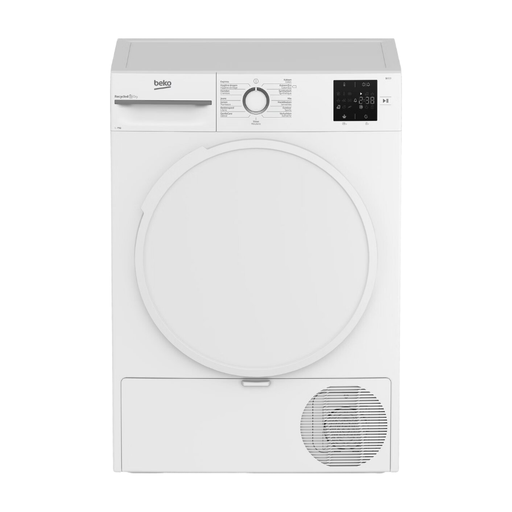 No image available
Its 7 kg capacity suits households that usually dry smaller loads.
Heat pump dryer with a moisture sensor, 15 drying programmes and a stated noise level of 64 dB.
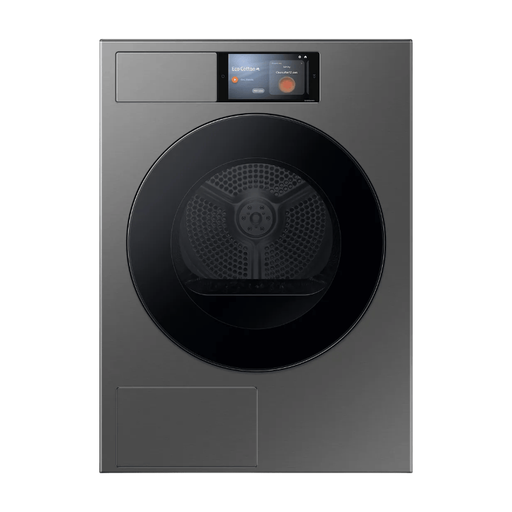 No image available
The small-load cycle may be useful if you’re considering a larger drum but also dry smaller loads.
Heat pump dryer with a stated noise level of 60 dB. Condensate is collected in a reservoir that needs to be emptied after every cycle.
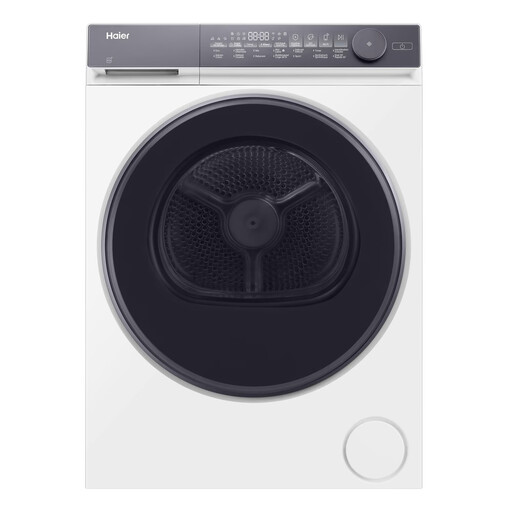 No image available
The 8 kg capacity offers room for people who alternate between small loads and larger washes.
Heat pump dryer with automatic moisture detection, 14 programmes, condensation class B and a stated noise level of 62 dB. A drain hose is listed.
 No image available
The 9 kg drum is a larger option for people who alternate between small loads and larger washes.
The listed specifications include AutoDry, 15 programmes, a self-cleaning condenser and 61 dB. The product title lists energy class B with the designation ‘German panel’.
 No image available
With an 8 kg capacity, this larger drum is worth comparing if you combine small loads with other washing.
Heat pump dryer with sensor drying, 15 programmes and a stated noise level of 64 dB. The reservoir needs to be emptied after use.
The European Commission says that household tumble dryers covered by EU energy labelling rules must display the A–G label in shops and online from 1 July 2025. Check the label for the specific model; an old A++ rating is not a current class to compare directly.
That depends on the installation instructions and whether the two appliances and any stacking kit are compatible. Follow the manuals and check the available space and connections; comparing the width alone isn’t enough.
Clean the lint filter after every drying cycle; Consumentenbond recommends this as part of regular maintenance. If the dryer isn’t connected to a drain, empty the condensate reservoir after every cycle too, and follow the model’s instructions for the condenser. Agree who will do it.
No. According to the Dutch government, statutory guarantees in the Netherlands don’t have a fixed time limit: you’re entitled to a product that does what you can reasonably expect it to do. Report any fault to the seller; a manufacturer’s guarantee or paid-for extended warranty doesn’t replace your statutory rights.