
Parent with a last-minute wash
You need a few suitable school clothes to be dry in time. Check which fabrics and how much laundry can go in a short programme.


When you regularly dry small loads, choosing a programme that suits the fabric and the limited load matters more than simply picking the shortest programme name or the largest drum. Also check the current energy label, the capacity you need for your other laundry, and the drainage and maintenance options. An airer may be enough if you don’t need the clothes again straight away.
You need a few suitable school clothes to be dry in time. Check which fabrics and how much laundry can go in a short programme.
You also dry larger loads, so you’ll want to consider capacity and electricity use as well as a programme for small loads.
The space available, drainage options and access to the filters are all worth considering when you choose a dryer.
Start with the fabrics and small loads you dry most often. Then compare energy use for regular drying and the capacity you need for your other laundry.
| What to consider | What should you check? | Who is this important for? |
|---|---|---|
| Drying a small load in time | Check which fabrics are allowed, the maximum load and the programme duration; see whether there’s a half-load option. For example, Bosch lists a 40-minute programme for a small amount of laundry made from synthetic and lightweight fabrics on the WQA23305NL. | If school clothes are needed the next day, you’ll want to know whether the programme is really suitable for that fabric and load size. Around 33% of consumers prioritise having clothes dry in time. |
| Electricity use when drying frequently | Compare the current A–G label and the energy use per 100 eco drying cycles. The figure on the label doesn’t automatically show the energy use of a short programme. | If you dry lots of loads, it’s worth factoring in running costs without assuming that the eco label predicts the energy use of every programme. Around 27% of consumers put running costs first. |
| Suitable for the fabric and a small load | Read the care labels on your clothes and the programme chart for the exact model. Also check whether there’s a timed programme for very small loads. | If you dry different school clothes, you’ll want to choose a programme that suits the fabrics in question. Around 20% of consumers give the most consideration to fabric care and getting the right result with small loads. |
| Capacity for other laundry | Compare the stated capacity with your usual loads, and check the maximum load for short or specialist programmes separately. | If you dry larger family loads as well as school clothes, the drum needs to suit your usual laundry too. Around 13% of consumers prioritise capacity. |
| Installation and maintenance | Measure the space available and check the drainage options, included parts and access to the fluff filter. | If your laundry space is tight, you’ll want to know in advance where the dryer will fit and how to deal with condensation water and filters. Around 7% of consumers give the most weight to installation and maintenance. |
The 40-minute programme Bosch lists for the WQA23305NL is for a small amount of laundry made from synthetic and lightweight fabrics. It isn’t a general promise about drying times for other clothes or loads.
Check the fabric type and the programme limits for the exact model before taking the drying time into account.
The current scale runs from A to G. The European Commission and EUR-Lex explain that the updated EU rules have applied since 1 July 2025; an old rating isn’t directly comparable with a current class.
Compare appliances using the applicable current label and the stated energy use per 100 eco drying cycles.
AEG says a dryer may not detect a very small load accurately, which can cause the programme to stop too soon.
Check whether the model has a suitable timed programme and follow the instructions in the manual.
The Dutch Consumers’ Association says some condenser and heat pump dryers can be connected to a drain; you may need an extra hose. The Netherlands Fire Service advises cleaning the fluff filter after every drying cycle.
Check the available space, drainage options and whether you can easily reach the filter after each cycle.
You may need an extra drain hose; without a suitable drain, use the condensation tank.
Worth considering if you’re looking for a model with a small-load option or a short programme.
A brand to include when comparing heat pump dryers with enough capacity for everyday family laundry.
Worth considering if you want to assess specific programmes as well as performance with small loads.
An option to compare if fabric-specific programmes and a programme for a quick cycle matter to you.
This selection includes heat pump dryers for small loads and for households that also dry larger loads. Check that each model’s programmes suit your fabrics and the amount of laundry you have.
 No image available
The description mentions a Short programme and a cotton programme for a partial load.
The stated duration for cotton with a partial load is 125 minutes. Check that the permitted load for each programme suits your laundry.
 No image available
The product name describes an 8 kg heat pump dryer.
The description mentions a Shirts 20' programme and timed programmes of 20, 40 and 60 minutes. Check the manual for the permitted fabrics and load sizes.
 No image available
The product name describes an 8 kg heat pump dryer.
The description mentions Quick Dry for up to 30 minutes, Time Dry and a Gentle Dry mode. Check which programme is right for the fabric and load size.
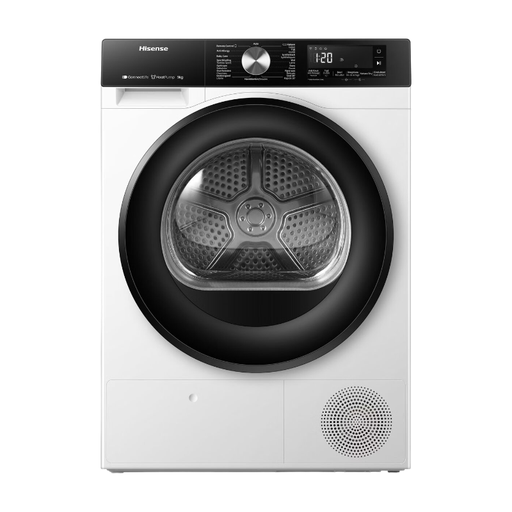 No image available
The product name describes a 9 kg heat pump dryer; the description mentions a Quick programme and an automatic programme.
The product listing states A+++. The European Commission says the current A–G scale has applied since 1 July 2025 to dryers covered by EU labelling rules. Check which current label applies to the Dutch listing.
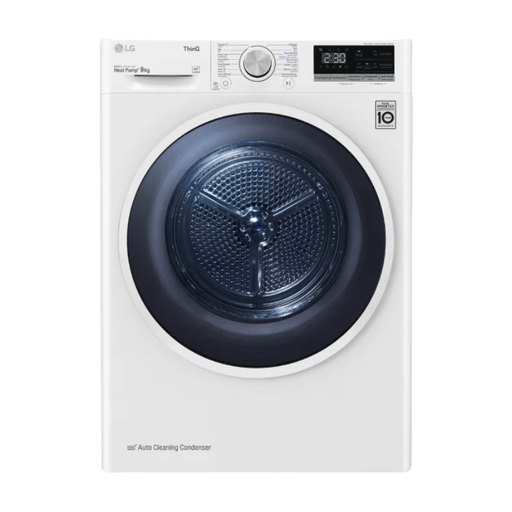 No image available
The product name describes a 9 kg heat pump dryer.
The description says Eco Hybrid lets you choose between faster drying and greater energy savings, and mentions a self-cleaning condenser. Check the manual for this model’s maintenance instructions.
No, not without checking that the fabric and load size are within the programme limits. Bosch lists the 40-minute programme on the WQA23305NL for a small amount of laundry made from synthetic and lightweight fabrics. Follow the care label and the programme chart for your model.
Check whether your model has a timed programme. AEG explains that an automatic dryer may not detect the moisture level properly if there’s too little laundry, and recommends using a timed programme in that case. Also follow the manual for your model.
Since 1 July 2025, dryers covered by EU energy labelling rules have used the current A–G scale, as described by the European Commission. An old A+++ label isn’t directly comparable with this scale. Also compare energy use per 100 eco drying cycles and check whether the rules apply to the appliance; mini dryers up to 3 kg are exempt from these labelling rules.
Clean the fluff filter after every drying cycle, as advised by the Netherlands Fire Service. Also follow the maintenance instructions for your specific model.
According to the Dutch Consumers’ Association, some condenser and heat pump dryers can be connected to a drain. Check the options for the exact model and whether you need a suitable connection or an extra hose.