
Someone moving into a room without a regular drying space
You need to dry a few loads in time, but you don’t yet know whether your new room will have space for a tumble dryer. Measure the available space before choosing an appliance.


If you can dry your washing on a line or airer before you move, you may not need a tumble dryer for this temporary period. If you expect to use one regularly after the move, compare the space available, the capacity you need and the programmes suited to your fabrics. Measure both locations and check the model’s installation instructions before buying.
You need to dry a few loads in time, but you don’t yet know whether your new room will have space for a tumble dryer. Measure the available space before choosing an appliance.
You generally dry small amounts at a time and want a capacity, overall size and programme to suit. Milieu Centraal says that 6 or 7 kg is enough if you live alone or don’t use the dryer often.
You want your clothes dry before you leave, so you’re comparing the conditions for quick programmes with the larger loads you might dry later.
First, decide whether air-drying your clothes before the move is practical. Then compare appliances based on where you’ll put them and which programmes suit the amount of washing you do and your schedule.
| Consideration | What should you check? | Who is this important for? |
|---|---|---|
| Space in both locations | Measure the height, width and depth of the available space. Allow for the door and the clearance specified in the manual. | If I don’t yet know whether the dryer will fit in my new room, I want to check the space before buying. Around 36% of consumers prioritise fitting the appliance in and moving it. |
| Drying time for small loads | For each model, check the permitted load, fabric type and duration of any quick programme. | If my washing needs to be dry before I leave, I want to know whether the quick programme is suitable for my clothes and load size. A drying deadline is the main concern for around 29% of consumers. |
| Energy use based on expected use | Compare the energy label figures and calculate the cost based on how many drying cycles you expect to run and your electricity tariff. | If I plan to keep using the dryer after the move, I’ll weigh the purchase price against the expected electricity costs. Total cost is a priority for around 21% of consumers. |
| Noise and maintenance | Compare the noise levels of different models and check how to drain the condensate and maintain the filter. | If the dryer will be near a living or sleeping area, I also want to know how much noise and maintenance to expect. Comfort at home and maintenance are the main concerns for around 14% of consumers. |
The capacity in kilograms describes the laundry load, not the appliance’s external dimensions or the space needed to open the door and position the dryer according to the manual.
Measure both intended locations and compare those measurements with the dimensions of the exact model before you order.
If the appliance doesn’t fit in your new place, you may need to arrange transport or find another way to dry your clothes.
The programmes Bosch and AEG describe for the models mentioned are intended for specific load sizes or fabric types. So a programme’s name doesn’t automatically tell you how long your washing will take to dry.
Check the permitted load, fabric type and programme duration for the clothes you need to dry before the move.
A small size or limited capacity alone doesn’t tell you how much electricity a particular appliance will use.
Compare the stated energy use and consider whether the capacity is large enough to avoid extra drying cycles.
A drum that’s too small may mean you have to dry the same washing over more cycles.
The manual specifies the space and positioning required for the model. According to the Consumers’ Association, a clogged lint filter can increase drying time and energy use.
Read the model’s manual, make sure the dryer is stable and level, and clean the lint filter after every cycle, as the Consumers’ Association advises.
The examples below relate to the models mentioned, not every product from these brands.
According to Beko Netherlands, the Beko BM3T3722W is a heat pump tumble dryer with a 7 kg capacity and a humidity sensor.
The Bosch WQA23309NL is an 8 kg heat pump tumble dryer. Bosch lists a half-load function.
According to AEG Netherlands, the AEG TR7E86BB4 is an 8 kg heat pump tumble dryer with a SpeedDry programme.
Joybuy product picks related to this topic. Compare each model’s capacity and dimensions, as well as any programmes for small loads.
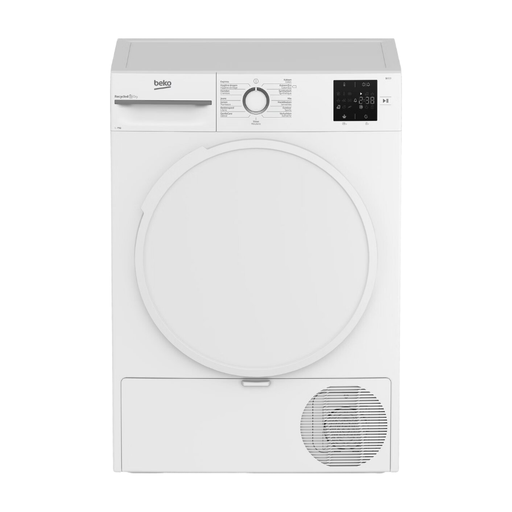 No image available
A capacity worth considering if you usually dry small loads. Milieu Centraal says that 6 or 7 kg is enough if you live alone or don’t use the dryer often.
Beko Netherlands lists a humidity sensor, dimensions of 84,6 × 59,8 × 54,5 cm, a noise level of 64 dBA and energy class E under the new label. Measure the space available before you decide.
 No image available
The 9 kg capacity is a good option to compare if you expect to dry larger loads as well as small ones.
The product information states that the cotton programme takes 125 minutes for a partial load; this duration doesn’t automatically apply to other fabrics. The listing also mentions AutoDry and Sensitive Drying.
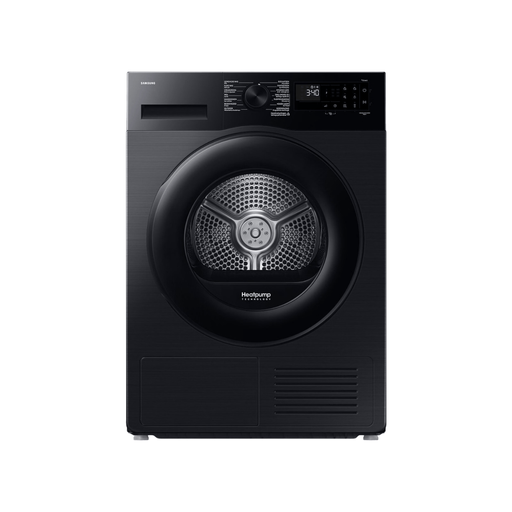 No image available
The 9 kg capacity is worth comparing if you expect to dry larger loads as well as small ones.
The product name lists a noise level of 64 dB and energy class C. The product information describes a reversible door; check the installation instructions and the ventilation clearance required for your setup.
 No image available
An 8 kg model to compare if you sometimes dry larger loads as well as small ones.
The product information lists a 30-minute Turbo Dry programme for small amounts of lightly damp clothing; this doesn’t automatically apply to other fabrics or load sizes. The stated installation requirements include a well-ventilated room of at least 4 m² and an earthed 220–240 V socket. Do not use an extension lead.
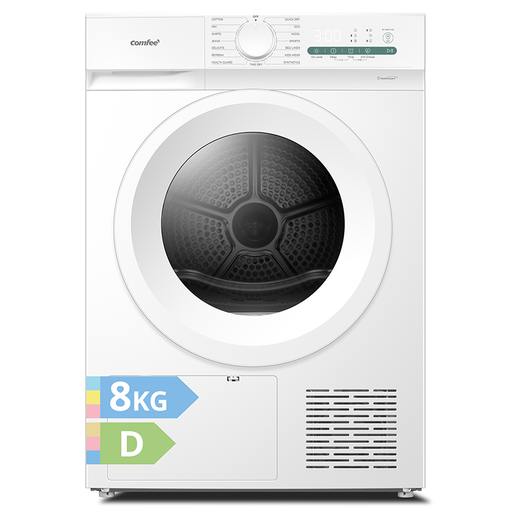 No image available
An 8 kg capacity to compare if you also dry larger loads. If you mainly do small loads, a smaller capacity may better suit your needs.
The product name lists energy class D. Check the space available and the model-specific installation instructions.
No, this type needs to vent to the outside. The European Commission explains that vented dryers expel moist air outdoors. For a condenser or heat pump dryer, check the installation instructions for the specific model too.
Not if you empty the water tank by hand on a model that allows this. If you want to use a drain hose, check whether the exact model supports it and which parts are included.
It depends on the work involved. The Dutch Government distinguishes between minor adjustments and major changes to a rented home. Don’t take this as general permission to, for example, make a vent through a wall; discuss any such work with your landlord.
For an online purchase, you generally have a statutory cooling-off period of up to 14 days after delivery, according to ACM ConsuWijzer. This is separate from your statutory guarantee: if a product breaks too soon under normal use, the seller is responsible for offering an appropriate solution. A two-year manufacturer’s warranty is not automatically the limit of your statutory rights.