What should you look for when buying?
Start by considering where the tumble dryer will go and what you usually dry. Then compare small-load programmes and energy consumption on the same label basis.
The points below draw on installation advice from the Consumentenbond, energy label information from energielabel.nl and maintenance advice from Brandweer Nederland.
| What to consider |
What to look for |
Who is this important for? |
| Getting school clothes dry in time |
Check which fabrics and load sizes are allowed for each programme, and follow the care labels. |
If I only need a few school clothes on a rainy day, I want to know which fabrics and what quantity a short programme can handle. Around 33% of consumers say getting clothes dry in time is their top priority when buying. |
| Noise and moisture |
Compare the noise level on the label in dB and the condensation efficiency; also measure the space and follow the installation instructions. |
If the tumble dryer is close to my living or sleeping area, I want to allow for noise, vibration and moisture in advance. Around 27% of consumers put placement and noise at the top of their list. |
| Energy consumption |
Compare kWh per 100 eco drying cycles on the current label and check that the capacity suits your laundry load. |
If I dry clothes regularly, I want to weigh up energy use against the purchase price and how I use the machine. Around 20% of consumers put ongoing electricity costs first. |
| Fabrics and maintenance |
Check the programmes for the laundry you wash and look at the model’s filters and maintenance instructions. |
If my school clothes include different fabrics, I look for suitable programmes and maintenance that I can keep on top of. Around 20% of consumers put fabric care and maintenance at the top of their list. |
Tumble dryers at Joybuy
This selection includes heat pump tumble dryers with a range of capacities and features. Compare the programme requirements, stated specifications and installation needs for your space for each model.
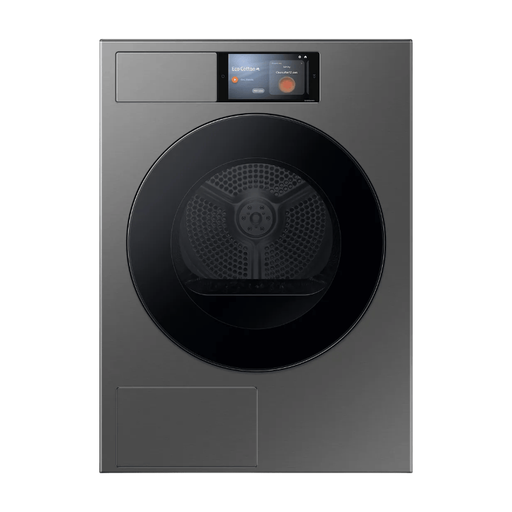 Image unavailable
Samsung DV90F09F4SU3 heat pump tumble dryer, 9 kg
The product listing mentions a 35-minute programme for small loads; check that the fabrics and quantity are suitable for it.
Capacity: 9 kg. Energy label: A. Noise level: 60 dB. Condensation efficiency class: B.
The listing mentions AI Dry+ for moisture detection and Wi-Fi with SmartThings. According to the product information, the R290 refrigerant is flammable; installation requires a well-ventilated room of at least 4 m² and servicing by a qualified professional.
View at Joybuy
 Image unavailable
Bosch WQH246DPFG Serie 6 heat pump tumble dryer, 9 kg
The product listing mentions AutoDry moisture sensing and an Extra Quick 40 programme; check which fabrics and load sizes are allowed for this programme.
Capacity: 9 kg. Energy label: B. Noise level: 59 dB. Condensation efficiency class: B. The listing also mentions a reversible door and anti-vibration side panels.
View at Joybuy
 Image unavailable
Bosch WQB245B40 Serie 8 heat pump tumble dryer, 9 kg
The listing mentions AutoDry moisture sensing and programmes for fabrics including silk, wool and delicates; check that the German control panel suits your needs.
Capacity: 9 kg. Energy label: B. Noise level: 61 dB. The listing mentions a self-cleaning condenser.
The product title specifies a German control panel.
View at Joybuy
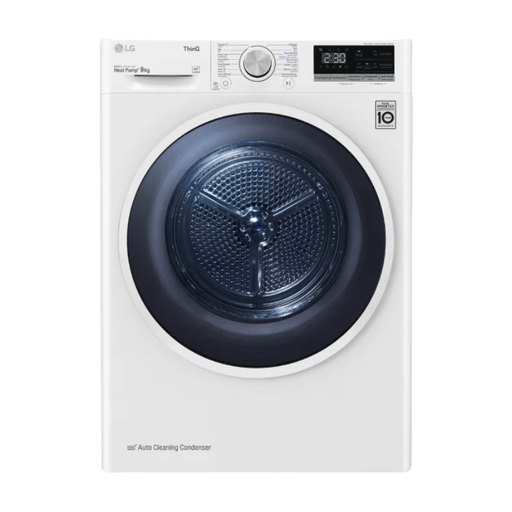 Image unavailable
LG RH90V5AV6N heat pump tumble dryer, 9 kg
The product listing mentions Sensor Dry and a self-cleaning condenser. Check the maintenance instructions and programmes for the fabrics you dry.
Capacity: 9 kg. Noise level: 64 dB. Condensation efficiency class: B.
The manufacturer’s website uses an old A++ rating for this model; don’t compare it directly with current A–G energy classes.
View at Joybuy
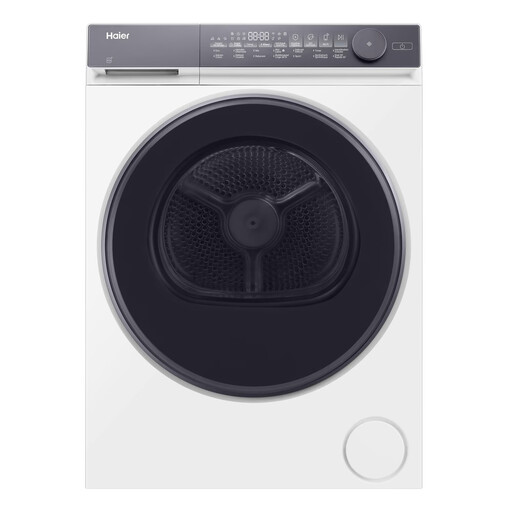 Image unavailable
Haier HD80-C367U1-DF heat pump tumble dryer, 8 kg
The product listing mentions automatic moisture detection and an I-Refresh function for delicate fabrics. Check the manual for programmes suited to your laundry.
Capacity: 8 kg. Energy label: C. Noise level: 62 dB. Condensation efficiency class: B. The listing mentions an included drain hose.
View at Joybuy
Frequently asked questions
What should I compare if school clothes are needed again tomorrow?
Compare the programme for the fabrics you want to dry and the permitted load size. A short programme time doesn’t automatically mean a full load of school clothes will be dry. For example, Bosch specifies that the 40-minute SuperKort programme on the WQG233D5NL is for a small load of lightweight or synthetic laundry.
Does a heat pump tumble dryer in an upstairs flat need a water outlet?
Not necessarily: condensation can be collected in a tank. On many models, a drain hose is an alternative if there’s a suitable connection; follow the instructions for the model you choose. Place the tumble dryer on a stable, level surface.
Which maintenance tasks shouldn’t I skip?
Follow the manufacturer’s maintenance instructions and keep the filters clean. Brandweer Nederland lists clean filters as a safety measure; an automatically cleaned condenser doesn’t replace cleaning the filters.
What warranty rights do I have in the Netherlands?
When you buy a product, you’re entitled to one that’s of satisfactory quality. According to the Dutch government, there’s no fixed statutory warranty period in the Netherlands; if a product is faulty, the retailer is your point of contact. A manufacturer’s warranty or paid-for extended warranty is separate from your statutory rights.
Can a shop still sell a conventional condenser dryer without a heat pump?
The updated efficiency requirements have applied to tumble dryers newly placed on the market since 1 July 2025. Appliances that were already on the market before that date and are still in shop stock aren’t brought under those requirements retrospectively; some requirements don’t apply to tumble dryers with a capacity of up to 3 kg. The rules that apply to a particular model depend on the relevant conditions.


