
Families with large cotton loads
You want to dry towels, bedding and other cotton laundry in as few suitable loads as possible. The Dutch Consumers' Association lists 9 kg as a possible choice for drying large amounts of laundry in one go.


An 8 kg heat pump tumble dryer may suit your usual cotton loads; a 9 kg model gives you more room for larger family loads, but it won’t necessarily be the most economical choice if you usually only half-fill the drum. Then compare the current energy label and consumption per 100 eco cycles, and check the drying time for cotton, the dimensions and the installation requirements for your laundry room.
You want to dry towels, bedding and other cotton laundry in as few suitable loads as possible. The Dutch Consumers' Association lists 9 kg as a possible choice for drying large amounts of laundry in one go.
You want to weigh up energy consumption during frequent winter use against programme duration and your own usage. Milieu Centraal recommends choosing a tumble dryer with a heat pump and a good energy label if you need a dryer; also compare the stated consumption per 100 eco cycles.
You need to consider installation, moisture, noise or a cold room. So check the dimensions and the care and installation instructions for the exact model.
Start with a capacity that suits your usual cotton load. Then compare energy use, drying results and the practical requirements of the space where you plan to put the dryer.
A good fit if: your cotton loads usually weigh no more than 8 kg and you can regularly fill the drum properly.
Bear in mind: it has a smaller capacity than a 9 kg model; capacity alone doesn’t predict drying performance. The Dutch Consumers' Association considers 8 kg a suitable choice for households of 3 to 4 people.
A good fit if: you regularly want to dry larger cotton loads, towels or bedding in one go.
Bear in mind: the extra capacity is less useful if you usually dry small loads; check the model’s dimensions too.
A good fit if: you have the time and a suitable, well-ventilated space, or some of your laundry doesn’t need to be machine-dried. Milieu Centraal says line-drying is the most environmentally friendly way to dry clothes.
Bear in mind: drying laundry indoors adds moisture to the air, so keep the room ventilated and watch out for damp.
A good fit if: having one appliance for washing and drying matters more to you than a separate tumble dryer and its capacity.
Bear in mind: check the separate drying capacity, which may be lower than the washing capacity. The Dutch Consumers' Association treats heat pump washer-dryers as a separate exception when comparing energy use.
| Consideration | What should you check? | Who is this important for? |
|---|---|---|
| Capacity for cotton | Compare the stated capacity for cotton with the weight of your usual dry load and the capacity of your washing machine. | If you want to dry large cotton loads in as few suitable cycles as possible, drum capacity is key. Around 33% of consumers put capacity first. |
| Energy use with frequent drying | Compare the current energy label class and the stated consumption in kWh per 100 eco cycles. Work out running costs using your own electricity tariff and expected usage. | If you use your dryer regularly and want to factor in ongoing electricity costs, look at consumption per cycle. Around 27% of consumers make this their top priority. |
| Drying results and cycle time | Check the results for cotton cupboard-dry and the duration of the cotton programme with a similar load. A short programme for other laundry won’t tell you how quickly a full cotton load will dry. | If you want to avoid parts of your towels or clothes staying damp and needing another cycle, check the cotton results and programme duration. Around 27% of consumers put this combination first. |
| Installation, moisture and maintenance | Check the dimensions, condensation efficiency, noise level, drainage options and care instructions for the exact model. | If you need to consider a cold or small laundry room, moisture or filter maintenance, you’ll want to know what installation and care involve beforehand. Around 13% of consumers put these practical requirements first. |
Bosch describes the 40-minute programme on the Bosch WQG245D7NL as suitable for a small amount of lightweight synthetic laundry. That isn’t the drying time for a full cotton load.
Compare the duration and results of the cotton programme with a load similar to the ones you dry at home.
Misjudging the programme duration could mean you need extra time or a second drying cycle.
The Dutch Consumers' Association lists the LG GD3R509S0 as having a 9 kg capacity for washing cotton and a 6 kg capacity for drying it. So its drying capacity may be lower than its washing capacity.
Before buying, check the washer-dryer’s separately stated drying capacity.
You may need to split a washed load into smaller batches before drying it.
Even with a self-cleaning condenser, the fluff filter still needs cleaning. The Dutch Consumers' Association recommends cleaning it after every drying cycle.
Check which filters you can access and follow the care instructions for the model you choose.
A clogged filter can mean longer drying times and higher energy use.
Drying laundry indoors adds moisture to the air. Milieu Centraal stresses the importance of ventilating your home.
Only use an airer indoors if the room and ventilation are suitable, and watch out for damp.
The DV90DB7845GEU3 is a heat pump tumble dryer with a 9 kg capacity and an A energy rating, making it worth considering when weighing up capacity and stated efficiency.
The WQG245D7NL is a heat pump tumble dryer with a 9 kg capacity, self-cleaning condenser and moisture sensor.
The TR738AT4B is an 8 kg heat pump tumble dryer to consider if your usual loads don’t require a larger drum.
According to Beko’s Dutch product page, the B5T49924WC is a heat pump tumble dryer with a 9 kg capacity and an OptiSense drying sensor.
These product picks focus on heat pump tumble dryers with a stated capacity of 9 kg, for those who regularly dry larger loads. Compare the specifications and check that the model you choose will fit, as well as its programme details.
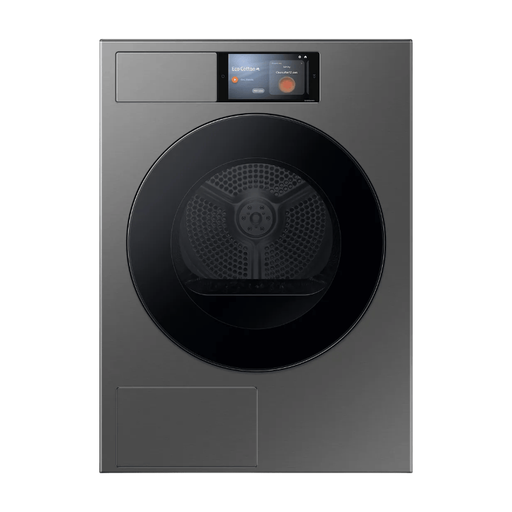 No image available
The stated 9 kg capacity is worth considering if you regularly dry larger cotton loads.
The product information lists 79 kWh per 100 drying cycles, moisture sensors, Optimal Dry and a condensate drain hose.
 No image available
The 9 kg capacity is worth considering for regularly drying larger loads; the product information also lists a cotton programme.
The description mentions AutoDry, a self-cleaning condenser, B-rated condensation efficiency and dimensions of 842 × 598 × 613 mm.
 No image available
The stated 9 kg capacity and cotton programme are worth considering if you regularly dry larger cotton loads.
The product information lists AutoDry, a self-cleaning condenser and dimensions of 84,2 × 59,8 × 66,2 cm. The product title specifies that the panel is in German.
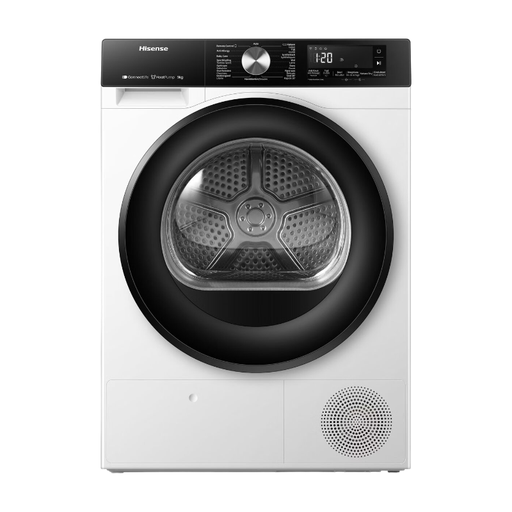 No image available
The stated 9 kg capacity is worth considering if you regularly dry larger loads.
The product information lists a moisture sensor, B-rated condensation efficiency, dimensions of 84,50 × 59,50 × 64 cm and a condensate drain hose.
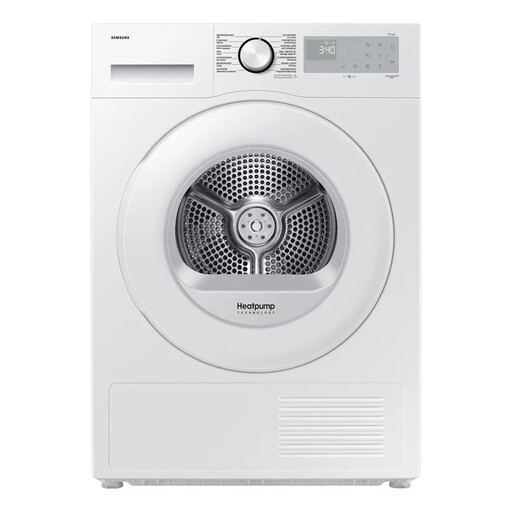 No image available
The stated 9 kg capacity is worth considering if you regularly dry larger loads.
The product information lists Optimal Dry with a moisture sensor and recommends cleaning the fluff filter after every cycle.
Compare dryers using the current A to G scale and the stated consumption in kWh per 100 drying cycles on the eco programme. The new scale has applied since 1 July 2025; an old rating such as A+++ isn’t directly equivalent to the same class. The European Commission explains that heat pump technology has been required for tumble dryers placed on the EU market since that date.
Check the requirements for the specific dryer rather than looking only at the available floor space. According to the Dutch Consumers' Association, a dryer uses more energy and dries less effectively in a cold, unheated room; also check the manual for the model you choose.
Clean the fluff filter after every drying cycle. Empty the condensate tank if the dryer isn’t connected to a drain, and follow the model’s manual for the condenser and any additional filters. A self-cleaning condenser doesn’t mean the fluff filter is maintenance-free.
No. According to the Dutch government, there’s no fixed period for the statutory guarantee in the Netherlands: you’re entitled to a product that does what you can reasonably expect it to do. If something goes wrong, contact the seller; a manufacturer’s guarantee or an extended warranty you’ve bought is separate.
Not by looking at the energy rating letter alone: a new energy label scale has applied since 1 July 2025, so the old and new scales aren’t directly comparable. When buying, compare the current energy rating and consumption of the models you’re considering.