What should you consider when choosing?
First, decide whether a short cycle for a small load is genuinely your main use case. Then compare your everyday family loads, garment care instructions and practical installation requirements.
| What to consider |
What should you look for? |
Who is this most relevant to? |
| Drying a small load in time |
Check the load size and fabric types allowed for the short cycle. Only spin the clothes beforehand if their care instructions allow it. |
If I only want to dry a few suitable items before leaving, I want to know whether the short cycle is designed for that. Around 29% of consumers prioritise having laundry ready before they leave. |
| Drying clothes with care |
Check the drying symbol on each garment and see whether the programmes are suitable for the fabrics you want to dry. |
If I’m drying school clothes made from different fabrics, I want to avoid using a short or delicate cycle for a garment that must not go in the dryer. Around 23% of consumers prioritise suitability for their own clothes. |
| Energy use with frequent drying |
Compare current energy labels on the same basis. A label rating doesn’t automatically tell you how much energy an individual quick cycle uses. |
When the dryer is used regularly, I want to consider its energy use alongside the occasional rush load. Around 18% of consumers put ongoing energy costs first. |
| Capacity for family laundry |
Compare the capacity with the weight of your usual dry laundry load, and check the maximum load for a short cycle separately. |
If I’m buying a dryer mainly for everyday family laundry, I want the drum to suit those loads, not just a small wash. Around 18% of consumers choose primarily based on the amount of family laundry they have. |
| Installation and maintenance |
Measure the available space, follow the installation guide, and check the condensate drainage and access to the fluff filter. |
If my laundry room has limited space, I want to know in advance whether installation and maintenance will be practical. Around 12% of consumers prioritise laundry-room space and their maintenance routine. |
Tumble dryers at Joybuy
These heat pump dryers are relevant if you’re weighing up a short cycle for a small load against capacity for regular family laundry. Check the stated load size for each programme and the instructions for use for every model.
 No image available
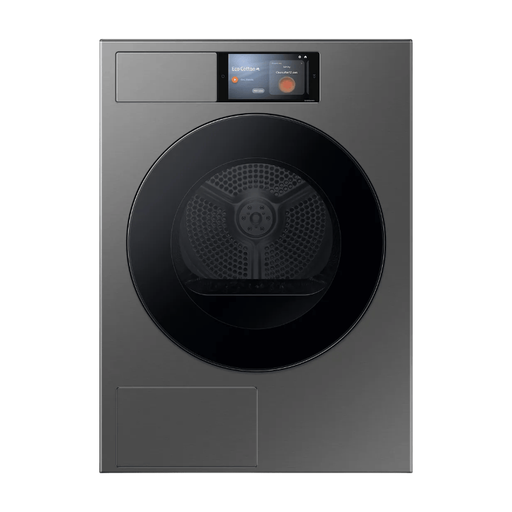
Samsung DV90F09F4SU3, 9 kg, AI Dry+, energy class A
The stated Super Speed cycle for small loads makes this model worth considering if a quick drying cycle is important to you.
Heat pump tumble dryer with a 9 kg capacity and a 35-minute Super Speed programme for small loads. The product description lists R290 (propane) as the refrigerant and warns against damaging the cooling circuit; leave servicing to qualified personnel.
Joybuy
 No image available
Haier HD80-C367U1-DF, 8 kg, energy class C
The 8 kg capacity makes this model relevant when choosing a dryer for everyday family laundry.
The product description lists sensor-controlled drying and the I-Refresh function, which uses warm, moist air. The model contains R290 (propane); the description requires a well-ventilated room of at least 4 m² and an earthed 220–240 V socket, with no extension lead.
Joybuy
 No image available
Bosch WQH246DPFG Serie 6, 9 kg, energy class B
The combination of a stated short programme and a 9 kg capacity makes this model worth considering when comparing a time-sensitive drying cycle with family laundry needs.
The product description lists Auto Dry, moisture sensing and a 40-minute Extra Quick programme. Follow the warning not to dry clothes treated with flammable substances, and clean the fluff filter after use.
Joybuy
 No image available
Bosch WQB245B40 Serie 8, 9 kg, German control panel
The 9 kg capacity and programmes for different fabrics make this model relevant for regular laundry loads.
The product description lists AutoDry, a self-cleaning condenser and energy class B. The control panel is in German, so bear that in mind when choosing. Clean the fluff filter after every cycle and don’t dry clothes treated with flammable substances.
Joybuy
 No image available
SHARP KDNHA8S6PWEBX, 8 kg, energy class E
The stated short programmes may be relevant if you need to factor in limited drying time.
The product description lists sensor drying, 15 programmes, Express 34' and Shirts 20'. Don’t dry clothes that their care labels say are unsuitable for tumble drying.
Joybuy
Frequently asked questions
Can you put every school garment in a heat pump dryer?
No. Check the drying symbol on each garment. A crossed-out tumble-drying symbol means the garment must not go in the dryer; a delicate cycle doesn’t change that instruction.
How can I get a small load dry in time?
Only spin the clothes if their care instructions allow it, sort them by fabric and thickness, and use a short cycle only for the load size and fabrics it’s designed for. Bosch specifies that its 40-minute programme is for a small load of lightweight or synthetic fabrics.
What should I check when installing and maintaining the dryer?
Follow the manual to make sure the dryer is stable and level, and leave the required space for heat to escape. Check whether condensate is collected in a tank or can be drained through a suitable connection, and clean the fluff filter after every drying cycle. The Netherlands Fire Service lists lint build-up as a fire risk.
Does my Dutch statutory guarantee end after the two-year manufacturer’s guarantee?
No. A manufacturer’s guarantee doesn’t determine how long a product must meet reasonable expectations under the law. According to the Dutch government, the Netherlands has no fixed statutory guarantee period; the expected lifespan depends on factors including the product itself. If a product is faulty, the retailer is your first point of contact, and the manufacturer’s guarantee is an additional benefit.
Which energy label should I compare for a tumble dryer?
Compare the current EU labels on the A to G scale. According to the European Commission, this scale has applied to tumble dryers since 1 July 2025. The basis for the label rating isn’t the same as a measurement of the energy used by the specific quick cycle you plan to use.


