What should you look for when choosing?
Measure the space first, then choose a drying capacity to suit your cotton loads. This helps you avoid compromising on safe installation just to get the right drum capacity.
Freestanding heat pump tumble dryer
Choose this if: you regularly dry cotton laundry and have a separate space or a suitable stacking setup.
Consider: stacking saves floor space, but you’ll need enough height and compatible appliances and accessories.
Washer-dryer
Choose this if: there’s no room for a second appliance or a suitable stacking setup, and you also need a washing machine.
Consider: according to Milieu Centraal, washing and drying in separate appliances uses less energy. Also check the drying capacity, not just the washing capacity.
Mini tumble dryer up to 3 kg
Choose this only if: you dry small amounts of cotton and the specific model’s dimensions and installation requirements suit your space.
Consider: the small capacity may make it impractical for larger loads of towels or bedding.
Washing line
Choose this if: you have a suitable place to hang your laundry and the drying time works with your schedule.
Consider: hanging laundry takes space and time, but avoids using a tumble dryer.
| What to consider |
What to look for when buying |
Who should prioritise this? |
| Will the tumble dryer fit, and can it be installed safely? |
Measure the height, width, depth, door clearance and access route. Check the instructions and compatibility of both appliances and the stacking kit. The Consumentenbond and AEG recommend using a suitable stacking setup. |
I need to fit the tumble dryer in without taking up extra floor space; around 31% of consumers prioritise being able to fit an appliance into their space. |
| Can one cycle dry the amount of cotton laundry I need? |
Compare the capacity in kg with your usual loads of towels, clothes and bedding. Check the cotton programmes and programme duration for the specific model too. |
If I mainly dry full loads of cotton, I want to know whether they’ll fit in one cycle; around 25% of consumers prioritise capacity. |
| What will I need to pay for when buying? |
Check which parts and services are included, such as a required stacking kit or installation. Compare electricity use separately, based on the label and your own usage; Energielabel.nl explains energy use per 100 eco cycles. |
I want to know in advance what I’ll need to install the tumble dryer properly; around 25% of consumers put purchase costs first. |
| How much electricity and moisture are involved in regular drying? |
Compare the current A–G label, kWh per 100 eco cycles, eco programme duration and condensation efficiency. Also follow the installation and ventilation instructions. |
For regular winter loads, I want to take the stated electricity use into account; around 19% of consumers consider this their top priority. |
Tumble dryers on Joybuy
These freestanding heat pump tumble dryers may suit you if you want to dry cotton laundry in a separate appliance. Before choosing, check that the stated capacity and dimensions suit your loads and the space available.
 Image unavailable
Candy BR 8N3BX-S, 8 kg
The stated 8 kg capacity may suit you if your cotton loads fall within this limit.
The product name lists energy rating C, AI Smart Move and Wi-Fi (hOn); the product description mentions a moisture sensor.
Joybuy
 Image unavailable
Bosch WQB245B40, Serie 8, 9 kg
The stated capacity and cotton programme may suit larger cotton loads, provided the tumble dryer fits in the space available.
The product description lists a cotton programme, self-cleaning condenser and dimensions of 84,2 × 59,8 × 66,2 cm. The B energy rating shown is for a German label and isn’t directly comparable with Dutch ratings.
Joybuy
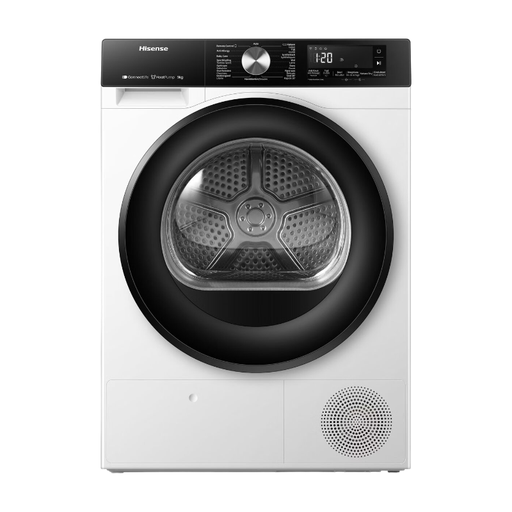 Image unavailable
Hisense DH3S902BW3, 9 kg
The stated 9 kg capacity may suit larger cotton loads. Measure the space and check that the door can open properly once the dryer is installed.
The product description lists dimensions of 84,5 × 59,5 × 64 cm and a reversible door. The A+++ rating uses the old energy label scale and can’t be directly compared with the current A–G scale.
Joybuy
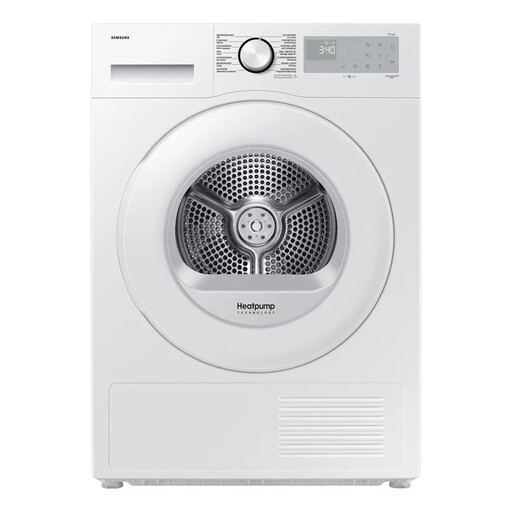 Image unavailable
Samsung DV9UDG52A0THEN, 9 kg
The stated 9 kg capacity may suit larger loads; check that the dimensions fit the space available.
The product information lists dimensions of 85 × 60 × 60 cm, energy rating C, 105 kWh per 100 cycles and condensation class B.
Joybuy
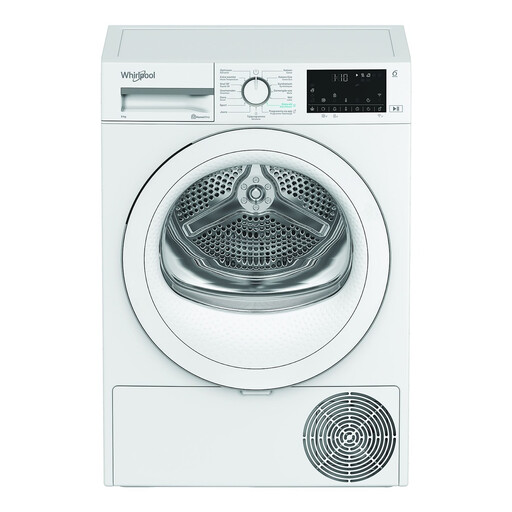 Image unavailable
Whirlpool C WD 94M WWS BE, 9 kg
The product description mentions moisture sensing during drying, which may be useful if you dry cotton loads of varying sizes.
The product information lists energy rating C, 106 kWh per 100 cycles, condensation class B and dimensions of 84,6 × 59,8 × 67,4 cm.
Joybuy
Frequently asked questions
Can I put a tumble dryer on top of my washing machine?
This can save space, but check which stacking kit and installation method the manufacturers approve for both appliances. Don’t put the washing machine on top of the tumble dryer, and leave the recommended space for heat to escape. This installation advice isn’t a general legal requirement to stack appliances.
Where does a heat pump tumble dryer drain the water?
The water collects in a tank that you empty, or, on many models, can be drained through a suitable hose. Check which connection is possible for each model, what’s included and whether there’s a drain within reach.
What maintenance matters if I use it a lot in winter?
Clean the lint filter after every drying cycle; this is the fire safety advice given by the Brandweer. Follow your model’s instructions for the water tank and condenser, as a self-cleaning condenser may need a different maintenance routine.
Which Dutch regulations and consumer rights should I know about when buying?
Since 1 July 2025, the current EU energy label for household tumble dryers has used the A–G scale and must be displayed in shops and online. In the Netherlands, the seller must resolve any fault covered by the statutory guarantee; this is separate from any manufacturer’s or additional guarantee.
What can I do with my old tumble dryer?
According to the Rijksoverheid, you can return an old household appliance to the shop or online retailer where you buy a new, similar appliance, take it to a collection point or drop it off at your local council recycling centre. Check how collection or return is arranged when you place your order.


