Who is this advice for?

Regular winter drying

You often dry cotton during the colder months and want to avoid electricity costs quietly adding up with every load. Compare the capacity you need and the current energy label, not just the purchase price. Milieu Centraal and the European Commission explain these points to consider when choosing tumble dryers and energy labels.

If you want to dry several loads

You may want to dry several cotton loads when changing your wardrobe over for the season. Check that the capacity suits your laundry, and compare drying results and cycle times. Milieu Centraal discusses capacity for more frequent drying; Consumentenbond explains how drying results are assessed.

If your utility room presents a challenge

You have limited space or ventilation, or want to stack the dryer on top of your washing machine. Check the dimensions, installation instructions, water drainage and condensation efficiency of the exact model. Consumentenbond highlights condensation efficiency as a factor to consider when choosing a tumble dryer.

What should you look for?

A heat-pump tumble dryer for regular use

A good fit if: you often dry cotton in winter and want a capacity that suits your needs.

The trade-off: Milieu Centraal says heat-pump dryers use less electricity than older condenser or vented dryers. Whether this offsets the purchase cost depends on how often you use it and your energy tariff.

Keep using your current dryer or washing line

A good fit if: you only dry occasionally and have enough room to hang out your washing, or your existing dryer still works well.

The trade-off: A washing line takes time and space, while drying indoors can also affect the humidity in the room. Before replacing an existing machine, consider how well it works, its maintenance needs and its electricity use.

A washer-dryer if floor space is limited

A good fit if: two separate appliances, even stacked, won’t fit and you need a single machine.

The trade-off: Milieu Centraal recommends separate appliances because washer-dryers use more energy. Compare the drying capacity separately with the amount of cotton you want to dry in each load.

What to consider What should you check? Who should pay particular attention?
Electricity use Compare the current A–G label and product information sheet, and check which programme you use. The European Commission explains the updated label for household tumble dryers. If I dry clothes often all winter, I want to factor in the electricity used per load. Around 29% of consumers put running costs first.
Large cotton loads Match the capacity to your actual load, then compare the cotton cupboard-dry result and programme duration. Milieu Centraal recommends 8 or 9 kg for more frequent use; Consumentenbond assesses drying results. When changing my wardrobe over for the season, I want to know whether my cotton laundry will be cupboard-dry after the cycle. Around 29% of consumers prioritise a suitable capacity and drying results.
Clothing care Check the drying symbols on each item and only choose a programme that suits its care label. Bosch Nederland explains how drying symbols show which treatment is suitable. If my cotton clothes have different drying instructions, I don’t want to treat them all the same way. Around 21% of consumers put clothing care first.
Installation location Check the model dimensions, installation instructions, condensation efficiency and whether water drainage is possible. Consumentenbond describes condensation efficiency as a factor to consider when choosing. In a small or damp-prone utility room, I want to know in advance whether the dryer will fit and how moisture will be removed. Around 14% of consumers prioritise where the appliance can be placed and how it drains.
Maintenance and purchase Check the maintenance instructions, how easy the lint filters are to reach and any drainage options. Consumentenbond recommends cleaning the filters after every drying cycle. I want to know what I’ll need to do after every cycle and which costs to factor in when buying. Around 7% of consumers prioritise ease of maintenance and purchase costs over other considerations.

Common mistakes when choosing

  • Assuming a quick programme will leave cotton cupboard-dry

    According to Bosch Nederland, the 40-minute setting on the Bosch WQG245D9NL is intended for small loads of synthetic materials and lightweight fabrics, not a full load of cotton.

    Compare the programme duration and drying results for cotton using a load that reflects how you use your dryer. Consumentenbond explains how the cotton cupboard-dry setting is assessed.

  • Comparing an old A+++ label directly with the current label

    Since 1 July 2025, household tumble dryers sold in shops and online have used the updated EU label, with an A–G scale. The old and new ratings are not directly comparable.

    Compare models using the current applicable label and product information sheet. Bear in mind that the label relates to the eco programme, which may differ from the cotton programme you usually use.

  • Assuming a self-cleaning condenser means no maintenance

    A self-cleaning condenser doesn’t remove the need for other maintenance. Consumentenbond recommends cleaning the lint filters after every drying cycle, while the Fire Service advises following the maintenance and cleaning instructions in the manual.

    Check the instructions for the exact model and clean the lint filters after every cycle.

  • Assuming all cotton clothes can go in the tumble dryer

    Drying instructions vary from one item to another. According to Bosch Nederland, a crossed-out tumble-drying symbol means the item must not be tumble-dried.

    Check the labels and keep anything marked as unsuitable for tumble-drying out of the machine.

Brands and models to compare

Beko

The BM3T3824W is an 8kg heat-pump dryer to compare if you usually dry a standard-sized cotton load.

  • Beko Nederland lists an 8 kg capacity, 64 dBA noise level, dimensions of 84,6 × 59,8 × 60,7 cm and an energy rating of C for this model.
  • These specifications are not an independent measure of its cotton cupboard-dry performance.

Bosch

The Serie 6 WQG245D9NL is a 9kg model to compare if you dry larger cotton loads.

  • Bosch Nederland lists a self-cleaning condenser, Auto Dry and a noise level of 61 dB(A).
  • According to Bosch, the 40-minute programme is intended for small loads of synthetic materials and lightweight fabrics, not a full load of cotton.

AEG

The TR838A2B is an 8kg model to compare if you also have delicate or mixed laundry that is suitable for tumble-drying.

  • AEG Nederland lists an energy rating of C, 97 kWh per 100 eco cycles and 67 dB for this model.
  • Claims about AbsoluteCare and MixDry come from AEG. Check clothing labels, and don’t assume these features offer an independent performance advantage without comparable drying test results.

Siemens

The iQ500 WQ35G2D0NL is an 8kg model to compare for sensor control, a half-load option and condenser maintenance.

  • Siemens Nederland lists a self-cleaning condenser and a noise level of 61 dB(A).
  • These features alone don’t guarantee that your cotton programme will take less time or use less energy; check the programme information for the model.

Miele

The T1 TEH788WP is a 9kg alternative to compare with other models for its programme features and service.

  • Miele Nederland lists DryCare 40, HygieneDry and SilenceDrum for this model.
  • Claims about gentler or quieter drying come from Miele; the product information doesn’t provide an independent comparison with other models.

Tumble dryers at Joybuy

These heat-pump dryers come in different capacities, giving you models to compare for cotton loads and regular use. Check the programme you need, the space available and the maintenance instructions for each model.
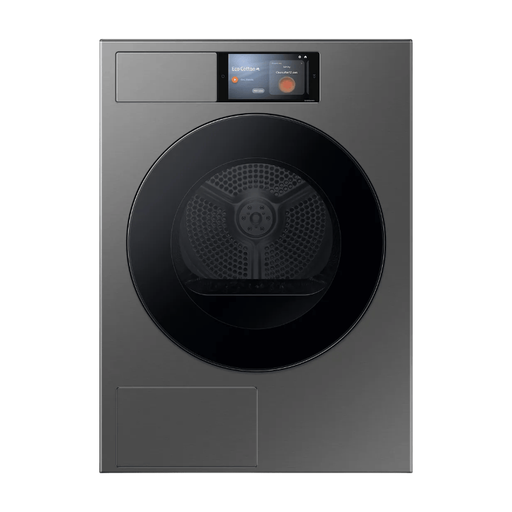
Samsung DV90F09F4SU3 heat-pump tumble dryer, 9 kg

Samsung DV90F09F4SU3, 9 kg

The listed 9 kg capacity may be worth considering when comparing models for larger cotton loads.

The product name lists a heat-pump tumble dryer, an A energy rating, AI Dry+ and Wi-Fi with SmartThings.

The product information says to clean the lint filter after every drying cycle and check the condenser regularly.

View at Joybuy

Haier HD80-C367U1-DF heat-pump tumble dryer, 8 kg

Haier HD80-C367U1-DF, 8 kg

The listed 8 kg capacity is an option to compare with the amount of cotton you dry in each load.

The product name lists a heat-pump tumble dryer and a C energy rating.

The product information specifies a minimum installation area of 4 m² and good ventilation. The appliance contains R290, a flammable refrigerant; the warning says servicing must be carried out by qualified technicians.

View at Joybuy

Bosch WQH246DPFG Serie 6 heat-pump tumble dryer, 9 kg

Bosch WQH246DPFG Serie 6, 9 kg

The listed 9 kg capacity may suit larger loads; check that it matches the amount of cotton you actually dry.

The product name lists a heat-pump tumble dryer, a B energy rating and an NL/FR control panel.

According to the product information, you should clean the lint filter after every use. If there’s no drain hose, the water tank must be emptied after every cycle.

View at Joybuy

Bosch WQB245B40 Serie 8 heat-pump tumble dryer, 9 kg, German control panel

Bosch WQB245B40 Serie 8, 9 kg, German control panel

The listed 9 kg capacity gives you a starting point for comparing this model with your usual cotton load.

The product name lists a heat-pump tumble dryer, a B energy rating and a German control panel.

The product information says to clean the lint filter after every cycle. If there’s no condensate drain hose, the water tank must be emptied after every cycle.

View at Joybuy

SHARP KDNHA8S6PWEBX heat-pump tumble dryer, 8 kg

SHARP KDNHA8S6PWEBX, 8 kg

The listed 8 kg capacity is an option to compare with your own cotton load.

The product name lists a heat-pump tumble dryer and an E energy rating.

The product information says to clean the filter after every use, empty the water tank and clean the condenser regularly.

View at Joybuy

Frequently asked questions

Can I dry all my cotton winter clothes using the same programme?

No. Check the drying label on each item. A crossed-out tumble-drying symbol means the item must not go in the dryer; one dot indicates a low drying temperature. Then sort your laundry according to the permitted treatment and the level of dryness you want. Bosch Nederland explains the drying symbols.

What should I check if I want to stack the dryer on top of my washing machine?

Check the dimensions and installation instructions for both exact models, and whether you need a compatible stacking kit. Also check that you can still access the condensation tank, whether suitable water drainage is available and how the room handles moisture and heat. Consumentenbond highlights positioning and condensation efficiency as points to consider.

What maintenance is still needed with a self-cleaning condenser?

Clean the lint filters after every drying cycle and follow the instructions in the manual for the condenser on your exact model. If the dryer isn’t connected to a drain, you’ll also need to empty the condensation tank as instructed in the product information. Consumentenbond and the Fire Service advise on filter maintenance and following the manual.

Do my rights end when the two-year manufacturer’s warranty expires?

No. In the Netherlands, statutory rights apply alongside a manufacturer’s or seller’s warranty. According to ACM ConsuWijzer, the seller must provide an appropriate solution if a product breaks down through normal use sooner than you could reasonably expect; statutory guarantees don’t have a fixed two-year time limit.

Which energy label should I compare when buying a new tumble dryer?

According to the European Commission, household tumble dryers sold in shops and online have used the updated EU label, with an A–G scale, since 1 July 2025. So don’t compare an old A+++ label as if it were directly equivalent to a current A rating, and check the relevant product information sheet. This labelling rule applies to sellers; it doesn’t mean you personally have to choose an A-rated model.
