If you often dry cotton laundry in winter and electricity use is a major concern, start by comparing heat pump tumble dryers. Milieu Centraal notes that they can cost more to buy, but may work out cheaper in the long run because they use less electricity. Then compare capacity, condensation efficiency and consumption figures on the current energy label. Also take programme duration, noise, water drainage and maintenance into account.
Who is this relevant to?
Someone using a damp utility room
You share a drying space with limited ventilation and want to avoid adding extra moisture to the room when you dry your laundry. Consumentenbond and Energielabel.nl identify condensation efficiency as a useful point of comparison. Also check the ventilation and whether condensate can be drained away.
Someone who regularly dries cotton
You often dry towels or other cotton laundry in winter and want to weigh the purchase price against electricity use. Compare the capacity that suits you and the energy-label consumption figures on the same basis. Milieu Centraal points out that heat pump tumble dryers can cost more to buy, but may use less electricity.
Someone sharing a busy laundry room
You need to plan drying cycles around other people or keep noise to a minimum. Check the noise level and the duration of the eco programme; Energielabel.nl lists both on the energy label.
What should you look for when buying?
Start with the limitations of the shared space, then weigh energy use and drying time against the cotton loads you usually dry.
| What to consider |
What should you check? |
Who should pay particular attention? |
| Moisture in the shared space |
Compare the condensation efficiency on the energy label and check whether condensate can be drained away. Drainage does not replace ventilation. |
If I dry cotton laundry in a utility room with limited ventilation, I want to keep moisture in the room to a minimum; around 33% of consumers put moisture control first. |
| Electricity use |
Compare the kWh consumption per 100 eco programmes using the same labelling basis. Do not compare an old A+++ rating directly with the current A–G scale. |
I often dry cotton laundry in winter and want to weigh energy use against how much I use the dryer; around 27% of consumers make electricity use their main priority. |
| Drying time and load |
Choose a capacity that suits your usual laundry loads and compare the duration of the eco programme. A short programme for a small load of lightweight fabric does not tell you how long a full load of cotton will take. |
When sharing a schedule, I want to know how long a cotton load will occupy the dryer; around 20% of consumers prioritise turnaround time. |
| Fitting and day-to-day use |
Measure the space and access route; compare noise levels and check the manual for filter maintenance and water drainage. |
I want to be able to install and use the dryer easily, without leaving others unsure about noise, the filter or condensate; around 20% of consumers prioritise how well it fits into a shared space. |
Common buying mistakes
-
Looking only at the energy class
Two tumble dryers with similar energy labels may not leave the same amount of moisture in the room.
Also compare condensation efficiency and assess the ventilation in the shared space.
-
Assuming a short programme shows how long a full drum of cotton will take
A short programme may be intended for a small load of lightweight or synthetic fabrics, so it will not give you a good indication of the time needed for a cotton load.
Use the stated duration of the eco programme when planning, and check the conditions for the specific model if you want to use other programmes.
-
Comparing an old A+++ rating directly with the new A–G scale
The European Commission states that the revised A–G scale has been shown on energy labels for tumble dryers in shops and online since 1 July 2025. The old scale is not directly comparable.
Compare current label details and the stated kWh consumption on the same programme basis.
-
Assuming drainage and maintenance will take care of themselves
If there is no accessible drain, emptying the condensate tank needs to be part of the arrangements for using the dryer. The Fire Service warns that accumulated dust can pose a fire risk.
Check the manual for drainage and filter access, and agree who will look after the filter and, if applicable, the condensate tank.
If you want to drain away condensate, you may need an extra hose. Check whether one is included with your chosen model.
Brands to compare
Beko
The BM3T3824W is an 8kg heat pump tumble dryer worth comparing for medium-sized cotton loads.
- Beko lists OptiSense, energy class C and a noise level of 64 dBA for this model.
- That stated noise level alone does not tell you whether the appliance will be quiet enough for your shared space; also compare programme duration and condensation efficiency.
Bosch
The WQG133DANL from Serie 6 is an 8kg heat pump model for the Dutch market, worth comparing for installation and condensate drainage.
- Bosch lists 63 dB(A), Auto Dry and a condensate drainage kit for this model.
- Bosch says SuperKort 40 is intended for a small load of synthetic or lightweight fabrics, not a full load of cotton.
Samsung
The DV90DG52A0AHEN is a 9kg model to consider if capacity or the door opening is a factor.
- Samsung lists a reversible door and energy class C for this model.
- Manufacturer claims about special programmes are not an independent measurement of drying results, moisture released or noise.
AEG
The TR728D4Z is an 8kg model for comparing energy, condensation and noise figures on the label.
- The product information sheet lists energy class D and a condensation efficiency of 82% for this model.
- The stated condensation and noise figures are label data; they do not necessarily predict conditions in every utility room.
Joybuy products for cotton winter laundry
This selection features heat pump tumble dryers that you can compare by capacity, moisture capture, noise and practical condensate drainage.
 No image available
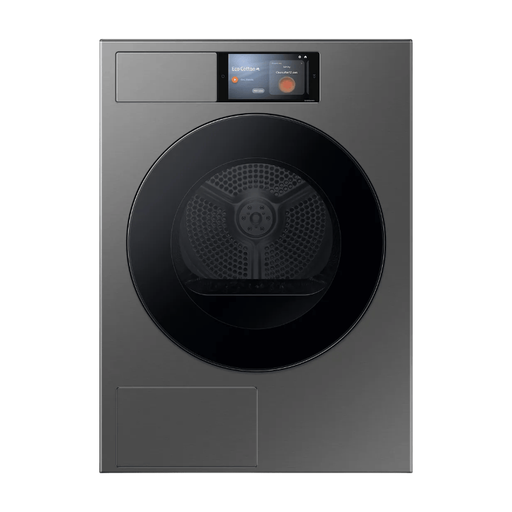
Samsung DV90F09F4SU3 heat pump tumble dryer, 9 kg, energy label A
An option to compare if you regularly dry larger cotton loads and want to take the stated noise level into account too.
The product details list a capacity of 9 kg, energy class A, condensation class B and 60 dB. Condensate is collected in a tank that needs to be emptied regularly; the filter must be cleaned after every cycle.
View product at Joybuy
 No image available
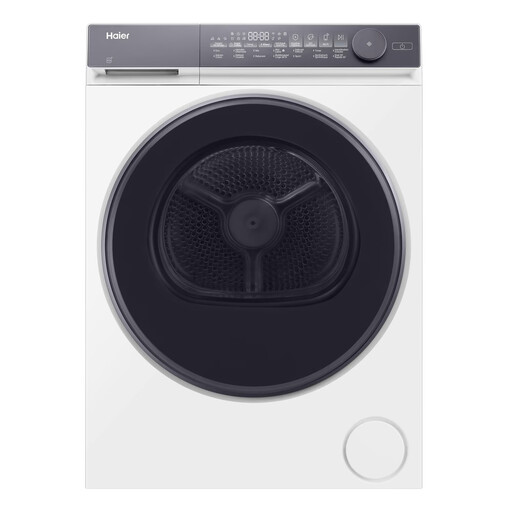
Haier HD80-C367U1-DF heat pump tumble dryer, 8 kg, energy label C
This 8kg option may suit you if you want to use a condensate drainage hose and compare the stated condensation efficiency.
The product details list energy class C, condensation efficiency of 91% and 62 dB(A). A drainage hose is included, and a programme duration of 190 minutes is also stated.
The product information specifies a well-ventilated room of at least 4 m² and an earthed socket; do not use an extension lead. The appliance contains the flammable refrigerant R290: do not damage the cooling circuit, and only have qualified technicians carry out work on it.
View product at Joybuy
 No image available
Bosch WQH246DPFG Serie 6 heat pump tumble dryer, 9 kg, NL/FR control panel
A 9kg model to compare if you dry larger cotton loads and are considering a fixed condensate drain.
The product details list energy class B, condensation efficiency of 91% and 59 dB(A). A reversible door and condensate drainage hose are also listed, as is a self-cleaning condenser.
The fluff filter must be cleaned after use. For continuous drainage, the hose must be connected correctly to a drain.
View product at Joybuy
 No image available
Bosch WQB245B40 Serie 8 heat pump tumble dryer, 9 kg, German-language control panel
Consider comparing this option if you dry larger cotton loads and want to take a self-cleaning condenser into account.
The product details list a 9 kg capacity, energy class B, a cotton programme and 61 dB. AutoDry and a self-cleaning condenser are also listed.
For continuous water drainage, the condensate hose must be connected to a drain; without this connection, the tank must be emptied after a cycle.
View product at Joybuy
 No image available
Sharp KDNHA8S6PWEBX heat pump tumble dryer, 8 kg, energy label E
An 8kg model to consider if you want to compare cotton programmes and automatic moisture detection.
The product details list energy class E and 64 dB(A). They also mention a sensor that monitors moisture levels and stops the programme when the laundry is dry.
The water tank must be emptied after use and the filter cleaned after every cycle.
View product at Joybuy
Frequently asked questions
Which energy-label figure tells me about moisture in a shared space?
Condensation efficiency indicates how much moisture from the laundry is collected rather than released into the room. Consumentenbond and Energielabel.nl list it as a point of comparison; also consider the ventilation in the space where the dryer will be installed.
Can condensate drain straight into a drain?
Many heat pump and condenser tumble dryers can drain condensate away, but you will need an accessible drain. Check the manual for your chosen model and whether the required hose is included; otherwise, agree who will empty the condensate tank.
What maintenance arrangements should people sharing a tumble dryer make?
Agree who will clean the fluff filter after every drying cycle. The Fire Service identifies accumulated dust as a fire risk; follow the manual for any other maintenance specific to the model.
Which energy-label scale has applied since the change?
Since 1 July 2025, the European Commission requires the revised A–G scale for tumble dryers to be displayed in shops and online. Separate rules may apply to existing stock, so do not compare old label ratings directly with the current scale.
Can I install a tumble dryer in a shared utility room myself?
Do not assume you are allowed to install a tumble dryer in a shared space. Check with the owner, landlord or building manager first, and make sure the required connections and installation space are available.


