
A dryer for large bedding
You want to know whether your largest item that’s suitable for tumble drying will have enough room, and which programme is designed for it. Check the programme load limit for each model.


Choose a dryer with a drum large enough for your biggest item that’s suitable for tumble drying, but also check the maximum load for the programme you plan to use. Siemens Home Netherlands recommends 8 or 9 kg for bedding; that general capacity doesn’t guarantee that every duvet will fit in a particular model or programme. For a shared space, also compare condensation, noise, ventilation and the option of draining away condensed water.
You want to know whether your largest item that’s suitable for tumble drying will have enough room, and which programme is designed for it. Check the programme load limit for each model.
You need to consider moisture, noise and space for a stable installation. If you share the machine, it’s also worth agreeing who will clean the filter and empty the condensate container.
If you dry clothes often, compare energy consumption using the same label basis and check how long the programme you plan to use takes.
Start by checking the size of your largest item of bedding and its care symbol. Then compare the features that matter in a shared space, such as moisture management, noise and programme information on the same energy label.
| Consideration | What to look for | Who should consider this? |
|---|---|---|
| Space and programme for bedding | Check the care symbol, the dimensions of your largest item, the overall capacity and the load limit for the programme you’ve chosen. | If I want to dry a large duvet, I need to know whether it can move freely and whether the fabric is suitable for tumble drying. Around 33% of consumers prioritise space and a suitable bedding programme. |
| Moisture and water drainage | Compare the condensation efficiency class and ventilation options, and check whether there’s a suitable outlet for draining condensed water. | In a poorly ventilated shared space, I want to avoid problems caused by damp air and check whether condensed water can be drained away easily. Around 27% of consumers say moisture management is their main concern. |
| Noise and installation | Compare the dB rating on the same label basis and check that the dryer can be installed securely and level. | If other people live close to the laundry room, I need to consider noise and vibration when choosing where to install the dryer. Around 20% of consumers focus mainly on noise and installation. |
| Energy consumption and programme duration | Compare kWh per 100 eco cycles and the eco programme duration on the same energy label. | If I dry clothes frequently, I want to compare the energy consumption on the label with the programme duration. That way, I’ll know how much energy the eco programme uses and how long the shared machine will be in use. Around 20% of consumers prioritise energy consumption and drying time. |
The kilogram figure doesn’t automatically tell you how much each individual programme can handle. A bulky item may therefore have a lower load limit than you’d expect based on the overall capacity.
Before buying, check the manual for the load limit of the programme you intend to use, and compare it with your largest item that’s suitable for tumble drying.
Condensation efficiency and ventilation matter too. A fixed drain for condensed water also requires a suitable outlet.
Check the condensation efficiency class, ventilation options and connection for condensed water together.
The energy label scale has changed. A letter on the old scale isn’t necessarily directly comparable with a letter on the current A–G label.
Compare appliances using the same label basis and check the energy consumption per 100 eco cycles.
The Dutch Fire Service advises cleaning the lint filter after every use. If there’s no drain connection, you’ll also need to empty the condensate container.
Agree who will take care of these tasks and follow the cleaning instructions for the specific model.
The TR97MUNCHEN we looked at has a capacity of 9 kg and a programme for duvets or down. This makes it a useful model to compare if you have larger loads of bedding.
According to the Consumers’ Association, the WQG133DBNL we looked at combines an 8 kg capacity and energy rating C with a programme for duvets (including down).
The Consumers’ Association lists the WQ33G2DCNL as an 8 kg heat pump dryer with energy rating C and a programme for duvets (including down).
According to Beko, the BM3T3823B we looked at is an 8 kg heat pump dryer with a drying sensor. The Consumers’ Association lists a programme for duvets (including down).
According to Miele, the TEH788WP is a 9 kg T1 heat pump dryer. It may be worth comparing if capacity and noise are important to you.
Compare these heat pump dryers by capacity and energy label when choosing a model for bedding and a shared laundry room. Check the suitable programmes and the load limit in the manual for each model.
 No image available
Its capacity makes this a model worth comparing for larger loads; check the programme load limit for your bedding.
Specifications: 9 kg; energy rating B.
 No image available
The capacity gives you a point of comparison for your bedding; check that the item you want to dry is within the programme load limit.
Specifications: 8 kg; energy rating C.
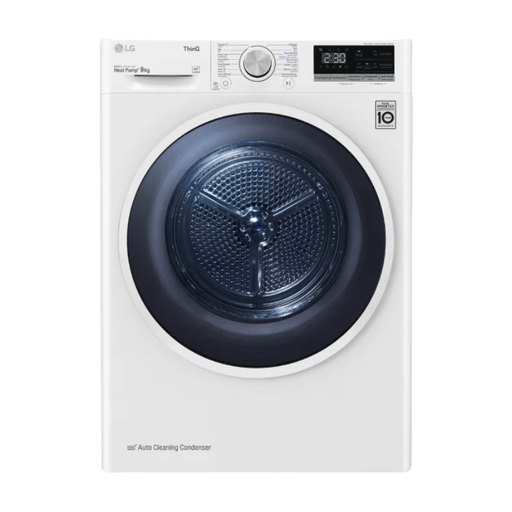 No image available
Its capacity makes this a model worth comparing with your largest load; check that the programme you plan to use is suitable and note its load limit.
Specification: 9 kg.
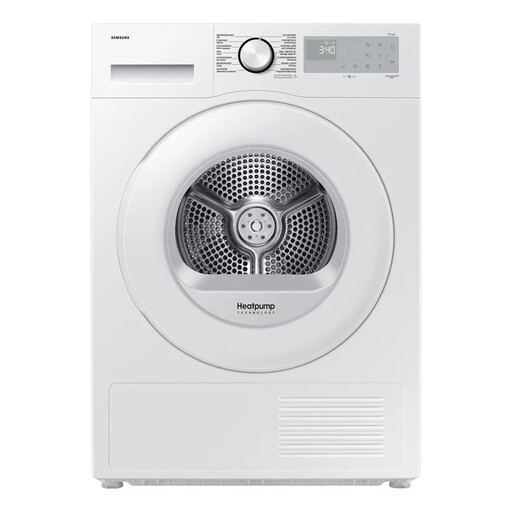 No image available
Its capacity may be a factor for larger loads, but it doesn’t on its own determine whether a duvet will fit in the programme you choose.
Specification: 9 kg.
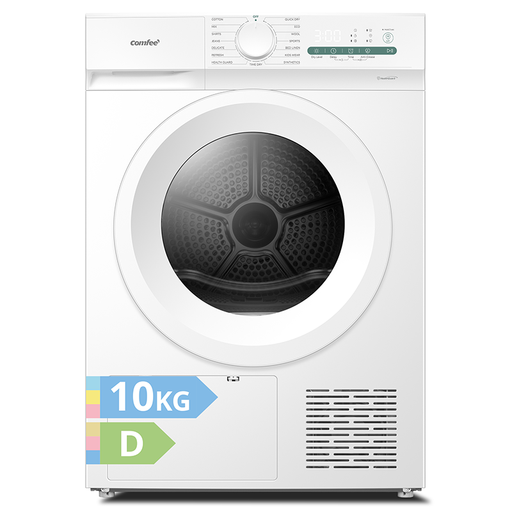 No image available
The stated capacity gives you a starting point for comparing larger loads; check the instructions for the fabric and the programme you’ve chosen.
Specifications: 10 kg; energy rating D.
No. The care symbol on the fabric tells you whether tumble drying is allowed; the dots in the tumble-drying symbol indicate the permitted heat setting. Also check the load limit for the programme you’ve chosen.
Follow the installation instructions, make sure the appliance is stable and level, and keep the air vents clear. Clean the lint filter after every drying cycle. If you share the dryer, agree who will do this and who will empty the condensate container. The Dutch Fire Service lists cleaning the filter after every use as a fire safety tip.
The general guidance from the Dutch Government doesn’t necessarily clarify the rules for a particular shared laundry room. It refers to smoke alarms on residential floors with a living room, bedroom or kitchen, and makes exceptions for an attic or basement used only for activities such as drying laundry. The stated requirement for homes doesn’t apply to communal areas such as stairwells or entrances. The Consumers’ Association also recommends fitting a smoke alarm in the laundry room.
Don’t compare an old A+++ label directly with a current rating on the A–G scale. The new scale has been in use since 1 July 2025. Check the relevant energy label and the consumption per 100 eco cycles. The European Commission states that ecodesign requirements apply to new machines placed on the market, not retrospectively to older stock already in shops.
According to the Dutch Government, the seller must provide a solution if a product is faulty. The Netherlands doesn’t have one fixed statutory warranty period for all products; a manufacturer’s or extended warranty is in addition to your right to a product that works as it should. When comparing extended warranties, check what extra rights and terms they offer.