
If you dry large bedding
If you regularly want to dry a large duvet cover or duvet, check both the care label and the dryer’s programme instructions. GINETEX explains that the dots in the tumble-drying symbol indicate the permitted drying treatment.


Start by choosing a dryer whose drum and programme instructions suit the bedding you want to dry. Capacity alone won’t tell you whether a large item can move freely inside. Then compare the space required, moisture control, current energy label information and maintenance needs, especially if your utility room has limited ventilation.
If you regularly want to dry a large duvet cover or duvet, check both the care label and the dryer’s programme instructions. GINETEX explains that the dots in the tumble-drying symbol indicate the permitted drying treatment.
Consider the available space, ventilation, condensed water and noise. The Consumers’ Association warns that damp air in a poorly ventilated laundry room can encourage mould growth.
If you use your dryer regularly, the current energy label, the programmes you choose and maintenance are all relevant points of comparison. Milieu Centraal highlights an 8 or 9 kg capacity as worth considering for larger households or more frequent drying.
Start with the size and care instructions for your bedding, then measure the space where the dryer will go. Moisture control needs extra attention in a utility room with limited ventilation; the Consumers’ Association warns that damp air can encourage mould.
| Buying concern | What should you look for? | Who is it most important to? |
|---|---|---|
| Drying large bedding | Check the fabric care label, the permitted load for the programme and whether the bedding can move freely in the drum. | If I regularly dry large items, I want to know whether the specific fabric will fit in the drum and suit the chosen programme. Around 31% of consumers prioritise being able to dry their bedding properly. |
| Moisture and positioning | Compare condensation efficiency, the dimensions and required clearance, and the options for draining condensed water. | In a small or poorly ventilated utility room, I consider space, moisture and noise before extra features. Around 25% of consumers give the dryer’s position in the utility room the highest priority. |
| Energy use with frequent drying | Compare kWh per 100 cycles using the same current label basis, and take the load and programme into account. | If the dryer runs often, I want to be able to assess its energy use on a like-for-like basis. Around 25% of consumers put ongoing energy use ahead of their other buying concerns. |
| Maintenance | Check how easy it is to access the filters and follow the model-specific cleaning instructions, even if the condenser is self-cleaning. | If you want to keep regular maintenance simple, check how accessible the filters are and what tasks are required. Around 19% of consumers give ease of maintenance the highest priority. |
A capacity in kilograms doesn’t tell you on its own whether a large duvet or duvet cover will have enough room to move or be suitable for the programme.
Check the fabric’s care label and the instructions for the specific dryer and programme you plan to use.
The European Commission requires domestic tumble dryers sold in shops and online to use the A–G scale from 1 July 2025. An older A+++ rating therefore isn’t directly comparable with a current A–G class.
Compare current label information on the same basis and check the accompanying product information sheet.
A self-cleaning condenser doesn’t remove the need to clean the lint filter separately.
Before buying, check how to access the filter and follow the cleaning instructions for the exact model. The Consumers’ Association recommends cleaning the lint filter after every drying cycle.
Clearance specified in the manual, door swing, ventilation and a possible route for draining condensed water can also affect where the dryer can be installed.
Measure the full installation space and check the model documentation for the required clearances and connection options.
The TR9HAMBURG is a 9 kg heat pump tumble dryer with a feature that AEG promotes for items such as duvets.
The WQG245D9NL is a 9 kg heat pump tumble dryer with a self-cleaning condenser.
According to LG, the RHX1009NWK is a 9 kg heat pump tumble dryer with Sensor Dry and a self-cleaning condenser.
The B3T6923M2 is a 9 kg heat pump tumble dryer with a drying sensor.
According to Miele, the TEH788WP is a 9 kg heat pump tumble dryer with a bedding programme.
This Joybuy selection features heat pump tumble dryers for drying bedding and installation in a utility room. Check the suitable load, installation space and current label information for each model.
 No image available
The product name lists a 9 kg capacity, making this an option to compare for larger loads. Check that the bedding and programme are a good match.
Heat pump tumble dryer; AutoDry; Sensitive Drying; energy class B according to the listing with German control panel.
The user instructions recommend filling the drum to around two-thirds for optimum drying results. Check the energy label and installation guidelines for your needs.
 No image available
The 8 kg capacity gives you a clear starting point for checking whether the dryer suits the size of your bedding and the programme load.
Heat pump tumble dryer; the product name lists class C, SmartHome and Sensor Drying.
Check the label basis and whether the selected programme is suitable for your specific fabric according to the manual.
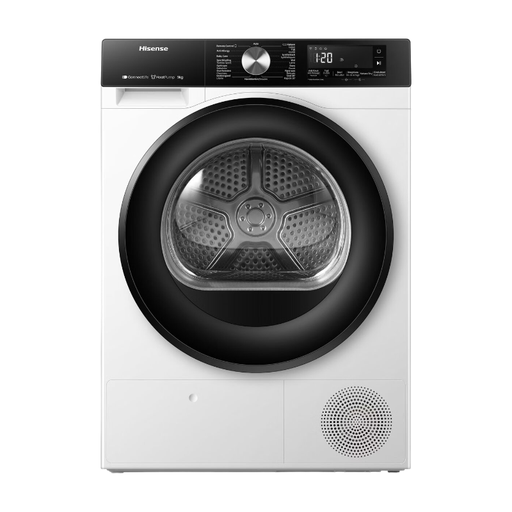 No image available
The product name lists a 9 kg capacity. For bedding, also check the programme load and the instructions for the fabric you’re drying.
Freestanding heat pump tumble dryer.
Before installation, compare the space required and check the model documentation for ventilation and condensed water requirements.
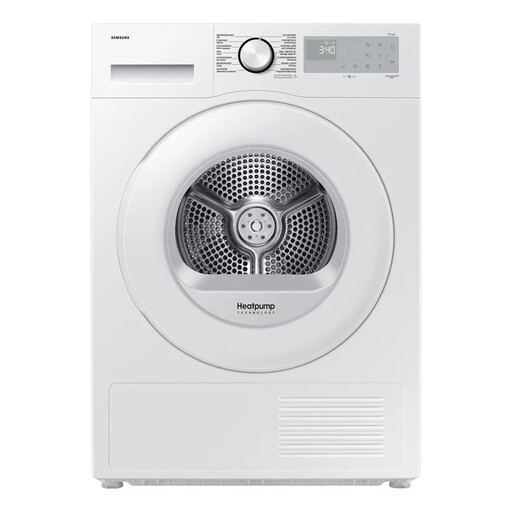 No image available
The listed 9 kg capacity is a point of comparison for larger loads. Follow the manual’s instructions for bedding and programme selection.
Freestanding heat pump tumble dryer; the product name lists the Optimal Dry System.
Check the model’s ventilation clearance and installation requirements before deciding where to put it.
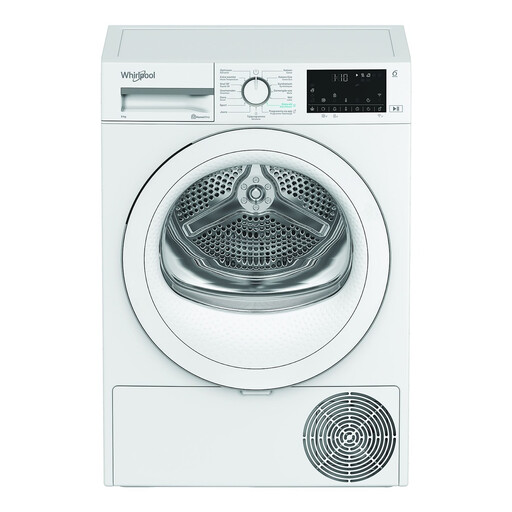 No image available
The product name lists a 9 kg capacity. Compare this with the dimensions and programme load required for your bedding.
Heat pump tumble dryer.
Check the model documentation for installation space, condensed water drainage and current energy label information.
No. Follow the fabric care label and the dryer’s programme instructions. The tumble-drying symbol shows which treatment is permitted; choosing a suitable machine programme won’t make fabric that isn’t suitable for tumble drying safe to dry that way.
Not always. With suitable condenser and heat pump tumble dryers, you can usually use the water tank. Many models can also be connected to a drain, provided you have a suitable outlet and the correct connection kit.
Follow the manual, leave the required space for heat to escape and clean the lint filter as instructed. The Consumers’ Association recommends cleaning the filter after every drying cycle.
No. According to the Dutch government, there is no fixed statutory guarantee period in the Netherlands. You’re entitled to a product that, with normal use, meets what you could reasonably expect. If there’s a fault, contact the seller; an additional manufacturer’s guarantee doesn’t replace this right.
According to the European Commission, domestic tumble dryers have used the A–G scale in retail listings since 1 July 2025. So don’t treat a product listing that shows only A+++ as a current A–G classification. If needed, ask for the valid label or product information sheet.