
Drying larger bedding items
You change your sheets and duvet covers and mainly need plenty of drum space and a suitable programme. The stated load capacity does not automatically mean that every duvet will fit.


Choose a tumble dryer that gives your largest tumble-dryer-safe items enough room to move within the permitted load, and check that the programme suits the care label. Then compare energy use on the current energy-label scale and consider how often you dry clothes. A larger capacity or extra programmes are no guarantee that every duvet will fit or dry evenly.
You change your sheets and duvet covers and mainly need plenty of drum space and a suitable programme. The stated load capacity does not automatically mean that every duvet will fit.
You want to choose a suitable drying cycle based on the care label, for example for a tumble-dryer-safe duvet or down item.
You expect to use the tumble dryer beyond seasonal changes, so you compare energy use alongside capacity and programmes.
First, check whether the care label allows your largest item to go in the tumble dryer and whether the load is suitable for the programme you want to use. Then compare energy use and the practical requirements for installation and maintenance.
| What to consider | What to look for | Who is this most important to? |
|---|---|---|
| Room for larger bedding | Compare your largest item with the drum and the programme’s maximum load. | If I dry large sheets or duvet covers, I want to know whether the load will fit the drum and the programme. Around 36% of consumers say space for larger bedding is their main buying concern. |
| Fabric care | Check the drying symbol and make sure there is a suitable programme with an appropriate load capacity. | If I dry down or other delicate bedding, I want to choose a suitable cycle based on the care label. Around 29% of consumers put fabric care first. |
| Energy use | Compare the current A–G label and energy use per cycle; the label is based on the eco programme. | If I use the tumble dryer regularly, I want to consider energy use alongside capacity and programmes. Around 21% of consumers say energy use is their main buying concern. |
| Installation and maintenance | Measure the available space and check the drainage, any required parts and filter maintenance. | If I need to fit a tumble dryer into my home, I want to know in advance how drainage and maintenance are handled. Around 14% of consumers put installation and maintenance first. |
Since 1 July 2025, the European Commission has used the revised A–G scale for household tumble dryers. So don’t compare an old A+++ rating directly with a current label class. The energy label is based on the eco programme; energy use may differ on other drying cycles.
The stated load capacity and whether an individual item is suitable answer different questions.
Check your largest item, its care label and the maximum load for the programme you want to use.
The European Commission revised the energy-label scale for tumble dryers on 1 July 2025. The old and new ratings are therefore not on the same scale.
Compare the current labels and energy-use information for the exact model.
Direct condensate drainage requires a suitable connection and an accessible drain point; you may also need an extra hose. Stacking also depends on the installation instructions and any required parts.
Check the dimensions, installation instructions and any accessories you may need before buying.
A condenser function does not replace filter cleaning. The Dutch Fire Service recommends cleaning the filter after every drying cycle and keeping electrical appliances free of dust.
Follow the manufacturer’s maintenance instructions and clean the filter after every drying cycle.
The WQG245D9NL is an example of a 9.0kg heat pump tumble dryer with a bedding programme.
The TR869T4C is a 9kg model worth considering if a programme for duvets or down is important to you.
The BM3T3824W is an 8kg heat pump tumble dryer to compare if that capacity suits your bedding.
The WR47B2C9NL is a 9kg model to compare if variable drum rotation and the stated noise level matter to you.
According to their product titles, these heat pump tumble dryers have a stated capacity of 8 or 9 kg. Use these figures as a point of comparison, not as a guarantee that every duvet will fit.
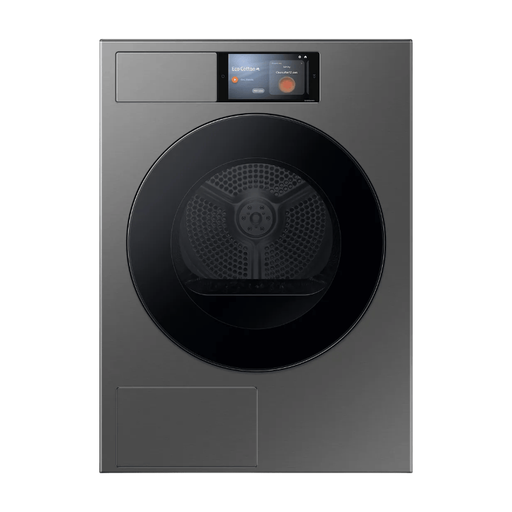 No image available
The stated 9 kg capacity is a useful point of comparison for a larger bedding load, but it does not guarantee that every duvet will fit.
Heat pump tumble dryer; stated capacity 9 kg; energy label A.
 No image available
This model is worth comparing if your bedding fits within the stated capacity; 8 kg is no guarantee that every duvet is suitable.
Heat pump tumble dryer; stated capacity 8 kg; energy label C.
 No image available
The stated 9 kg capacity is worth comparing for larger loads; check separately whether your bedding is suitable for the programme you want to use.
Heat pump tumble dryer; stated capacity 9 kg; energy label B.
 No image available
The stated capacity of 9 kg is a useful point of comparison for bedding; check the programme’s suitable load and the care label.
Heat pump tumble dryer; stated capacity 9 kg; energy label B; German control panel.
 No image available
Compare the stated capacity with your bedding and the programme’s permitted load; the stated capacity does not guarantee that every duvet will fit.
Heat pump tumble dryer; stated capacity 8 kg; energy label E.
No. First check the drying symbol and the care instructions for the duvet. Having a dedicated programme does not mean every item can be tumble-dried according to its care label or within the programme’s capacity.
Since 1 July 2025, household tumble dryers have used the revised A–G energy label, according to the European Commission. So don’t compare an old A+++ rating as if it were on the same scale.
Not if you use a model with a condensate tank and empty it as instructed in the manual. For direct drainage, check that the exact model supports it, whether a hose is needed and whether there is an accessible drain point.
Follow the manual’s cleaning and maintenance instructions. The Dutch Fire Service recommends cleaning the filter after every drying cycle and keeping electrical appliances free of dust.
Yes. According to the Dutch government, the old-for-new take-back scheme applies to private purchases of a new, similar appliance, including online purchases. The old appliance is taken back free of charge; it can be handed over on delivery or through an arrangement made by the seller.