Choose a capacity that suits the loads you usually dry: 8 kg may be enough for smaller loads, while 9 kg is worth considering if you often dry large loads of bedding that can go in the tumble dryer. Also check the load limits for your chosen programme, energy use per 100 eco cycles, drying time and maintenance requirements. A bedding programme doesn’t replace checking the care label.
Who is this choice relevant to?
If you often dry large loads of bedding
You regularly dry bedding that the care label says is suitable for tumble drying, and want enough capacity and a suitable programme. Milieu Centraal and Bosch Netherlands highlight capacity and care-label instructions as factors to consider.
If you alternate between large and small weekly loads
You want to weigh up capacity against energy use, drying time and the load limits for different programmes. Milieu Centraal identifies energy use as an important consideration when choosing.
If you have limited space for a tumble dryer
Your choice also depends on the space available, humidity control in your laundry room and whether you can drain away condensation. The Consumers’ Association highlights the importance of ventilation when installing a tumble dryer.
What should you look for when choosing?
8 kg heat pump tumble dryer
A good fit if: Your usual weekly laundry loads are fairly small and your bedding has enough room to move within the programme’s load limit.
The trade-off: A large load of bedding may be too bulky and might need to be dried in batches.
9 kg heat pump tumble dryer
A good fit if: You regularly have large loads suitable for tumble drying and the dimensions work for your space.
The trade-off: The stated capacity doesn’t mean every bedding programme can take a full load. Also compare energy use and drying time based on how you’ll use the dryer.
Washer-dryer
A good fit if: There isn’t room for two appliances and the drying capacity is sufficient for your bedding.
The trade-off: The maximum washing capacity isn’t necessarily the same as the drying capacity. The Consumers’ Association explains that washer-dryers have less room for drying and take longer to dry on average.
| What to consider |
What to check before buying |
Who should give this more weight |
| Drying bedding |
Check the care label, the programme’s load limit and whether there’s a suitable programme. |
If I regularly dry large items of bedding, I want to know whether they’ll fit in the drum and within the programme limits. Around 36% of consumers say bedding is their main concern when buying. |
| Energy use for weekly laundry |
Compare the current energy label and energy use per 100 eco cycles. Also check how the model handles smaller loads. |
When I alternate between different load sizes, I want to choose a capacity that suits my usual loads and compare energy use. Around 29% of consumers prioritise the right size and energy use. |
| Planning drying time |
Compare the stated eco programme duration, along with the conditions and maximum load for quick programmes. |
If I need to fit several loads into my weekly schedule, I want to know how long the programmes I’ll use take. Around 21% of consumers make drying speed their top priority when buying. |
| Installation and maintenance |
Measure the space and delivery route. Check the condensation efficiency class, drainage, filter access and installation instructions. |
In a cramped or poorly ventilated laundry room, I want to know in advance whether the dryer will fit and how condensation and filters are managed. Around 14% of consumers prioritise installation and maintenance. |
Common mistakes when choosing
-
Confusing washing and drying capacity
The maximum capacity of a washer-dryer may refer to washing; its drying capacity isn’t necessarily the same.
Compare the stated drying capacity separately with the load of bedding you want to dry.
-
Comparing an old A+++ label directly with a current A label
The energy label scale for tumble dryers was updated on 1 July 2025. According to the European Commission, an old A+++ rating isn’t the same class as an A on the new scale.
Compare current A–G labels and energy use per 100 eco cycles on a like-for-like basis.
-
Assuming the maximum capacity is the programme load limit
A quick programme may be intended for a small amount of lightweight or synthetic laundry. So a stated capacity of 9 kg doesn’t mean a single large load of bedding will fit in every programme.
Check the manual for the maximum load for your chosen programme and follow the fabric’s care label.
-
Assuming a self-cleaning condenser means no maintenance
A condenser-cleaning function doesn’t automatically take care of other parts of the appliance.
Follow the model’s maintenance instructions. The Fire Service advises cleaning fluff from the filter after every use.
Brands worth comparing
AEG
The TR9HAMBURG is a heat pump tumble dryer with a 9 kg capacity. AEG says its 3DScan technology can be used for items including duvets.
- The stated capacity may be worth considering if you regularly dry large loads.
- The duvet performance is a claim made by AEG, not an independently verified test result. Check the care label and the programme’s load limit.
Bosch
The WQG133DBNL has an 8 kg capacity, Auto Dry, a variable drum direction and a half-load option.
- These features are worth comparing if you alternate between large and smaller loads.
- According to the specifications, this model doesn’t have a self-cleaning condenser. The quick programme is intended for a small amount of lightweight or synthetic laundry, not a full load of bedding.
LG
The RT90X8 is a heat pump tumble dryer with a 9 kg capacity and Sensor Dry. LG describes a choice between faster drying and greater energy savings.
- The manufacturer’s description gives you features to compare with your preferred drying speed and energy use.
- This is LG’s description of the model, not an independent comparison of drying results. Check the programme and permitted load for the bedding you want to dry.
Samsung
The DV90DG52A0AEEN has a 9 kg capacity and a C energy rating. Samsung lists a reversible door and an anti-crease option.
- Capacity, door position and programme options are all worth comparing with other models.
- Treat any hygiene percentages as Samsung claims based on its own test conditions, not as a general result for every duvet.
Miele
The TSD643WP is a T1 heat pump tumble dryer with a 9 kg capacity, DirectSensor and DryCare 40.
- These model specifications are useful points of comparison if you have varying load sizes and programme requirements.
- The features alone don’t prove an advantage for every mixed load. Check the programme instructions for the bedding you want to dry.
Tumble dryers at Joybuy
These Joybuy products are heat pump tumble dryers with different capacities and features for varying load sizes and bedding that the care label says is suitable for tumble drying.
 No image available
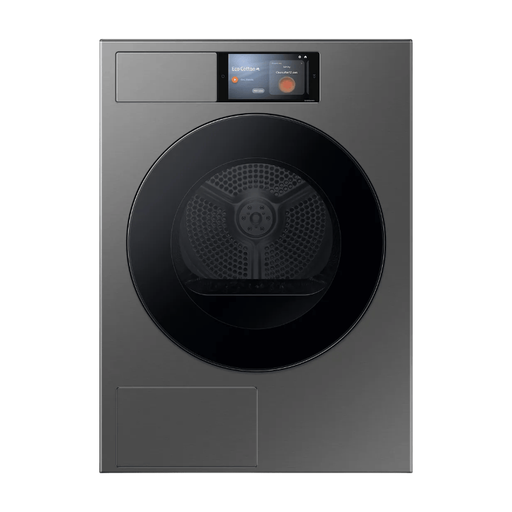
Samsung DV90F09F4SU3, 9 kg
The stated capacity and moisture sensing are worth considering if you alternate between large and small loads. Check the programme’s load limit for bedding.
AI Dry+ measures moisture, temperature and fabric type. The product description lists an energy label A rating.
View at Joybuy
 No image available
Bosch WQH246DPFG Serie 6, 9 kg
The stated capacity and automatic moisture sensing are worth considering if you alternate between larger and smaller loads. Check the programme’s load limit for bedding.
The product description lists AutoDry with continuous moisture sensing and a self-cleaning condenser. Energy label B.
View at Joybuy
 No image available
Bosch WQB245B40 Serie 8, 9 kg
The product description lists a Bed Linen programme. Check the permitted load and always follow the care label on your bedding.
AutoDry, a Mix programme and Sensitive Drying are listed. Energy label B; the product has a German control panel.
View at Joybuy
 No image available
Haier HD80-C367U1-DF, 8 kg
The capacity and adjustable dryness levels are worth considering for different load sizes. Check whether a load of bedding is within the programme limit.
The product description lists automatic sensor drying and three dryness levels. Energy label C.
View at Joybuy
 No image available
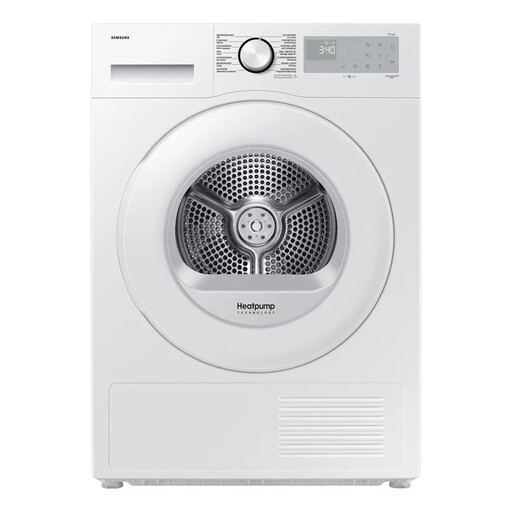
Samsung DV9UDG52A0THEN, 9 kg
The stated capacity and Optimal Dry system are worth considering for varying load sizes. Check the programme’s load limit for bedding.
The product description lists Optimal Dry and an energy label C rating.
View at Joybuy
Frequently asked questions
Can any duvet go in the tumble dryer on a bedding programme?
No. First check the drying symbol and follow any restrictions on temperature or programme. Also check the maximum load for the drying programme you choose.
What should I consider when installing a tumble dryer in a small laundry room?
Measure the space and delivery route, and check access through the door, drainage options and condensation efficiency class. According to the Consumers’ Association, a tumble dryer with lower condensation efficiency can make a poorly ventilated room damp.
Which energy label should I compare?
Compare the current A–G energy label for tumble dryers. The European Commission says the new scale has applied since 1 July 2025; an old A+++ rating isn’t the same class as an A on the new scale.
What does the energy label tell me about my electricity costs?
The label includes information such as energy use per 100 drying cycles on the eco programme. This gives you a basis for comparison, not a bill for the specific bedding programme you use; actual energy use also depends on how you use the dryer.
How can I keep my tumble dryer safe and in good working order?
The Fire Service advises cleaning fluff from the filter after every use. Follow your model’s manual for the reservoir, condenser and other cleaning tasks.


