
Photographing tulips from a distance
You want to fill the frame with a single tulip or a small part of a flower bed from where you’re standing, so you mainly need a suitable telephoto angle of view.


If you want to fill the frame with a tulip from a distance, choose a suitable telephoto focal length. For the flexibility to switch between a tight crop and a wider view, a bridge camera with a fixed zoom is handy, while a mirrorless camera lets you change lenses later. The angle of view depends on focal length and sensor size, as Sony Netherlands explains. Also check the close-focus distance, the weight and whether the telephoto lens is actually included in the kit.
You want to fill the frame with a single tulip or a small part of a flower bed from where you’re standing, so you mainly need a suitable telephoto angle of view.
You want to photograph petals or the centre of a flower up close. Close-focus distance and magnification matter more to you than maximum reach for distant subjects.
You want to capture both a tightly framed flower and a wider view on the same walk, so you’re considering the overall zoom range, the included lens and what you’ll need to carry.
Choose this if: you mainly want to frame individual tulips from a distance and would like the option to change lenses later.
Keep in mind: the telephoto lens needs to be included in the kit; Canon lists a maximum magnification of 0.28× for the RF-S 55–210 mm reviewed here.
Choose this if: you want to switch between a wider view and a tighter flower shot on a walk without changing lenses.
Keep in mind: the lens is fixed, so check that its range suits your shooting distance and desired framing.
Choose this if: you photograph flowers or other subjects from a great distance and genuinely need an extra-narrow angle of view.
Keep in mind: maximum reach isn’t always necessary in a tulip garden; Nikon lists the COOLPIX P1100 as weighing around 1.4 kg.
Start with the distance to the flowers and the framing you want. Then compare the angle of view, how well the camera handles close-ups and what you’ll be carrying on your walk.
| Consideration | What should you look for? | Who is this important to? |
|---|---|---|
| A tight frame from where you’re standing | Compare focal lengths on the same full-frame-equivalent basis and check that the required telephoto lens is included in the kit. | I want to make a distant flower appear larger in the frame without walking closer. That’s why around 36% of consumers prioritise a narrow angle of view. |
| Close-up flower details | Check the minimum focusing distance and maximum magnification at the zoom setting you want to use. | When I’m photographing petals or the centre of a flower up close, I want to know whether the camera can focus at that distance. Around 29% of consumers prioritise close focusing and magnification. |
| Switching between a flower and a flower bed | Compare the wide-angle and telephoto ends on the same equivalent scale and check whether the lens is fixed or interchangeable. | I want to capture both a wider view and an isolated flower on the same walk. Around 21% of consumers mainly choose a camera for this flexibility in framing. |
| Portability on a walk | Compare weights on the same basis, preferably including the battery and memory card; include the lens when considering a mirrorless camera. | If I’m carrying the camera for the whole walk, portability matters more to me than maximum reach. Around 14% of consumers prioritise portability. |
An extremely narrow angle of view is harder to aim, and a wide zoom range alone doesn’t guarantee better image quality. The Consumers’ Association also points out that cameras with a high zoom range can have smaller sensors.
Start with your shooting distance and the framing you want. Then compare the optical range and sensor on a suitable, consistent basis.
The Canon EOS R50 kit reviewed here includes the RF-S 55–210 mm, but that doesn’t automatically apply to every EOS R50 offer.
Check the exact contents of the box and the lens mount before you buy.
If your chosen kit doesn’t include a suitable telephoto lens, you may need to buy a compatible lens separately.
A lens with a long range isn’t automatically suitable for sharply capturing a flower up close.
Check the minimum focusing distance and maximum magnification at the zoom setting you want to use. A stated macro mode doesn’t automatically mean 1:1 macro.
The EOS R50 kit reviewed here is worth considering if you want to use a telephoto zoom and have the option to change lenses later.
The RX10 V reviewed here has a fixed zoom lens for anyone who wants to vary their framing without changing lenses.
The COOLPIX P1100 reviewed here is an option when subjects at a great distance call for an exceptionally narrow angle of view.
The LUMIX FZ82D reviewed here combines wide-angle and telephoto views in one fixed lens.
These Joybuy cameras mention zoom in the product name. Check that the range and lens set-up suit the distance to the tulips and the framing you want.
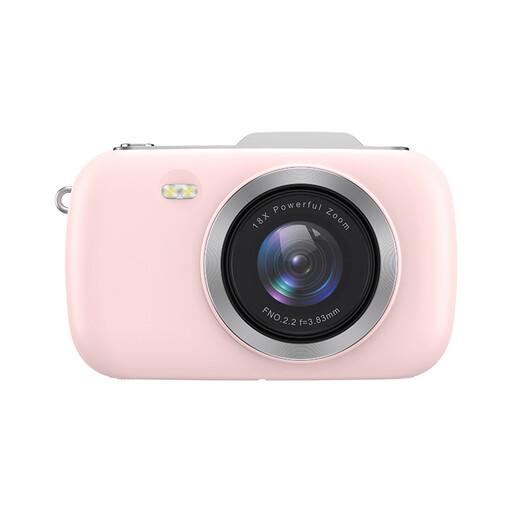 No image available
The stated zoom gives you a way to adjust the framing; check that the range suits the distance to the flowers.
The product name lists 18× zoom.
 No image available
The stated optical zoom is useful if you want to adjust the framing from where you’re standing; check whether the range suits your shooting distance.
The product name lists 12× optical zoom, 4K and 64 MP.
 No image available
The stated optical zoom can help you adjust the framing; compare its range with the distance from which you’ll be photographing the tulips.
The product name lists 8× optical zoom, 5K and 64 MP.
 No image available
The stated optical zoom is useful if you want a tighter frame from where you’re standing; check that its range suits your shooting distance.
The product name lists 10× optical zoom, 5K and 56 MP.
 No image available
The kit includes a zoom lens for adjusting the framing; check that its range suits the distance to the flowers.
The product name lists a 16–50 mm lens.
No. With a camera that has interchangeable lenses, choosing a suitable, compatible telephoto lens can make all the difference. First check your camera’s lens mount; on a bridge camera, the lens is fixed.
Check the minimum focusing distance at the zoom setting you want to use. For the Canon RF-S 55–210 mm, Canon lists 0.73 m and a maximum magnification of 0.28× at 210 mm; figures may differ for another lens or zoom setting.
For a consumer purchase in the Netherlands, you’re entitled to a product that meets the required standards, and the retailer must provide a solution if something goes wrong, according to the Dutch government. A manufacturer’s guarantee is in addition to your statutory rights. For eligible online distance purchases, you’ll generally also have a 14-day cooling-off period.
Not necessarily. According to the Dutch Data Protection Authority, personal use is exempt when you keep photos private or share them only with a very limited group. Sharing identifiable people more widely or for business purposes requires a lawful basis under the GDPR; the regulator says consent is often the appropriate basis.
No. Keukenhof lists 18 March to 9 May 2027 as its next open season. This doesn’t tell you the opening dates of other tulip gardens.