What should you look for when buying?
Choose a lens and controls to suit your subject: whole flower beds call for a different angle of view from tiny flower details, while movement means you’ll need control over shutter speed.
| Buying consideration |
What to look for |
Who this matters to |
| Sharpness when flowers are moving |
Control over shutter speed, aperture and ISO; assess stabilisation separately from movement in the tulip. |
If tulips are moving in a breeze, I want to be able to adjust for sharpness without confusing stabilisation with keeping the subject still. Around 33% of consumers prioritise control over motion blur. |
| Close-ups and flower details |
Compare maximum magnification, minimum focusing distance and compatibility with the lens mount. |
If I want to capture stamens, petals or droplets up close, the lens needs to focus at a short distance. Around 25% of consumers prioritise magnification and precise focusing. |
| Garden views |
Check the focal length range of the exact lens and the exposure and white balance settings. |
For rows of tulips and the shape of the flower bed, I want a suitably wide frame and control over brightness. Around 25% of consumers prioritise this kind of garden view. |
| Portability and protection |
Check the weight of the camera body with the lens attached and, if rain is a concern, the weather protection of both the body and lens. |
If I’m walking around the garden for a while, I want my kit to be comfortable to carry. If rain is possible, I also want to check the protection offered by the complete setup. Around 17% of consumers prioritise portability. |
Cameras at Joybuy
This Joybuy selection includes Osmo Pocket, Insta360 X6 and DJI Osmo 360 models. Features vary by camera, so check that the angle of view and shooting style suit the tulip photos you want to take.
 No image available
Osmo Pocket 4P Standard Combo, Black
The stated 20mm lens may be a useful starting point when assessing the frame for a garden view.
The lens is specified as 20mm f/2.0. The description lists 4K/240fps only for slow-motion mode.
Joybuy
 No image available
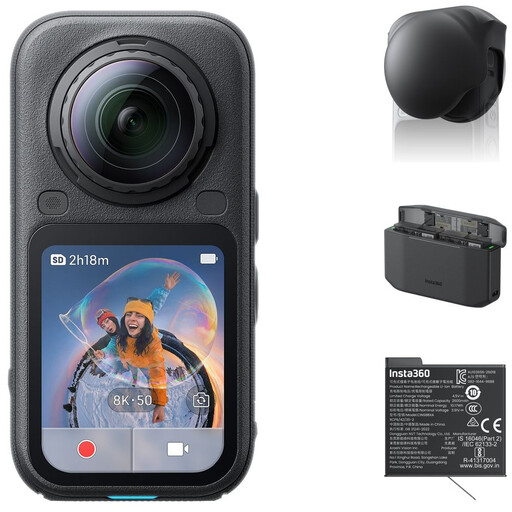
Insta360 X6 All-in-One Bundle
The stated 360° capture gives you the option to record a panoramic view. Check whether that suits the kind of garden image you want to create.
The description lists 8K/50fps 360° video and 5K/60fps with a 170° angle of view. These are video specifications, not stated specifications for still tulip photos.
The bundle includes a Lens Cap, Xtreme Battery and Fast Charge Case.
Joybuy
 No image available
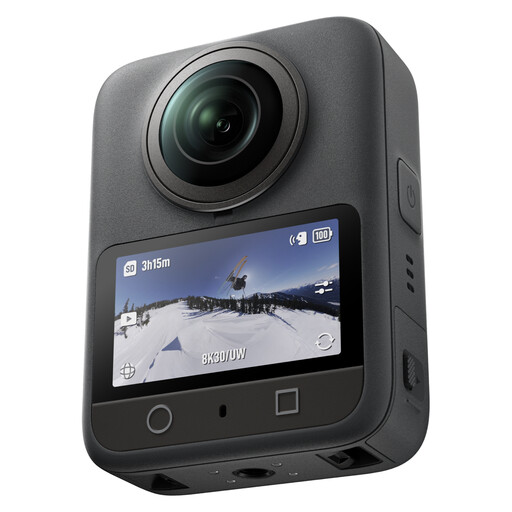
DJI Osmo 360 Standard Combo
If you’re considering a panoramic garden view, the product description lists 120MP 360° photos.
The description also lists 8K/30fps 360° video.
Joybuy
 No image available
DJI Osmo Pocket 4 Standard Combo
The stated 3-axis stabilisation is useful if you’re shooting handheld, but it won’t stop a tulip from moving.
The title lists a 1-inch CMOS sensor, 2× lossless zoom and a 2-inch rotating screen. The description lists 4K/240fps only for slow motion.
Joybuy
 No image available
DJI Osmo Pocket 3
The description mentions still images and fast focusing; check that the shooting style suits your flower photos.
The product information lists a 1-inch CMOS sensor, fast focusing, 10-bit colour, a rotating screen and 3-axis stabilisation.
Joybuy
Frequently asked questions
Is image stabilisation enough to photograph tulips sharply in the wind?
No, image stabilisation won’t stop a moving tulip from appearing blurred. Check the shutter speed, too. With close-ups, even small movements can affect focus, as Nikon explains.
How should I set up a camera for tulips under an overcast sky?
First, assess the exposure of both the flowers and the sky. Then choose an aperture and shutter speed to suit your desired depth of field and any movement. Canon explains that a wider aperture reduces depth of field; Nikon notes that shooting in RAW gives you the option to adjust white balance afterwards. There isn’t one setting that works for every scene.
What should I check when choosing a macro lens?
Check the lens mount, maximum magnification and minimum focusing distance. A lens labelled macro doesn’t necessarily offer 1:1 magnification: Canon lists a maximum of 0.5× for the RF 35mm F1.8 MACRO IS STM.
What are my rights when buying a camera online in the Netherlands?
According to ACM ConsuWijzer, online purchases generally come with a statutory cooling-off period of up to 14 days after delivery, with some exceptions. The statutory guarantee is separate from any manufacturer’s warranty. If a product is faulty, the retailer is your point of contact.
Can I share identifiable visitors in a tulip garden online?
First consider how and why you’re sharing the photo. The Dutch Data Protection Authority distinguishes between private use within a limited circle and wider public or commercial sharing; identifiable people may count as personal data.


