A compact camera with a fixed zoom lens keeps your kit simple. A mirrorless camera lets you choose a different lens later for close-up flower details. With either type, check the focusing distance at the zoom setting you want to use, the reach from where you’ll be standing and the weight of the complete kit. Stabilisation helps reduce camera shake, but it won’t freeze tulips moving in the wind.
Who is this choice relevant to?
Walkers framing garden scenes
You want to capture both a flower bed and a larger group of flowers on a walk, without changing lenses. The Dutch Consumers’ Association highlights subject matter, size, controls and zoom range as factors to consider when choosing a camera.
Photographers looking to capture flower details
You want to fill the frame with a single tulip or a small detail, so you’re looking at the focusing distance and magnification of the specific lens. Canon and Nikon publish these details for the kit lenses mentioned here.
Photographers looking for a lightweight kit
You take photos handheld for extended periods and weigh up the combined weight of the camera and lens against the stabilisation available. Fujifilm, Canon and Nikon describe the stabilisation in the cameras and lenses mentioned here; shutter speed also matters when photographing moving flowers.
What should you look for?
Compact camera with a fixed zoom lens
Choose this option if: you want to switch quickly between a garden scene and flowers further away from one spot during a walk. Sony lists a 24–200 mm full-frame equivalent range for the RX100 VII; Panasonic gives 24–720 mm for the TZ99.
Bear in mind: the lens is fixed. For the RX100 VII, Sony lists a focusing distance of around 8 cm at the wide-angle end and around 100 cm at the telephoto end.
Mirrorless camera with a stabilised kit zoom
Choose this option if: you mainly take garden scenes and wider flower shots, but want the option to fit a different lens later. The kits mentioned pair the Canon EOS R50 with an RF-S 18–45mm IS STM and the Nikon Z50II with a Z DX 16–50mm VR.
Bear in mind: in these examples, stabilisation is in the lens; Canon does not list sensor-shift stabilisation for the EOS R50. A kit zoom isn’t automatically suitable for very small details.
Mirrorless camera with in-body stabilisation
Choose this option if: you want to pair a body with built-in stabilisation with a lens that suits your composition and focusing distance. Fujifilm lists five-axis IBIS for the X-S20 and also offers a kit with the XC15–45mm OIS PZ.
Bear in mind: Fujifilm claims up to 7.0 stops of stabilisation, but that doesn’t guarantee a sharp photo of a moving flower. Consider the combined weight of the lens and camera body too.
Start with the photos you’re most likely to take: range, focusing, carrying weight and subject movement each place different demands on your camera.
| What to consider |
What to look for when buying |
Who should give this extra thought? |
| Wide views and flexible framing |
Compare the full-frame equivalent zoom range and the focusing distance at the zoom setting you want to use. Panasonic lists 24–720 mm equivalent for the TZ99; Sony gives 24–200 mm for the RX100 VII. |
If you want to frame both the flower bed and an individual flower on one walk, look at the range and focusing distance at that zoom setting. Around 31% of consumers prioritise flexible framing. |
| Focusing on a single tulip |
Check the focusing distance and magnification of the specific lens, including the mode the manufacturer uses for its measurements. Canon lists 0.25× magnification for the RF-S 18–45mm when using manual focus. |
If you want to capture small flower details, check how close your lens can focus at the setting you want to use. Around 31% of consumers prioritise flower details. |
| Taking photos handheld for extended periods |
Compare the combined weight of the camera body and lens, and check whether stabilisation is in the lens or the body. For moving flowers, choose an appropriate shutter speed too; stabilisation won’t freeze the subject. |
If you’re walking for a long time, you’ll want a manageable kit and less camera shake from your own movement. Around 23% of consumers prioritise lightweight, stable handheld shooting. |
| Flowers further away |
Check the telephoto range and the focusing distance at the telephoto end. Panasonic lists 24–720 mm equivalent for the TZ99; Sony gives around 100 cm from the front of the lens at the telephoto end for the RX100 VII. |
If you can’t get closer to a flower, you’ll want to frame it from where you’re standing without overlooking the focusing distance at the telephoto end. Around 15% of consumers prioritise reach for flowers at a distance. |
Common buying mistakes
-
Confusing stabilisation with freezing a flower in place
Lens or in-body stabilisation helps reduce camera shake, but a tulip moving in the wind can still end up blurred.
Consider the shutter speed needed for moving flowers, and don’t buy based only on the stated number of stabilisation stops. Canon describes shutter speed as one of the settings that can capture movement.
-
Assuming maximum zoom is also the best setting for close-ups
The stated focusing distance for the Sony RX100 VII varies between wide-angle and telephoto. A long zoom range doesn’t automatically mean you can focus close up at the telephoto end.
Check the focusing distance at the exact zoom setting you plan to use for the flower.
-
Treating a camera body, kit and extra lens as the same purchase
The angle of view and close-focusing capabilities depend in part on the lens supplied with the kit. A body without a lens won’t give you that angle of view by itself.
Compare the full model and kit name, and check that the included lens suits the photos you most want to take.
Camera brands to consider
Canon
The EOS R50 kit with the RF-S 18–45mm IS STM is an interchangeable-lens option for garden scenes and wider flower shots.
- Canon lists optical stabilisation and 0.25× magnification when using manual focus for the kit lens.
- Canon says the EOS R50 does not have sensor-shift stabilisation. These details apply to this camera and lens combination.
Nikon
The Z50II kit with the Z DX 16–50mm VR is a mirrorless camera kit with a retractable standard zoom lens.
- Nikon lists stabilisation in the lens, a minimum focusing distance of 0.2 m and a lens weight of 135 g.
- Check whether this lens offers enough magnification for the small flower details you want to photograph.
Sony
The RX100 VII is a compact camera with a fixed zoom lens for anyone who doesn’t want to change lenses.
- Sony lists a full-frame equivalent range of 24–200 mm.
- Sony gives a focusing distance of around 8 cm at the wide-angle end and around 100 cm at the telephoto end, measured from the front of the lens. So check how close you can focus at the zoom setting you want to use.
Panasonic
The LUMIX DC-TZ99 is a compact camera with a fixed zoom lens for anyone looking for a wide optical range from one spot.
- Panasonic lists 30× optical zoom, equivalent to 24–720 mm.
- Zoom range alone doesn’t tell you how close you can focus at the telephoto end. Check the focusing distance for the composition you have in mind.
Fujifilm
The X-S20 is a mirrorless camera with in-body stabilisation; a kit with the XC15–45mm OIS PZ is also available.
- Fujifilm lists five-axis IBIS up to 7.0 stops and a camera body weight of 491 g.
- The stated number of stops doesn’t guarantee a sharp photo of moving flowers. Remember to include the lens when considering the weight.
Cameras at Joybuy
This selection of Joybuy products includes cameras for handheld photography, including compact models and a mirrorless camera kit.
 No image available
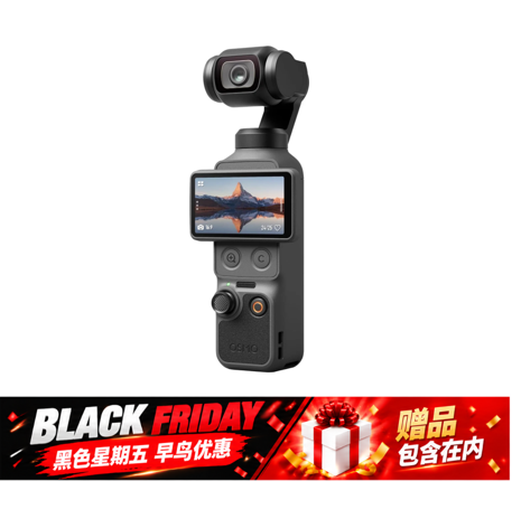
DJI Osmo Pocket 4 Standard Combo
This handheld camera may suit anyone looking for a compact setup. For flower details, check the focusing distance and make sure a fixed camera setup suits the way you plan to use it.
The product title lists 3-axis stabilisation, 2× lossless zoom, a 1-inch CMOS sensor and 107 GB of built-in storage. These are product listings, not independent test results.
View at Joybuy
 No image available
KOMERY G7-A 4K Digital Camera, pink
This model may suit anyone looking for a portable point-and-shoot camera. Before taking close-ups of flowers, check the focusing distance and type of zoom.
The product title lists 18× zoom, 80MP and 4K video. The type of zoom and close-up capabilities are important things to check for your intended use.
View at Joybuy
 No image available
KOMERY G7 5K Digital Camera, white
This portable point-and-shoot model may suit anyone looking for a compact camera to take on a walk. Check its close-up capabilities for your tulip photos.
The product title lists 18× zoom, 80MP and 5K video. Check which type of zoom is meant and how close the camera can focus at the setting you want to use.
View at Joybuy
 No image available
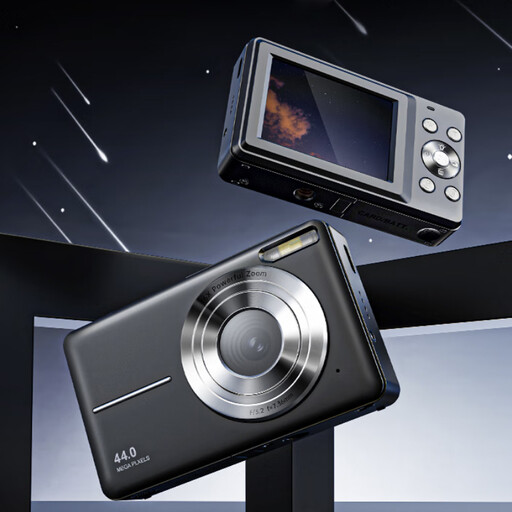
Songdian Pocket Camera, black
This pocket camera may suit anyone looking for a small model to take on a walk. Digital zoom is not the same as optical zoom range.
The description lists 16× digital zoom, autofocus and video up to 1920×1080P. A microSD card is not included.
View at Joybuy
 No image available
Sony ZV-E10 with 16–50mm zoom lens, black
This kit may suit anyone looking for a mirrorless camera with an interchangeable lens for varied compositions. Check whether the kit lens can focus close enough for flower details.
The description lists a 24.2 MP APS-C sensor and a 16–50mm lens with OSS. An SD card and adapter/charger are not included.
View at Joybuy
Frequently asked questions
Does image stabilisation help when a tulip is moving in the wind?
Stabilisation is designed to reduce camera shake, not to freeze a moving flower. Consider the shutter speed too, and wait for a calmer moment if needed; the stated number of stabilisation stops doesn’t guarantee a sharp subject.
Do I need a macro lens straight away to capture a flower detail?
Not for every shot; first check what the supplied lens can do. Canon lists 0.25× magnification for the RF-S 18–45mm when using manual focus, while Nikon gives a minimum focusing distance of 0.2 m for the Z DX 16–50mm. These are different specifications, not directly comparable magnification measurements.
Is a camera with a long zoom range suitable for close-ups?
Not necessarily: zoom range and focusing distance answer different questions. For the Sony RX100 VII, Sony gives around 8 cm at the wide-angle end and around 100 cm at the telephoto end, measured from the front of the lens. So check the distance at the setting you want to use for the flower.
Who is responsible if a camera bought online turns out to be faulty?
According to the Netherlands Authority for Consumers & Markets, the seller is responsible for the legal guarantee. Depending on the circumstances, an appropriate solution might include a free repair or replacement; a manufacturer’s warranty does not replace your statutory rights.
Do I have a cooling-off period when I buy online?
For distance selling, the Netherlands Authority for Consumers & Markets says you usually have a statutory cooling-off period of up to 14 days after delivery, subject to legal exceptions. Check the returns information provided with your purchase.


