
Vandaag of morgen in huis

Kwaliteit gegarandeerd

Welkomstaanbiedingen ontgrendelen: GRATIS bezorging | Tot 80% korting | Gratis 30 dagen JoyPlus-proefperiode
Download de app
Solar garden lighting seems simple: place the panel in the sun and enjoy cable-free light in the evening. In practice, some models can disappoint. A small solar panel, awkward positioning or a low protection rating can mean the lights go out quickly in cloudy weather or aren’t suitable for an exposed garden.
Use these buying tips to compare outdoor solar lights using verifiable specifications. This will help you find the right solar outdoor lighting for ambience, paths, flower beds, a balcony or festive decorations.
Brands often state the maximum run time after a full charge. According to the product descriptions for various models, this depends on direct sunlight, the angle of the panel, temperature and the light setting selected. In autumn and winter in the UK, output can therefore be lower than on a sunny summer’s day.
So don’t just look for a claim such as “up to 10 or 12 hours”. Also check:
Water-resistant garden lights should have a clear IP rating. IP44 protects against splashing water and is best suited to sheltered spots, such as a balcony, pergola or covered area. IP65 protects against dust and water jets, and is generally more suitable for an exposed garden. IP67 offers a higher level of protection, but always check the full product instructions and don’t leave connections in water for extended periods.
A higher IP rating doesn’t automatically mean the light is brighter or will last longer. The rating mainly indicates protection against dust and moisture.
Eight or thirteen settings might sound appealing, but for a garden path you’ll usually want a steady, constant light. Flashing settings are better suited to solar string lights, solar Christmas lights or a festive seating area.
Also check whether the light remembers your chosen setting. A memory function, timer and automatic light sensor make everyday use easier. Check the length, distance between LEDs and number of light points, too. A 5-metre string with 20 bulbs creates a different effect from a 10-metre string with 400 small LEDs.
Warm white light around 2700–3000 K creates a soft ambience for a patio or garden. Cool white is more functional, but can look harsher. RGB lighting cycles through different colours, making it handy for special occasions, but not necessarily for permanent path lighting.
The number of LEDs doesn’t tell you everything about brightness. A product with 20 larger bulbs might create more ambience than a delicate string with lots of small LEDs. For functional lighting, lumens, coverage and light distribution matter more than the LED count alone.
Place the solar panel somewhere that gets as much direct daylight as possible. Shade from a fence, tree or roof will increase charging time. Wipe the panel with a soft cloth if dust or grime builds up. If the product instructions say to do so, set the switch to “on” before first use.
A separate panel with a ground stake gives you more flexibility than one attached directly to the light. A compact model may be more practical for a balcony, while a longer connecting cable is useful for a deep garden.
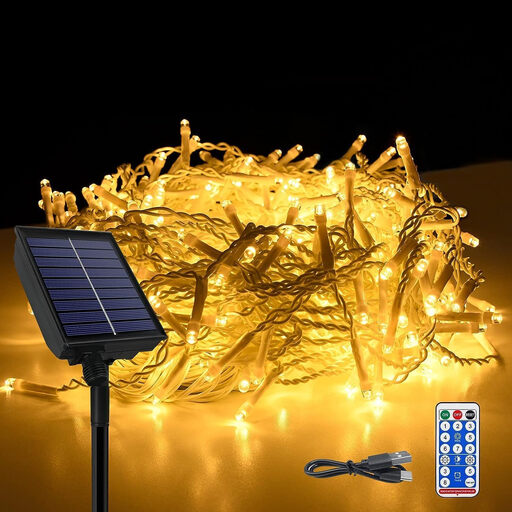
Why it suits this type of buyer: The length is a good fit for a balcony, small garden or fence. The product description states that it has eight light settings, a timer and a memory function.
The product information states that it has an IP44 rating and advises avoiding heavy rain and snow. This makes its limitations clearer than a general claim that it’s waterproof.
5-metre length, 200 warm white LEDs, eight light modes and a timer for 3, 5 or 8 hours.
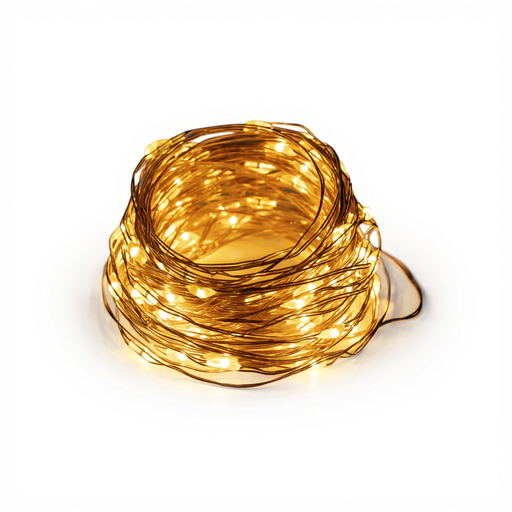
Why it suits this type of buyer: This model combines a copper-wire design with a stated IP65 rating and an adjustable solar panel. It’s well suited to decorating a garden or patio, or adding a festive touch to an outdoor gathering.
The specifications state a charging time of 4–6 hours, a 1200 mAh battery and a run time of up to 12 hours. This information helps you set more realistic expectations.
10 metres, 160 LEDs, IP65 rating, day/night sensor and an adjustable panel.
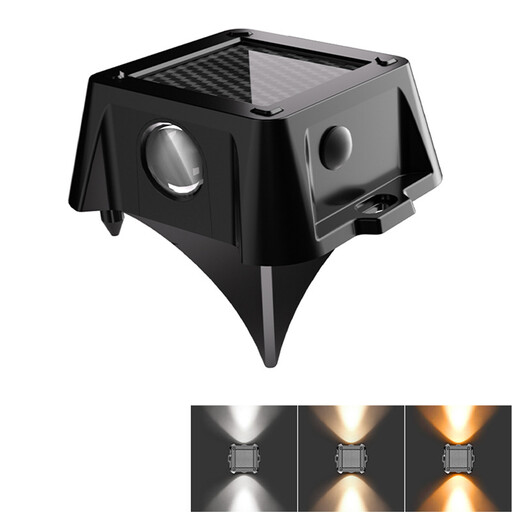
Why it suits this type of buyer: The product description states that this model is designed for paths, steps and driveways, and has an IP67 rating. The light can be set into the ground or screwed into place.
The description states that, according to the seller, the casing can withstand pressure of up to 3 tonnes. Before installation, still check the surface, mounting method and local instructions.
IP67 rating, two mounting options, three light colours and a stated run time of up to 10 hours.
We’ve put together a complete, up-to-date list of products that meet these strict selection criteria and the applicable European safety regulations.
Place the solar panel somewhere that gets several hours of direct sunlight, away from shade cast by walls, trees and parasols. Position the panel according to the product instructions. If the panel is separate, you can place the light itself in a shadier part of the garden, as long as the panel gets plenty of sun.
Their lifespan depends on the battery, LED module, casing, temperature and maintenance. The battery usually wears out before the LEDs. Check whether it can be replaced, and store decorative lights during prolonged frost or storms if the manufacturer recommends it. An IP rating helps protect against moisture, but won’t prevent wear caused by UV exposure or physical impact.
During normal use, energy is stored by the solar panel during the day. This means the light doesn’t need to be connected to the mains. Models with USB charging can use electricity from a socket if you use this feature. Other potential costs include the initial purchase, replacing the battery and maintenance.
