What should you look for when choosing?
For truffle photography, your choice mainly depends on the level of detail, colour consistency and how easily you can recreate the same set-up.
| What to consider |
What should you look for? |
Who is this important for? |
| Small details |
Compare the lens’s maximum magnification and the working space available for your lighting. Canon Netherlands lists a maximum of 0.26× at 45 mm with manual focus for the RF-S 18-45mm; Nikon Netherlands lists 1:1 for the separate Z MC 50mm. |
If you want to show the filling, cocoa powder or coating up close, the magnification of the lens you use matters. Around 31% of consumers prioritise detail. |
| Colour consistency |
Test the white balance under the lighting you use. Canon Netherlands describes how window light varies with direction, time of day and weather; Nikon recommends checking the white balance again when lighting conditions change. |
If you want chocolate shades to look consistent between photo sessions, focus on stable lighting and a repeatable white balance. Around 25% of consumers give colour consistency top priority. |
| Consistent photos |
Keep the camera, product and lighting positions as consistent as possible. Canon’s food photography guide links a higher f-number with greater depth of field. |
For a catalogue with several variations, you’ll want to be able to repeat the framing and exposure. Around 25% of consumers prioritise this consistency across a series. |
| Complete set |
Check which lens is included and whether the mount is compatible with any separate lens you might want to buy. A compact camera has a fixed lens; you can expand a mirrorless camera with other lenses. |
If you want to get started easily with a single set-up, it’s important to know exactly which lens is included. Around 19% of consumers give ease of purchase and a straightforward set-up top priority. |
Camera brands to compare
These examples are based on manufacturers’ specifications. The features apply to the cameras and lenses listed, not automatically to every kit from the same brand.
Canon
The EOS R50 with the RF-S 18-45mm kit lens is an entry-level option for wider shots; for small details, the kit lens’s magnification is an important point to check.
- Canon specifies 24,2 MP for the EOS R50 and lists the RF-S 18-45mm as part of the kit mentioned.
- For the lens at 45 mm, Canon lists a maximum magnification of 0.16× with autofocus or 0.26× with manual focus; this is not a 1:1 macro lens.
Nikon
The Z50II is a DX mirrorless camera; the separate NIKKOR Z MC 50mm f/2.8 is an option for high magnification.
- Nikon specifies 20,9 million effective pixels for the Z50II and 1:1 magnification for the macro lens listed.
- The 1:1 lens is not automatically included with a Z50II kit. Check the lens and package contents of the version you choose.
Sony
A Sony camera with an E-mount can be paired with the separate E 30 mm F3.5 Macro for close-ups.
- Sony specifies approximately 24,2 effective megapixels and RAW recording for the α6400; the manufacturer describes the SEL30M35 as a 1:1 macro lens.
- When working at close range, it can be harder to position light around the subject. The macro lens is not listed as part of a camera kit.
Fujifilm
The X-S20 with the separate XF30mmF2.8 R LM WR Macro is an expandable combination for both wider and detailed shots.
- Fujifilm specifies 26,1 MP for the X-S20 and 1:1 magnification for the lens mentioned.
- Fujifilm lists a minimum focusing distance of 10 cm for the lens. Check whether there’s enough room for your lighting set-up at that working distance.
OM SYSTEM
The Tough TG-7 is a more compact option with a fixed lens and macro modes, without interchangeable lenses.
- OM SYSTEM lists 12 megapixels, RAW recording and macro modes for the TG-7.
- Focusing from 1 cm and the LG-1 light guide are listed for the specific micro-adventure kit. Check that this kit matches the version you’re buying.
Cameras at Joybuy
This selection includes compact cameras and mirrorless cameras with zoom lenses. For small truffle details, check separately whether the lens and lighting set-up can achieve the close-up you want.
 No image available
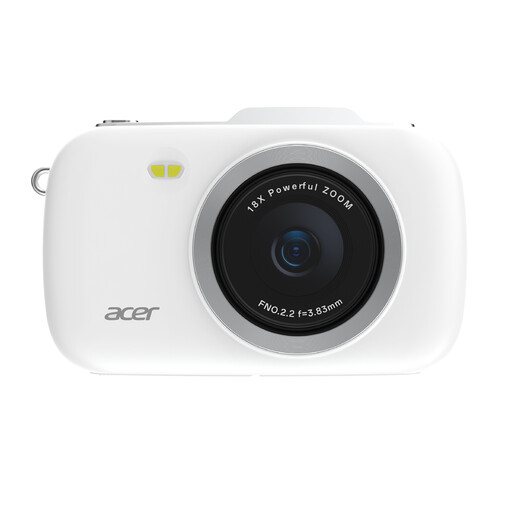
KOMERY G7 5K digital camera, white
The stated zoom may help you frame subjects at different distances; check separately whether it can capture the truffle details you want.
The product description lists 18× optical zoom. The product title states 5K and 80MP; these are product claims, not the result of an independent image test.
View at Joybuy
 No image available
KOMERY W6 digital camera with 12X zoom
Check that the camera and the framing you want are suitable for photos of your truffles and boxes; the stated zoom alone doesn’t tell you anything about macro magnification.
The product title lists 12X optical zoom. Check which zoom specification applies to this version before buying.
View at Joybuy
 No image available
KOMERY G7-A 4K digital camera, white
Test the camera in a sample set-up to see whether it can frame your truffles and boxes as you want; no macro magnification is listed here.
The product description lists 18× optical zoom. The product title states 4K and 80MP; these are product claims, not the result of an independent image test.
View at Joybuy
 No image available
Sony ZV-E10 with 16–50mm zoom lens, black
The included zoom lens gives you a mirrorless camera set-up for framing truffles and boxes; check separately whether it can capture the level of detail you want in close-ups.
The product description lists a 24,2 MP APS-C camera, an E-mount and a Product Showcase setting. According to the description, the adapter/charger and memory card are not included.
View at Joybuy
 No image available
Sony Alpha A6100 with 16–50mm f/3.5-5.6 OSS II lens
The included zoom lens gives you a mirrorless camera set-up for framing products; check separately whether it can capture the close-up detail you want.
The product description lists a 24,2 MP APS-C camera, an electronic viewfinder and a tilting touchscreen.
View at Joybuy
Frequently asked questions
Is a standard zoom lens enough to photograph a whole truffle and a close-up of the filling?
Not necessarily. For the RF-S 18-45mm at 45 mm, Canon Netherlands lists a maximum magnification of 0.16× with autofocus and 0.26× with manual focus. Take a test shot framed to the size you want; for higher magnification, Nikon, Sony and Fujifilm list separate macro lenses with 1:1 magnification.
How can you keep photos of different truffles consistent?
Keep the camera and lighting positions as consistent as possible, and check the white balance if the light changes. Canon explains that the direction and time of day, as well as the weather, can affect window light. A fixed lighting set-up can therefore help you take consistent photos on different days.
When buying a camera online for your shop, are you always entitled to a 14-day cooling-off period?
No, this period doesn’t automatically apply to every business purchase. Ondernemersplein describes a 14-day cooling-off period for the specified online purchase made by a consumer; the Chamber of Commerce says that small businesses may still be able to rely on consumer protection in some cases. Before ordering, check what type of agreement you’re entering into and which terms apply.
Can you alter the colour or filling of truffles in photos for your online shop?
Your product presentation must not mislead consumers. The Netherlands Authority for Consumers and Markets lists inaccurate information and leaving out important information as forms of misleading conduct. Don’t edit photos in a way that makes an essential product feature look different from what it really is.


