
Truffle detail specialist
You want to show chocolate coating, decoration or a cross-section in close-up, and can choose a lens and lighting setup separately. Nikon describes macro photography as a way to capture small details.


For quick photos of whole truffles, a compact camera with a close-up mode can be practical; for tiny details, the magnification offered by the specific lens is what matters most. Check how much room there is in front of the lens for lighting and your hands, and whether you can use a stable setup on the shared workbench.
You want to show chocolate coating, decoration or a cross-section in close-up, and can choose a lens and lighting setup separately. Nikon describes macro photography as a way to capture small details.
You share your workspace with others and want a compact setup that’s quick to put up and pack away for photographing whole truffles or packaging. According to OM SYSTEM, the OM SYSTEM Tough TG-7 has macro modes and a fixed lens.
You photograph different varieties repeatedly and want control over framing, lighting and colour, not just magnification. Nikon describes using a tripod to reduce camera movement during macro shots.
A good fit if: you want to get set up quickly and the close-up mode gives you the framing you need.
Bear in mind: you can’t switch to a different lens.
A good fit if: you mainly frame whole truffles, boxes and wider product shots, and want the option to choose a different lens later.
Bear in mind: a kit zoom isn’t automatically a 1:1 macro lens; Canon specifies a maximum magnification of 0.25× for the RF-S 18-45mm.
A good fit if: you want to show texture, decoration or a cross-section in close-up, and have room for a separate lens and lighting setup.
Bear in mind: the lens may need to be bought separately; macro shots may require a tripod and extra focusing steps, taking up more table space and setup time.
| What to consider | What should you check? | Who should pay extra attention? |
|---|---|---|
| Magnification and texture | Compare the maximum magnification of the exact lens or camera mode with the framing you want; check whether the macro lens is included in the kit. | If you mainly want to show coating or decoration clearly, magnification should be your first priority; around 33% of consumers put magnified detail first. |
| Setting up on a shared table | Check whether the camera, your hands and the lighting will fit in the available workspace, and whether you can set up everything securely. | If you want to set up and pack away your equipment quickly, a compact setup matters; around 25% of consumers prioritise quick setup. |
| Consistent focus and colour | Check whether you can position the camera securely and set the lighting and white balance in the same way each time. | If you photograph several truffle varieties and want comparable images, consistency comes first; around 25% of consumers choose this as their priority. |
| What’s included in the complete kit | Check exactly which camera, lens and accessories come with the version you’ve chosen. | If you want to know in advance which parts you’ll need for a workable setup, what’s included in the kit is decisive; around 17% of consumers prioritise this. |
Canon’s stated maximum magnification of 0.25× for the RF-S 18-45mm is different from the 1:1 specification of the separately listed macro lenses.
Compare the magnification of the lens actually included with the close-up framing you want.
Being close to the truffle can affect the room available for lighting. The focusing distance alone doesn’t tell you how much clear space there is in front of the lens.
Check that you’ll have room for your lighting at the magnification you want; don’t assume a single distance figure guarantees enough working space.
A tripod can help you get a steady macro shot, but it needs a permanent spot. A separate macro lens also isn’t automatically included with a camera kit.
Check what’s included in the kit and decide in advance where the camera, tripod and lighting can go on the workbench.
The Tough TG-7 is a compact option with a fixed lens and macro modes, ideal if you want to keep loose camera equipment on the table to a minimum.
The EOS R50 with RF-S 18-45mm is a mirrorless option for whole truffles and wider product shots, with the flexibility to choose a different RF lens later.
The separately sold NIKKOR Z MC 50mm f/2.8 is an option if you want to capture small details at 1:1 magnification.
The ZV-E10 II has an interchangeable E-mount; the separate Sony E 30 mm F3.5 Macro offers 1:1 magnification, alongside the option to shoot product videos.
The X-S20 and the separate XF30mmF2.8 R LM WR Macro offer an X-mount setup for photography and video with 1:1 magnification.
These cameras are suited to photography with a compact or versatile setup; check whether each model’s close-up framing and lens configuration meet your needs.
 No image available
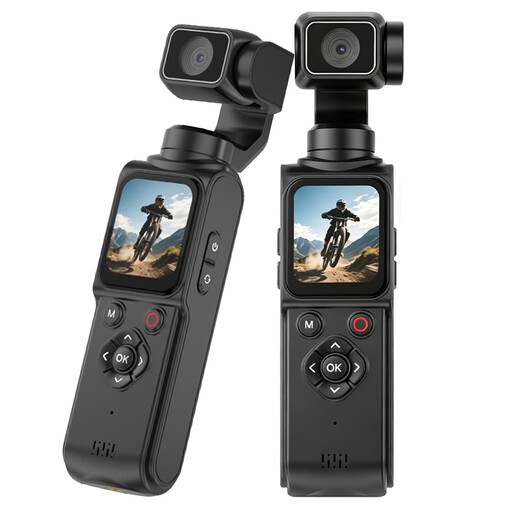
A compact camera option if you’re looking for a small setup; the kit includes a mini tripod.
The title mentions a rotating lens and touchscreen. The product information lists a weight of 84 g.
 No image available
A compact camera option for photographing still subjects; check first that its close-up capability suits the details you want to capture.
The product information lists a weight of 179 g and a rotating touchscreen.
 No image available
A compact camera option for product photography; check that its close-up capabilities suit the framing you want for your truffle.
The product title lists 16X digital zoom and the colour Pink.
 No image available
A mirrorless option for flexible framing; check whether the included zoom lens can capture your truffle details at the size you want.
The product information lists a 16–50mm zoom lens, an APS-C sensor and 24.2 MP.
 No image available
A compact camera option for a limited workspace; check whether the close-up framing is good enough to show the details you want.
The product information lists 20 Mpx, 2.7× optical zoom, and RAW and JPEG shooting.
Not if the whole truffle or its packaging already fills the frame as much as you want. If you want tiny surface details to fill the frame, compare the magnification offered by the exact lens or close-up mode. A separate 1:1 macro lens is a different option from a kit zoom with a stated magnification of 0.25×.
Keep both the still subject and the camera steady. Focus stacking combines several shots taken at different focus points and requires post-processing; check whether this approach suits your setup.
Check whether the lens and any accessories you need are included with the version you’ve chosen. According to ACM ConsuWijzer, consumers buying online often have up to 14 days after delivery to change their mind, in addition to the statutory guarantee; if you’re buying for a business, don’t assume that consumer rights apply.
For images used for business purposes in which people are recognisable, you need a lawful basis under the GDPR. The Dutch Data Protection Authority states that, in most cases, an employee’s consent is needed to use images of them. If you photograph only truffles and no recognisable people, this doesn’t mean you need colleagues’ consent just to use the truffle photo itself.