
One-off hem presser
You mainly want to get a single trouser hem looking neat and flat before your visit, and are looking for an easy-to-handle appliance for a small job.


For a single trouser hem, a standard steam iron with a pointed tip that you can position neatly by the hem is usually the practical choice. Check the care label first and only use steam if permitted. If you also regularly iron large loads or heavy fabrics, a steam generator may be suitable, but it takes up more space and requires more preparation.
You mainly want to get a single trouser hem looking neat and flat before your visit, and are looking for an easy-to-handle appliance for a small job.
Your trousers have a delicate finish or specific ironing instructions. Temperature, steam and avoiding shine matter more to you than speed. GINETEX emphasises that you should base the maximum temperature on the care label.
You’ll also use your purchase for larger loads or heavy fabrics, and want to weigh up a standard iron against a steam generator. The Consumers’ Association describes this choice as depending on factors such as the amount of ironing and the storage space available.
Suitable for: one hem, small amounts of ironing or limited storage space.
Trade-off: the Consumers’ Association describes this type as more compact, but with a smaller water tank than a steam generator.
Suitable for: regularly ironing lots of laundry or heavy fabrics, if you also have room for the larger set-up.
Trade-off: according to the Consumers’ Association, this type takes up more space and is less convenient for just a small hemming job.
Suitable for: freshening up clothes or reducing general creases.
Trade-off: pressing a hem requires localised downward pressure, which is different from steaming clothes while they’re hanging.
| Point to consider | What to look for | Who is this important for? |
|---|---|---|
| Pressing a hem precisely | Look at the shape of the tip and how easily you can position it by the hem. | If I want to press a single hem quickly and precisely before a visit, I look for an iron that’s easy to handle for the job. Around 40% of consumers say their main need is to press one hem precisely. |
| Protecting the fabric | Follow the care label; check whether you can adjust the temperature and switch off the steam when needed. | If my trousers have a delicate finish, I want to treat them according to the care label, rather than using the maximum steam setting. Around 30% of consumers prioritise protecting the fabric. |
| Large loads or heavy fabrics, too | Weigh up a steam generator’s larger tank and set-up against the extra space it takes up. | If I also often iron heavy fabrics or large loads, I look beyond just hemming. For around 20% of consumers, regular heavy-duty ironing is their main need. |
| Budget and storage space | Consider how much storage space you need, and don’t automatically choose a larger set-up for one small job. | If I have little space and only iron occasionally, I want an appliance that suits the limited task. Around 10% of consumers say budget and storage space are their main needs. |
The label may specify a low temperature or ironing without steam. A more powerful steam setting doesn’t make that treatment suitable.
Check the label before buying, and see whether the iron can also be used without steam if needed.
The larger tank and extra steam are mainly useful if you also do a lot of ironing or regularly tackle heavy fabrics.
Choose the larger set-up only if your other ironing needs justify it. Bear in mind the storage space required and that you may need a suitable ironing board.
For the Tefal Easygliss Plus FV5736, Tefal lists a 270 ml tank, while a Joybuy listing gives 200 ml. The specifications therefore don’t match.
When buying, check the version and tank capacity of the model on offer before assuming the product details are the same.
The TexStyle 9 SI9188EBK is an example for anyone looking for a clearly specified precision zone when pressing a hem.
The Easygliss Plus FV5736 is an example of a standard steam iron with a specified precision tip.
The 3000 Series DST3031/20 is an example of a standard steam iron for smaller amounts of ironing.
These product options are standard steam irons for small ironing jobs, such as pressing a trouser hem in one spot. Follow the care label for each model and check the product details for the version you choose.
 No image available
A standard steam iron for a small pressing job. Tefal lists a precision tip for the FV5736; check whether it’s suitable for the hem you want to press.
Tefal lists a 270 ml tank, while the Joybuy listing gives a capacity of 200 ml. Check the tank capacity of the version on offer.
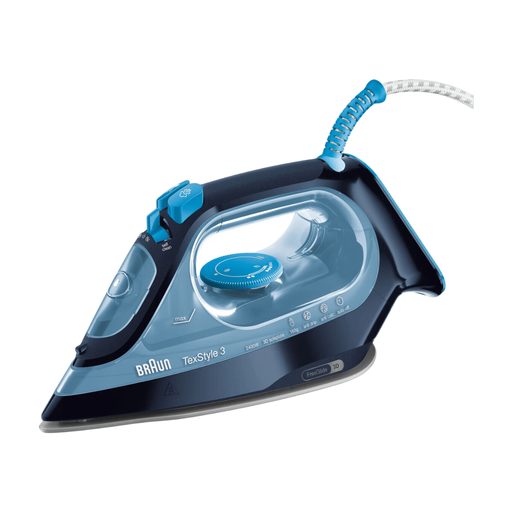 No image available
This standard steam iron is a good option if you’re looking for an appliance for a small ironing job. Check the care label and the settings on this version before pressing your trousers.
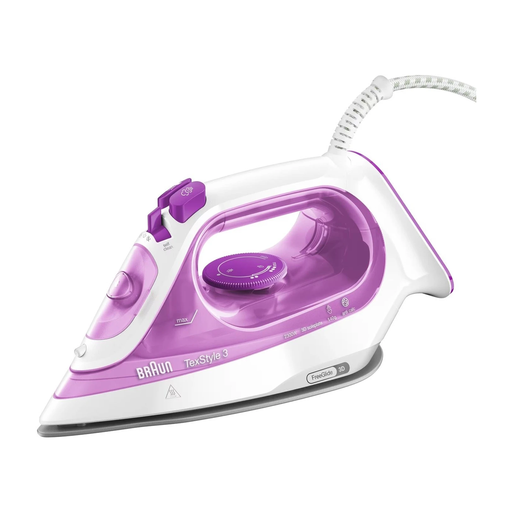 No image available
If you’re looking for a standard steam iron for a small pressing job, check that the temperature settings match the advice on your trouser care label.
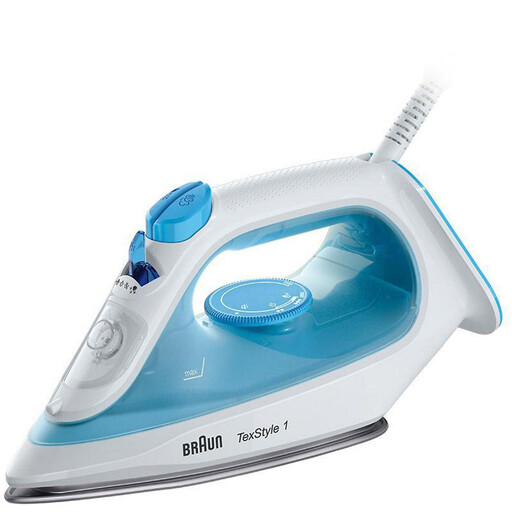 No image available
This standard steam iron is an option to consider for a small pressing job. Follow the care label and don’t use steam if the specified treatment rules it out.
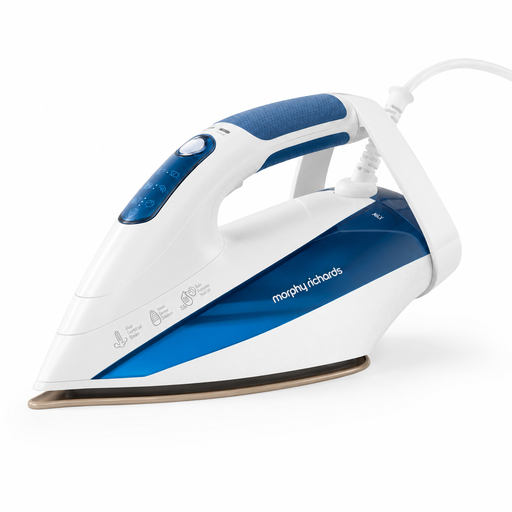 No image available
A standard steam iron for anyone who doesn’t want a larger steam generator set-up for a small pressing job. Check the care label and the product details for this version.
Read the care label first. Press the iron down briefly on the area, then lift it rather than sliding it over the fabric for a long time. If the fabric is prone to shine or pressure marks, use a pressing cloth if needed, or work inside out. This advice may not suit every type of trouser fabric.
No. The permitted treatment depends on the care label. GINETEX also describes a low-temperature ironing setting without steam; if the label gives this instruction, don’t use a steam shot.
Follow the instructions for the exact model. Philips describes descaling procedures for its steam irons, which can vary between model series; don’t use them on another brand or a steam generator without checking first.
No. According to the Dutch government, there’s no fixed two-year period for the statutory guarantee in the Netherlands: you’re entitled to a product that works properly, and you should contact the seller if there’s a fault. A manufacturer’s guarantee is additional.
New electrical appliances covered by the relevant harmonised EU rules must carry the required CE marking before being placed on the market. The European Union explains that the marking is a declaration by the manufacturer, not a separate product test carried out by the government. Check the product and safety information for the specific item you’re considering.