
Vandaag of morgen in huis

Kwaliteit gegarandeerd

Welkomstaanbiedingen ontgrendelen: GRATIS bezorging | Tot 80% korting | Gratis 30 dagen JoyPlus-proefperiode
Download de app
Want to buy tropical fruit drinks, but can no longer tell the difference between products from the terms on cans and cartons? Brightly coloured packaging says little about the amount of fruit, sugar content or practical value of a multipack. Coconut water, mango drinks and Asian soft drinks in particular come with a few common pitfalls.
So don’t just look at the flavour name. Always check the ingredients, nutritional values, volume and storage instructions. That way, you can choose a drink that suits your household, office, hospitality setting or catering order.
A product can have a distinct mango, guava or lychee flavour even when its fruit content is relatively low. Check the label for terms such as fruit juice from concentrate, purée or a specific percentage.
For example, according to the product information, MAAZA Guava Drink contains 17% guava juice from concentrate. The ingredients list also includes water, sugar, pectin, citric acid, ascorbic acid, flavouring and colouring plant extracts. This makes it a fruit drink, not the same as pure guava juice.
Fruit drinks naturally contain sugars from fruit. A product with no added sugar can therefore still contain carbohydrates and sugars. Always check the nutritional table per 100 ml.
According to the product description, Iam Superjuice Mango Drink contains 30% mango juice, uses steviol glycosides as a sweetener and provides 17 kcal per 100 ml. This is a different formulation from a mango drink with added sugar. Compare the label rather than relying solely on the front of the packaging.
A box containing 6 x 1 litre or 12 x 330 ml may seem practical, but opened cartons usually need to be refrigerated and consumed within the stated period. For a family or office, a multipack of fruit drinks can be convenient. For a small household, cans or smaller packs may be easier to manage.
First, decide what type of drink you are looking for:
For example, Iam Superjuice Soursop Drink states that the product contains no added sugar, provides 18 kcal per 100 ml and is a soursop drink from Vietnam. These details come from the brand’s product description; check the current label before buying.
Compare the nutritional values per 100 ml, not just per can or carton. After all, a 330 ml can contains more than three times the amount shown in the table.
Look out for differences between:
Iam Superjuice Lychee Drink states 15 kcal per 100 ml and no added sugar. KATO Mango Juice with Nata de Coco, on the other hand, lists sugar and fructose syrup as ingredients, with 11.2 grams of sugar per 100 ml. Both may suit a selection of Asian soft drinks, but their formulations are different.
Small 250 or 330 ml cans are suitable for individual consumption and serving chilled. A 1-litre carton is better suited to breakfast, a family or a meeting room. For hospitality and catering, boxes containing several litres are more practical, but check the available storage space and shelf life after opening first.
Also look for instructions such as shake before use. Drinks containing coconut meat, fruit pulp or nata de coco may contain sediment or pieces. Sunlee Coconut Juice with Pulp 310ml, for example, states that you should shake the can before opening and open it carefully.
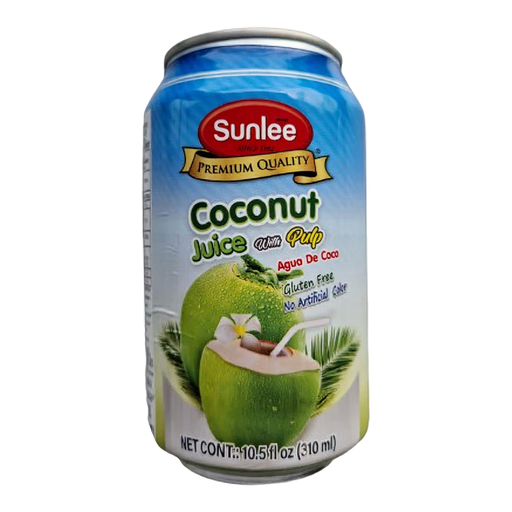
Why it suits this profile: A compact serving for anyone who wants to try coconut drink without ordering a large box straight away.
The ingredients and nutritional values are clearly stated. The presence of sugar is explicitly shown in the ingredients list, so you don’t have to rely solely on the term coconut water.
310 ml per can, coconut water with young coconut flesh and clear storage instructions.
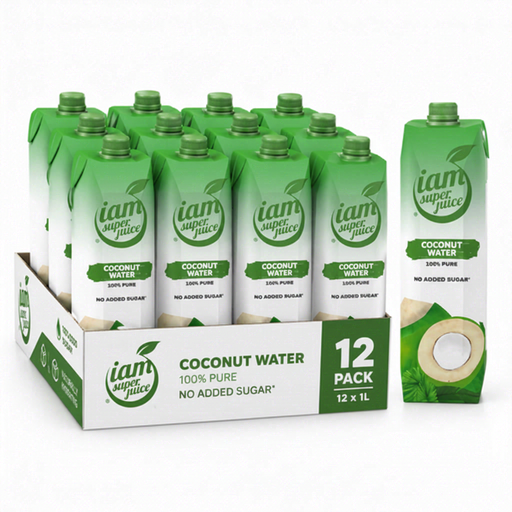
Why it suits this profile: A substantial supply for households or offices that regularly drink coconut water and value a simple list of ingredients.
The product description states 100% coconut water and no added sugar. After opening, however, check the refrigeration instructions and use the carton according to the label.
12 1-litre cartons, 21 kcal per 100 ml according to the product information and no declared allergens.
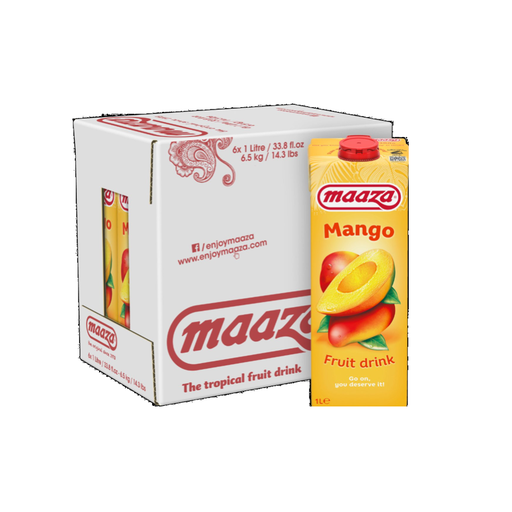
Why it suits this profile: The 6 x 1-litre pack is ideal for families, hospitality, catering and locations where several glasses are served each day.
The formulation lists 17% mango purée, sugar and lemon juice from concentrate. This allows you to assess the fruit drink based on specific information rather than the flavour name alone.
6 litres in total, 46 kcal and 10.8 grams of sugar per 100 ml according to the product information.
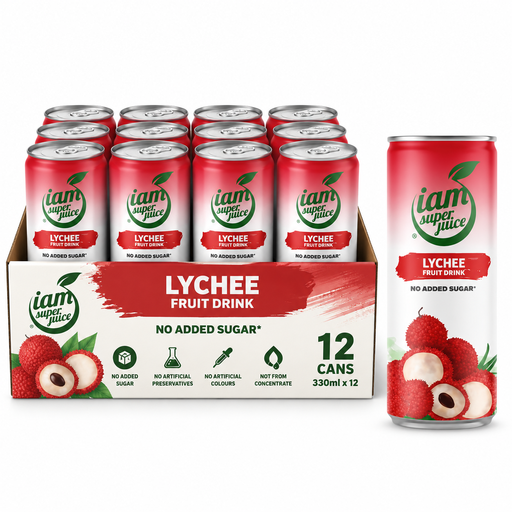
Why it suits this profile: Convenient individual cans for home, on the go, an office get-together or a meal, with a light lychee flavour.
The product description states 30% lychee juice, no added sugar and 15 kcal per 100 ml. These brand details can be checked on the product packaging.
12 x 330 ml cans, 30% lychee juice and no declared allergens according to the product information.
We’ve put together a complete, up-to-date list of products that fully meet these strict selection criteria and the applicable European safety regulations.
First, check the fruit percentage, ingredients list, sugar values per 100 ml, volume per pack and storage instructions. Also check whether delivery is available to your Dutch address if the product states regional restrictions.
No. Coconut water naturally contains sugars. “No added sugar” means that, according to the product information, no extra sugar has been added. For an accurate comparison, check the nutritional table.
That depends on consumption and storage. A box containing 12 x 1 litre is practical for regular use, while 12 x 330 ml cans are convenient for individual portions. Work out the price per litre and take refrigeration after opening into account.
