
Vandaag of morgen in huis

Kwaliteit gegarandeerd

Welkomstaanbiedingen ontgrendelen: GRATIS bezorging | Tot 80% korting | Gratis 30 dagen JoyPlus-proefperiode
Download de app
Buying a tropical fruit drink might seem straightforward, but the options vary considerably. A mango drink, for example, could have a high proportion of fruit purée, while another variety might be mostly water, sugar and flavouring. Terms like “no added sugar” and “low calorie” aren’t always used consistently either.
So when you buy a tropical fruit drink online, it’s worth checking three things: the ingredients, the nutritional information and the packaging. That way, you can avoid ordering a bulk pack that doesn’t suit your taste or daily routine.
A fruit drink with no added sugar can still contain naturally occurring sugars. Some drinks also include sweeteners. Always check the full ingredients list and the nutritional values per 100 ml.
A product with 15 to 18 kcal per 100 ml might appeal if you’re watching your calories, but do consider the pack size. A 330 ml can will naturally contain more calories than the per-100 ml value suggests.
Mango, lychee, passion fruit and guava sound clear enough, but the amount of fruit varies from product to product. Iam Superjuice, for instance, states 30% fruit or fruit juice in several of its varieties. Maaza Mango lists 17% mango purée according to the product information, while Rubicon Classic Lychee Delu states 14% lychee purée.
So compare the fruit percentage, not just the flavour name on the front.
A tray of fruit drink cans is handy for stocking up, taking to work or having visitors round. Even so, a 12-pack only makes sense if you already know you like the flavour and have enough storage space. For a family, a large-format fruit drink of 1 or 1.5 litres might be more suitable. For on the go, a 330 ml tropical drink or a 300 ml bottle is more practical.
Also check the best-before date and storage instructions. Once opened, many fruit drinks need to be kept in the fridge and consumed within the stated time.
Check whether you’re buying a fruit drink, juice drink, soft drink or dairy drink. These categories have different compositions and flavours.
Alongside “no added sugar”, look particularly at carbohydrates of which sugars. “No added sugar” doesn’t mean the product contains no sugar. Taksi Tropical Fruit Drink, for example, contains no added sugar but does include sweetener and dairy ingredients. The product information states 11 kcal per 100 ml.
A low-calorie fruit drink may therefore use a different sweetening method than a classic juice drink. If you prefer to avoid sweeteners, it’s better to choose a variety without sweeteners and with a clearly listed ingredients list.
A can is easy to take with you and doesn’t need resealing once opened. A tray of 12 × 330 ml is good for stocking up or sharing with several people. A 1 litre or 1.5 litre bottle works better for a meal at home.
Also watch out for allergens. Some tropical drinks contain milk or coconut. Taksi Tropical Fruit, for instance, is based on fruit and dairy ingredients. Mogu Mogu Coconut contains coconut. If you follow a vegan diet, always check the current packaging; a fruity flavour doesn’t automatically mean a product is vegan.
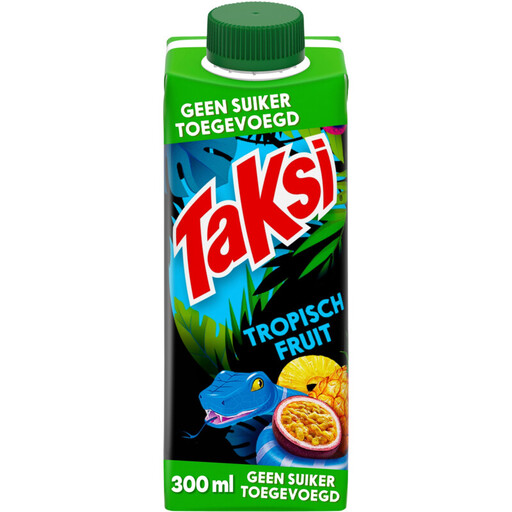
Why this suits the profile: The 300 ml bottle is an easy way to try a tropical fruit blend of pineapple, passion fruit and apple.
The nutritional values and ingredients are clearly stated. Do note: “no added sugar” here doesn’t mean no sweetener.
300 ml per bottle, 11 kcal per 100 ml according to the product information and vitamin C listed on the label.

Why this suits the profile: A 12-pack of 330 ml cans is ideal for fans of a distinctive exotic fruit drink who want to stock up.
The fruit percentage is stated: 30% natural passion fruit. It also lists 17 kcal per 100 ml and no added sugar.
30% passion fruit juice, 12 cans of 330 ml and a sweet-tart flavour according to the product description.
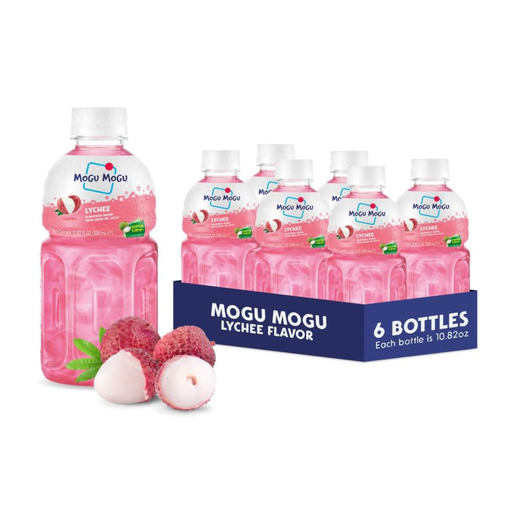
Why this suits the profile: This Asian soft drink is designed for those who want texture as well as flavour, thanks to the pieces of nata de coco.
The product information lists sugar, fructose and nata de coco. This makes it clear that it’s not a fruit drink with no added sugar.
320 ml per bottle, lychee flavour, nata de coco and a pack of six.
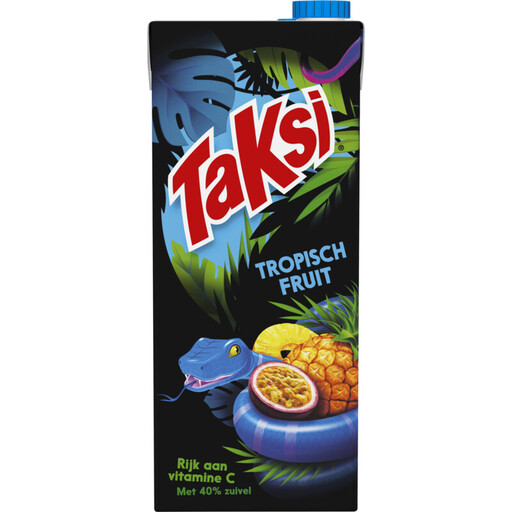
Why this suits the profile: The 1.5 litre bottle is ideal for a family meal, entertaining guests or situations where smaller cans are less practical.
The volume, composition with 40% milk permeate and nutritional value of 34 kcal per 100 ml can all be checked in advance.
1.5 litre volume, no sweeteners according to the product information and suitable for serving chilled.
We’ve put together a full, up-to-date list of products that fully meet these strict selection criteria and comply with current European safety regulations.
That depends on the brand and flavour. Among the product information listed, Iam Superjuice Lychee comes in at 15 kcal per 100 ml, Pink Guava at 16 kcal, and Passionfruit and Mango at 17 kcal. Always check the current label, as recipes and nutritional values can change.
No. Nata de coco consists of jelly-like pieces that add extra texture. A nata de coco drink may contain fruit flavouring or fruit juice, but it’s not the same as a traditional juice. Mogu Mogu Lychee combines lychee flavour with nata de coco and contains sugar and fructose according to the product information.
Store unopened drinks as directed on the label, usually in a cool, dry place away from direct sunlight. Once opened, put the bottle or pack in the fridge and consume it within the stated time. With 330 ml cans, this is usually straightforward: you open exactly one portion when you need it.
