
Vandaag of morgen in huis

Kwaliteit gegarandeerd

Welkomstaanbiedingen ontgrendelen: GRATIS bezorging | Tot 80% korting | Gratis 30 dagen JoyPlus-proefperiode
Download de app
A tropical fruit drink can be a simple way to try new flavours. Online, you'll find everything from tropical fruit beverages, lychee drinks, mango drinks, passion fruit drinks and guava drinks. Korean drinks, other Asian beverages and Mexican soft drinks also often fall under this search term.
However, a picture of mangoes, lychees or passion fruit doesn't always tell you everything about what's inside. The following pitfalls are common:
First, check the ingredients list and the proportion of fruit juice, purée or concentrate. Iam Superjuice Lychee Drink states 30% natural lychee juice according to the product information. The Iam Superjuice variants with mango, passion fruit and pink guava also state 30% of the relevant fruit.
In contrast, there are drinks where fruit is used mainly as a flavour profile. Jarritos Mango 370 ml is made with carbonated water, sugar and natural mango flavour, according to the product description. That makes it more of a Mexican soft drink than a fruit juice.
For a product with multiple fruit types, the breakdown is also relevant. Taksi Tropical Fruit contains 6% fruit juice from concentrate and 40% milk permeate, according to the label. So it's not a classic clear juice drink, but a fruit and dairy beverage. Always check the actual packaging; product compositions can change.
Use the table per 100 ml, not just the nutritional value per can or bottle. This way, you can fairly compare a small Korean pouch drink with a 1-litre bottle.
Some examples from the product information provided:
"No added sugar" is therefore a product feature, not a general health assessment. Look at the full ingredients list and the nutritional value before you order.
A can of 190 to 375 ml is suitable for individual use. A 1 or 1.5-litre bottle is better for a meal, household or small group. A multipack of fruit drink is handy when you already know you like the flavour.
After opening, pay attention to the storage instructions. Many fruit drinks need to be kept refrigerated and consumed within the time stated on the packaging. Unopened products should generally be stored in a cool, dry place away from direct sunlight. For nata de coco drinks, it's wise to check that the packaging is delivered upright and undamaged.
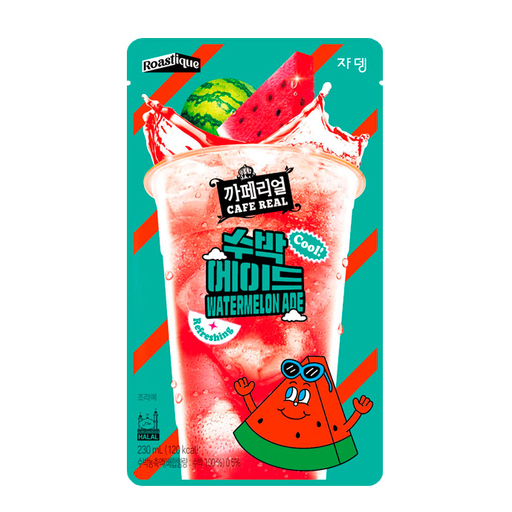
Why this fits the profile: The 230 ml can is a manageable portion to try a watermelon flavour with a light fizz, without committing to a large pack straight away.
The size limits waste on a first purchase. The product information states approximately 24 kcal per 100 ml; check the actual packaging for the final values.
230 ml, ready to drink, with concentrated watermelon juice and carbonation according to the product description.
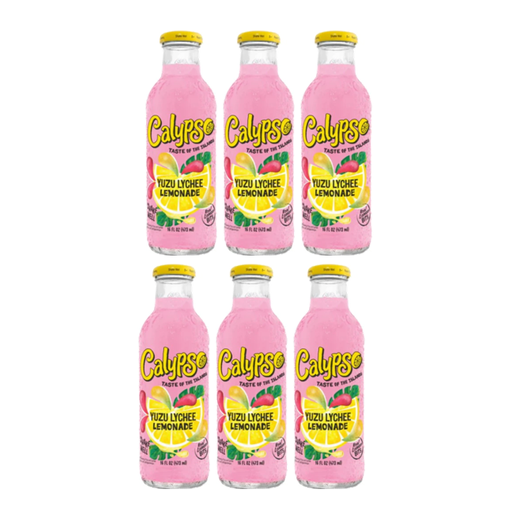
Why this fits the profile: The combination of yuzu, lychee and lemon offers a distinctive flavour profile for those looking for more than a standard tropical fruit drink.
The product specification states 46 kcal and 11 g sugar per 100 ml. This makes the sugar content easier to assess than from the packaging alone.
Six 473 ml bottles, lemon base, yuzu and lychee flavour; suitable for serving chilled.
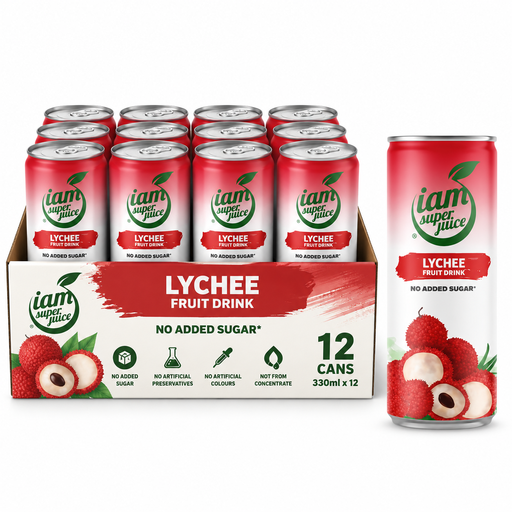
Why this fits the profile: Twelve 330 ml cans are practical for a household, office, catering or party where individual portions are wanted.
The product information states 30% lychee juice, no added sugar and 15 kcal per 100 ml. Check the ingredients and nutritional values on the delivered packaging before purchase.
12 × 330 ml, lychee flavour, ready to drink chilled and enriched with vitamin C according to the product information.
We've put together a full, up-to-date list of products that fully meet these strict selection criteria and comply with current European safety regulations.
Fruit juice typically consists of juice or concentrate from fruit, whereas a fruit drink may also contain water, sugar, sweeteners, flavourings or other ingredients. Look at the name, the fruit percentage and the ingredients list. A drink with milk components, such as Taksi Tropical Fruit, falls into a different product category.
The product information provided states this for Iam Superjuice Lychee, Mango, Passionfruit and Pink Guava, among others. These products may contain naturally occurring fruit sugars. Always check the label, especially when comparing products with a sweetener or a different composition.
Store unopened cans, bottles or cartons according to the instructions on the packaging, usually in a cool, dry place away from direct sunlight. After opening, a product should generally be kept in the fridge. With a multipack, you can store the unopened containers outside the fridge if the label allows it; always follow the specific storage instructions from the manufacturer.
