
当日/次日达

品质保障

开启新人专享福利: 全场免邮 | 低至 2 折 | 免费试用 30 天 JoyPlus 会员
下载 Joybuy
A tropical fruit drink might seem like a simple choice at first. But mango drink, guava juice, lychee juice, passion fruit drink and soursop drink can vary considerably in their ingredients, sugar content, fruit percentage and packaging. What’s more, a striking image on the front doesn’t always tell you how much of the pictured fruit is actually in the drink.
Use this practical guide to avoid a disappointing purchase and find a product that suits your household, taste and occasion.
A pack might show a large image of mango, guava or passion fruit, while the ingredients list reveals a relatively low percentage of that fruit. So always check:
For example, according to the product information, Wicky Mango Fruit Drink contains 0.2% mango juice from concentrate. So while it does taste of mango, it isn’t comparable to a product with a high proportion of mango purée.
A sugar-free fruit drink may contain sweeteners. So, as well as checking the front of the pack, look at the nutrition table and ingredients list. According to the published product information, Mogu Mogu Zero Tropical Delight contains 0 grams of sugar per 100 ml and includes sweeteners. Taksi Jungle Fruit is labelled “no added sugar”, but it does contain naturally occurring sugars and sweetener.
These differences matter if you’re specifically looking for a sugar-free fruit drink, a low-calorie option or a drink for everyday use.
A 1 or 1.5-litre bottle might seem ideal for a family or party, but it needs to be refrigerated after opening and used within the time stated on the label. Cans or small bottles can be more practical for one person. A multipack of fruit drinks can help prevent waste if you want to portion out drinks in advance, for example for a picnic, the office or a party.
Compare more than just the flavour name: look at what the product is made from, too. A drink made with purée often has a different texture from a clear fruit drink. According to the product information, Maaza Guava Fruit Drink contains 16% guava juice from concentrate. Maaza Mango Drink contains 17% mango purée. DubbelDrank Mango Guanabana states a minimum fruit content of 40%, but it’s made from several fruits, including apple, mango and guanabana.
So if you’re looking for a distinctive exotic flavour, it’s worth comparing the fruit percentage and full ingredients list.
Use the values per 100 ml as a consistent basis for comparison. Check:
Mogu Mogu Zero Tropical Delight is listed as containing 0 grams of sugar per 100 ml and around 10 kcal per 320 ml bottle. By comparison, Maaza Lychee Juice contains 10.9 grams of sugar per 100 ml. The two products therefore suit different preferences.
If in doubt, always check the current label. According to the product information, Taksi Tropical Fruit contains milk, so it isn’t suitable for anyone looking to avoid milk. Several other selected drinks don’t list any of the 14 main EU allergens, but the packaging is always the final word.
Some brands add vitamins C or D. Treat this as a product specification, not a health claim. For example, DubbelDrank Pineapple Guava Apple Juice lists added vitamins C and D, with 14 mg of vitamin C and 0.75 µg of vitamin D per 100 ml according to the nutrition information. The brand’s own product information says the drink is briefly heated and doesn’t require preservatives; this is a product claim made by the manufacturer.
Store unopened packs as directed on the label, away from heat and direct sunlight. Most fruit drinks should be kept in the fridge after opening.
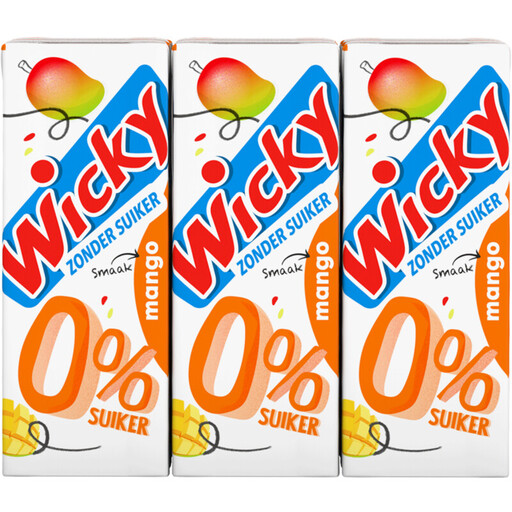
Why it suits this profile: The six 200 ml packs are handy for individual occasions and help avoid leftovers once opened.
The product information lists less than 0.1 grams of sugar per 100 ml. Do bear in mind the low mango juice content of 0.2% if you’re expecting a pronounced fruit flavour.
1 kcal per 100 ml according to the product information, with added vitamin C and six small packs.
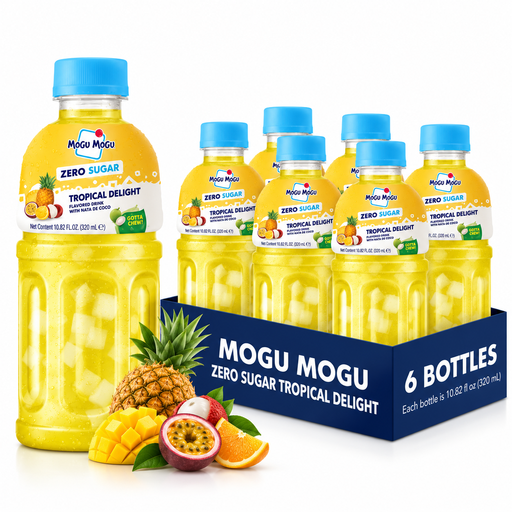
Why it suits this profile: This Asian drink combines a tropical fruit flavour with nata de coco, making texture part of the drinking experience, too.
The product information clearly lists 0 grams of sugar per 100 ml and 15% nata de coco. So you know in advance that this isn’t a smooth fruit juice.
Six 320 ml bottles, a blend of mango, pineapple, passion fruit and lychee, plus nata de coco.

Why it suits this profile: The tray of twelve 330 ml cans is handy for parties, stocking up for a café or restaurant, or for fans of a distinctive passion fruit flavour.
The product description states that it contains 30% natural passion fruit juice and no added sugar. Check the current label on arrival for the exact nutritional values.
12 cans, 330 ml each, listed as containing 17 kcal per 100 ml according to the product information, with vitamin C included.
We’ve put together a complete, up-to-date list of products that meet these strict selection criteria and current European safety regulations.
Fruit juice consists mainly of juice, while a fruit drink usually contains water, juice or purée, sugar or sweetener, and sometimes flavourings. Check the fruit percentage and ingredients list to compare the two properly.
Mogu Mogu Zero Tropical Delight is listed as containing 0 grams of sugar per 100 ml. Wicky Mango contains less than 0.1 grams of sugar per 100 ml. “No added sugar” doesn’t automatically mean sugar-free: the drink may contain natural sugars from fruit.
Put an opened bottle in the fridge, replace the cap securely and follow the storage time stated on the label. If you’re buying a large pack, it’s worth thinking in advance about how much you’ll use over the next few days. Small bottles or cans are more practical if you won’t finish the drink quickly.
