
Vandaag of morgen in huis

Kwaliteit gegarandeerd

Welkomstaanbiedingen ontgrendelen: GRATIS bezorging | Tot 80% korting | Gratis 30 dagen JoyPlus-proefperiode
Download de app
Buying a tropical fruit drink might seem straightforward – until you see the range on offer. On the shelf and in online shops, mango drink, lychee drink, passion fruit drink, guava drink, coconut water and tropical fizzy drinks all sit side by side. The packaging often features large fruit images, yet the actual fruit juice content can vary enormously.
If you only focus on taste or an attractive multipack, you could end up paying for a product that doesn't really suit your everyday needs. With this practical guide, you'll learn to look at the information that truly matters: fruit content, nutritional values, ingredients, packaging and portion size.
A fruit drink with no added sugar can still contain naturally occurring sugars. Always check the nutrition table for sugars per 100 ml. Also look at the sweeteners used. For example, Wicky Mango Fruit Drink states less than 0.1 grams of sugar per 100 ml, but according to the product information it contains sucralose and acesulfame-K.
So "no added sugar" does not automatically mean the same as sugar-free or unsweetened.
The name "mango drink" or "lychee drink" doesn't tell you how much fruit is actually in it. Compare the percentage of juice or puree listed in the ingredients. For instance, Iam Superjuice fruit drinks state 30% fruit or fruit juice, whereas other drinks consist mainly of water, sugar, flavourings or other ingredients.
What's more, the fruit flavour in a tropical juice may come from a blend – such as apple, pineapple, passion fruit and guava. That's not the same as a drink with one dominant fruit.
A 330 ml can, a 1.5 litre bottle and a multipack of 12 are not directly comparable. Calculate the price per litre or per serving. A multipack of fruit drink can be handy for a household, but less economical if you only want to try it occasionally.
Also consider the shelf life, storage space and the size you'd like to take on the go.
Start with the ingredients list. Ingredients are listed in descending order by quantity. Look for terms like fruit juice from concentrate, puree or direct juice. A stated fruit percentage gives you far more information than just a picture of a mango or lychee on the can.
Examples from the range:
Always compare per 100 ml. This stops a small can from appearing lighter than a large bottle. The Iam Superjuice variants state, among others:
These values are based on the product information provided. Always check the label at the time of purchase, as product compositions and packaging can change.
A product with sugar might actually deliver the flavour you're after. For example, Taksi Tropical Fruit Juice in a 1.5 litre bottle states 7.9 grams of sugar per 100 ml and contains sugar according to the ingredients list. The no-added-sugar version, on the other hand, uses a sweetener and contains milk derivatives.
A 330 ml can is practical for a single serving. A 1 or 1.5 litre bottle works better for a meal or for several people, but must be kept refrigerated after opening. So check the storage instructions on the packaging.
For vegans, the ingredients list is especially important. According to the product descriptions, Iam Superjuice Mangosteen and Coconut Water are labelled as vegan. Taksi and g'woon Zappie list milk derivatives and are therefore not suitable as a vegan fruit drink. For allergies too, always check the current packaging; online information is no substitute for the label.
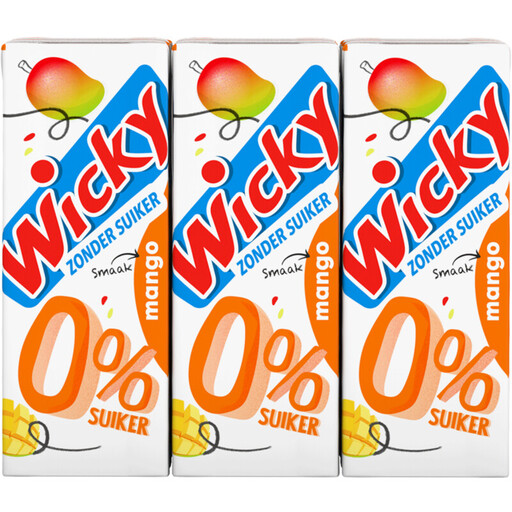
Why this fits the profile: The six 200 ml portions are easy to manage for home, lunch or on the go. According to the product information, the drink contains less than 0.1 grams of sugar and 1 kcal per 100 ml.
The portion size and nutritional values are clearly stated. The drink is not presented as fruit juice; the mango content is listed as 0.2% juice from concentrate.
6 × 200 ml, added vitamin C, none of the 14 major EU allergens according to the product information.
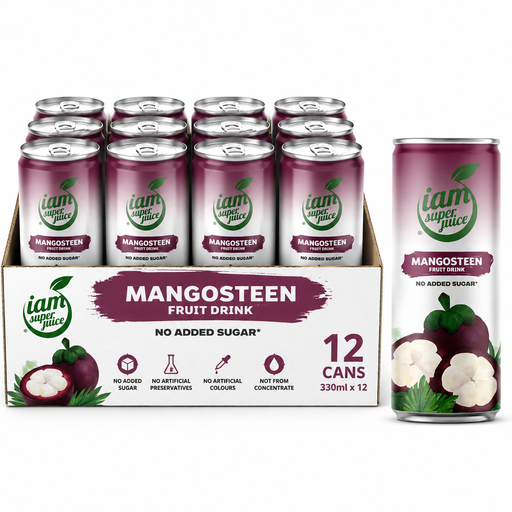
Why this fits the profile: For those looking for a distinctive exotic flavour and a higher fruit percentage. According to the product description, this drink contains 30% mangosteen juice.
The juice percentage is clearly stated, so you don't have to rely solely on the fruit image or flavour name.
12 × 330 ml, no added sugar according to the product information, with vitamin C and labelled as vegan.

Why this fits the profile: A practical option for households that want to grab an individual pack regularly. According to the product description, the drink consists of 100% coconut water with 2% real coconut pieces.
The product's base is clearly stated. This makes it easier to tell the difference from a coconut drink with sugar and coconut flavouring.
12 × 330 ml, no added sugar according to the product information, labelled as vegan and gluten-free.

Why this fits the profile: The tray of 12 cans of 330 ml is ideal for keeping in stock at home, sharing or serving with a meal. According to the product description, the drink contains 30% mango juice.
The content per can, total volume and stated juice percentage are all clearly given. This makes it easier to compare with a 1 litre bottle.
12 × 330 ml, 30% mango juice according to the product description and 17 kcal per 100 ml.
We've put together a full, up-to-date list of products that fully meet these strict selection criteria and comply with current European safety regulations.
Fruit juice usually consists entirely or largely of juice, whereas a fruit drink may also contain water, sugar, sweeteners, flavourings or other ingredients. Check the fruit percentage and the ingredients list; the product name alone doesn't give you enough information.
No. Fruit naturally contains sugars. What's more, a product may contain sweeteners. So look at the of which sugars line per 100 ml and read the ingredients list. For example, Wicky states less than 0.1 grams of sugar per 100 ml, while other drinks with no added sugar may have a higher amount of natural sugars.
Follow the instructions on the label. Many drinks need to be kept refrigerated after opening and consumed within the stated period. Cans of 330 ml are handy when you want to open just one serving. With a 1 or 1.5 litre bottle, it's important to bear in mind the limited shelf life after opening.
