
Vandaag of morgen in huis

Kwaliteit gegarandeerd

Welkomstaanbiedingen ontgrendelen: GRATIS bezorging | Tot 80% korting | Gratis 30 dagen JoyPlus-proefperiode
Download de app
Looking to buy tropical drinks for home, on the go, at the office or for an event? You’ll soon come across terms such as no added sugar, fruit drink, aloe vera and 100% fruit juice. These descriptions don’t always mean the same thing. And eye-catching packaging can hide the fact that a multipack consists mainly of small cans, or that a drink still contains naturally occurring sugars despite being labelled “no added sugar”.
Use this practical guide to focus on the details that really matter: ingredients, nutritional values, volume, packaging and storage advice.
According to the product information, a sugar-free drink contains no sugar, or only a very small amount within the legal limits. “No added sugar” simply means that no extra sugar was added during production. Fruit juice or purée can still contain naturally occurring sugars.
So always compare the nutritional values per 100 ml. That way, you can make a fair comparison between an aloe vera drink, guava drink and passion fruit drink.
A tropical fruit drink may contain juice, purée, flavouring, water or a combination of these. Check the fruit percentage in the ingredients list. According to the product information, Iam Superjuice Pink Guava contains 30% pink guava juice. The passion fruit version also lists 30% natural passion fruit juice.
Other drinks focus more on aloe vera. Tropical Aloe Vera Honey, for example, lists 18% aloe vera juice and pulp, while the peach version contains 20% aloe vera juice and pulp and green tea.
A multipack of tropical drinks is handy if you serve them regularly, but a box of twenty bottles takes up more space than twelve cans. Consider:
Start by checking the ingredients list. Ingredients are listed in descending order by quantity. Look for juice, purée, aloe vera gel or pulp, and check for sweeteners, sugar and flavourings too.
For OKF Aloe Vera Drink Lychee 500 ml, the product information lists water, aloe vera gel, lychee flavouring, sugar, citric acid and vitamin C, among other ingredients. The stated nutritional value is 20 kcal and 5 grams of sugar per 100 ml. This makes it a good choice if you’re looking for the texture of aloe vera pieces and a lychee flavour, but not specifically for a sugar-free drink.
Compare nutritional values per 100 ml, then calculate the amount for the whole bottle or can. A product with 16 kcal per 100 ml contains around 53 kcal in a 330 ml can, based on the stated value.
The Pink Guava drink lists 16 kcal per 100 ml, while the Passionfruit version lists 17 kcal per 100 ml. According to the product information, both are made with no added sugar. The Soursop version lists 18 kcal per 100 ml, or around 59 kcal per 330 ml can.
Be aware of the difference between low in calories, no added sugar and sugar-free. These terms aren’t interchangeable.
A 330 ml can is easy to take with you and serve chilled. A 500 ml bottle is better suited to a longer working day or for selling individually. For a party, shop stock or catering-style use, a box of 20 bottles may be more practical.
The product information lists countries such as Vietnam and South Korea as the origin of various drinks. Also check the allergen information and current packaging. Labels, ingredients and shelf-life information may vary between deliveries.
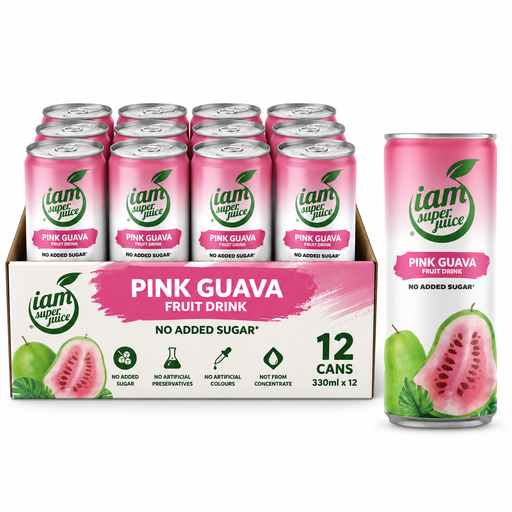
Why it suits this profile: The twelve 330 ml cans are a manageable size for home, work or on the go. According to the product information, this guava drink contains 30% pink guava juice, no added sugar and 16 kcal per 100 ml.
The fruit percentage and nutritional values are clearly stated in the product information, so you don’t have to rely on the tropical packaging alone.
30% pink guava juice, 12 × 330 ml, no added sugar and 16 kcal per 100 ml, according to the product description.

Why it suits this profile: This Asian soft drink is aimed at fans of a distinctive sweet-and-sour passion fruit flavour. The cans come in packs of twelve and, according to the product information, are suitable for serving chilled.
The product information gives both the fruit content, at 30%, and the calorie count, at 17 kcal per 100 ml. That’s more helpful than relying on the flavour name on the front alone.
30% passion fruit juice, no added sugar, 17 kcal per 100 ml and a tray of 12 330 ml cans.

Why it suits this profile: A pack of twelve cans is handy for stocking up for several people, whether at home, in the office or at a gathering. According to the product information, this coconut water contains 100% coconut water and 2% real coconut pieces.
The ingredients are clearly described: 100% coconut water, no added sugar and 2% coconut pieces. Be sure to check the current label before buying.
12 × 330 ml, no added sugar, with coconut pieces and, according to the product information, suitable for a vegan and gluten-free diet.
We’ve put together a complete, up-to-date list of products that meet these strict selection criteria and the applicable European safety regulations.
It depends on the product and serving size. The supplied product information lists Pink Guava at 16 kcal per 100 ml, Passionfruit at 17 kcal per 100 ml and Soursop at 18 kcal per 100 ml. Always check the latest nutritional information on the packaging.
No. Fruit juice and purée can contain naturally occurring sugars. “No added sugar” describes the production process; “sugar-free” refers to the amount of sugar in the finished product. So compare the of which sugars line per 100 ml.
Follow the label for the specific product. Many drinks need to be refrigerated after opening and consumed within a few days. Shake products containing pulp or pieces if the packaging says to, and don’t consume a bottle or can if the seal was damaged before opening.
