
Vandaag of morgen in huis

Kwaliteit gegarandeerd

Welkomstaanbiedingen ontgrendelen: GRATIS bezorging | Tot 80% korting | Gratis 30 dagen JoyPlus-proefperiode
Download de app
A trolley with wheels may seem like a simple purchase, until it won’t fit through the door, wobbles on an uneven floor or can carry far less weight than you expected. Whether you need one for the kitchen, bathroom, garage, campsite or a house move, there are significant differences between a kitchen trolley, storage trolley, serving trolley and transport trolley.
Look out for these three common pitfalls:
Below, you’ll find the key specifications to check, along with some suitable product recommendations for different uses.
Don’t just look at the maximum total weight. For a mobile storage unit or multi-tier trolley, the weight capacity per level is important too. Put heavier items on the lowest level and avoid loading a single shelf to its full capacity.
A small trolley such as the 5five Colors Linen has three tiers and a stated maximum load of 6 kg. That’s suitable for lightweight kitchen items, toiletries or small amounts of food. For tools, boxes or potting compost, a transport trolley with a much higher weight capacity is a better choice.
For a furniture dolly, the weight capacity is usually stated more clearly for the entire platform. The Practo Furniture Dolly has a stated maximum capacity of 200 kg, but the surface, the position of the item and its stability all remain important for safe use.
A trolley with brakes is useful if you’re keeping it beside a worktop, bed or table. Check how many wheels can be locked and whether the brake is easy to reach on a flat surface.
A camping trolley has different requirements from a trolley for the kitchen or bathroom. For grass, sand or uneven pavements, wheel size, frame and ground clearance matter more than a compact design.
Metal, plastic, MDF and fabric all have different uses. Stainless steel is a practical choice for a serving trolley in a dry or slightly damp environment. PP plastic is lightweight and easy to wipe clean. MDF needs more care if it’s in prolonged contact with water. A fabric storage compartment made from Oxford fabric is handy outdoors, but should be put away somewhere dry.
Also check whether self-assembly is required. Some models need their shelves, wheels and connectors fitted. Tighten all the connections after assembly and check regularly that they haven’t come loose. Never use a trolley as a step, even if the frame feels sturdy.

Why it’s a good fit: At 15 cm wide, this model is ideal for a narrow alcove in the kitchen or bathroom. Its three tiers offer space for lightweight food, toiletries or kitchen utensils.
The stated maximum load of 6 kg makes it clear that this isn’t a heavy-duty transport trolley. That makes it easier to match it to lighter items.
40 × 15 × 75 cm, three tiers, four wheels with a locking system and FSC certification, according to the product information.
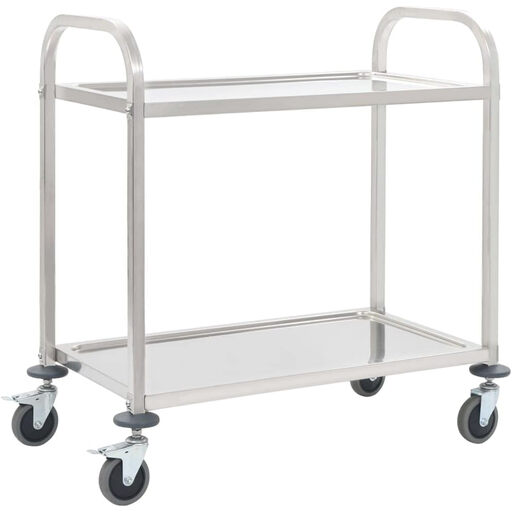
Why it’s a good fit: This two-tier model is designed for serving and moving food, drinks or crockery. Its stainless steel frame is well suited to regular use around the home.
The specifications state a load of 20–25 kg per shelf and two wheels with brakes. That gives you a clearer guide than a general claim about sturdiness alone.
Dimensions of 95 × 45 × 83,5 cm, four swivel castors and two brakes. The platform measures 69,5 × 40 cm.
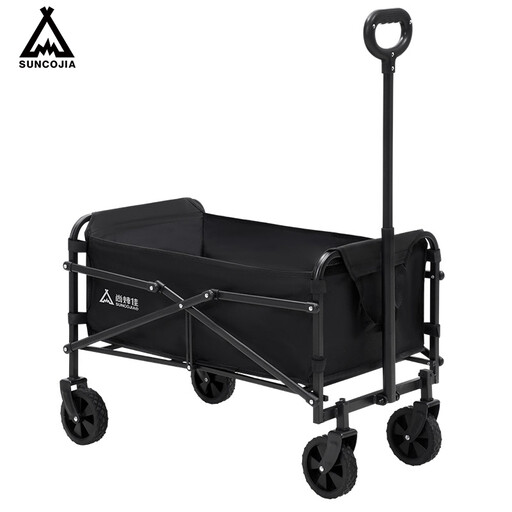
Why it’s a good fit: For campers, event organisers and households carrying things to the car, campsite or picnic spot, this folding trolley offers a capacity of 170 litres.
The product information states both the capacity and a maximum load of 100 kg. Fully unfold the trolley and lock the frame in place before loading it.
Folding design, 170-litre capacity, multi-directional swivel wheels and a cold-rolled iron frame with 600D Oxford fabric.
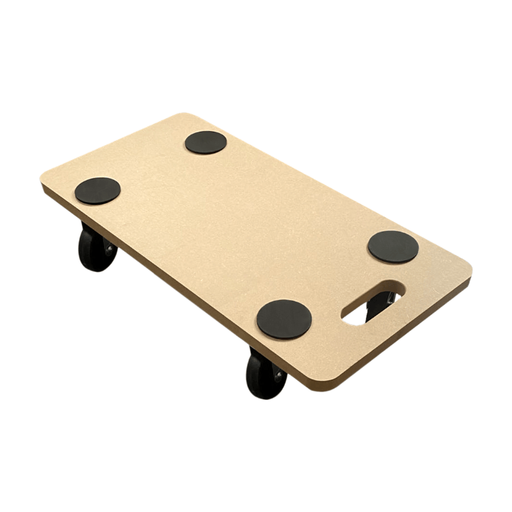
Why it’s a good fit: This furniture dolly is designed for heavy appliances, cupboards and other large items. The built-in handle makes it easier to move them.
The specifications list four swivel castors, anti-slip pads and a maximum load of 200 kg. Centre the weight and make sure the route is clear.
18 mm MDF platform, four 75 × 23 mm swivel castors, anti-slip pads and no assembly required, according to the product description.
We’ve put together a complete, up-to-date list of products that meet these strict selection criteria and current European safety regulations.
A capacity of a few kilos is often enough for bathroom items, snacks and small kitchen utensils. For storage crates, tools or potting compost, a transport trolley with a clearly stated higher weight capacity is a better choice. If it has multiple shelves, check the load limit for each shelf too.
Put heavier items on the bottom, spread the weight across the platform and use the trolley on a flat surface. Lock the wheels if the model has brakes. Take door thresholds slowly, and don’t use a narrow three-tier trolley for heavy, tall items.
Its lifespan depends on the materials, load, moisture, surface and how well it’s maintained. Check the wheels, brakes, screws and connections regularly. Clean plastic and metal with a soft, damp cloth. Keep MDF and fabric parts as dry as possible, and only fold away a camping trolley when it’s clean and dry.
