
Vandaag of morgen in huis

Kwaliteit gegarandeerd

Welkomstaanbiedingen ontgrendelen: GRATIS bezorging | Tot 80% korting | Gratis 30 dagen JoyPlus-proefperiode
Download de app
As a Joybuy Product Recommendation Officer, I see many parents struggle to find the right writing tools for their children. The shelves are filled with pencils that look appealing but aren't always practical. Choosing the right pencil is crucial for developing a proper pencil grip and fostering a love for writing. In this guide, we'll discuss the common pitfalls and provide objective criteria to help you make the right choice.
Before you make a purchase, it's important to be aware of the most common missteps. Much of the marketing focuses on appearance, while functionality takes a backseat.
To avoid a bad purchase, focus on a few verifiable specifications. These determine whether a pencil is truly suitable for a child.
The most important feature of ergonomic pencils is their shape. A triangular pencil naturally guides the fingers into the three-point grip (or 'tripod grip'). This is the most efficient and least fatiguing way to hold a pencil. It helps develop fine motor skills and lays a solid foundation for good handwriting. Round or hexagonal pencils do not offer this level of support.
The hardness of the graphite lead is crucial. The code on the pencil indicates this:
Pay attention to the quality of the wood. Good wood doesn't splinter and is easy to sharpen. An eraser on the end is also a practical feature. A kids' pencil with an eraser ensures that mistakes can be corrected immediately and without smudging, which boosts confidence during the learning process.
Below are some products that suit different needs, based on their specifications.

Why This Fits Their Persona: Ideal for children aged 4 to 7 who are learning to write their first letters. The combination of the ergonomic shape, soft lead, and a fun design makes writing more enjoyable and less strenuous.
These panda pencils combine an attractive design with the right functional features: a triangular shape and a soft 2B lead. This successfully avoids the 'fun' trap.
Ergonomic grip for a correct pencil hold. Soft 2B graphite core for smooth writing with little pressure. Includes eraser.
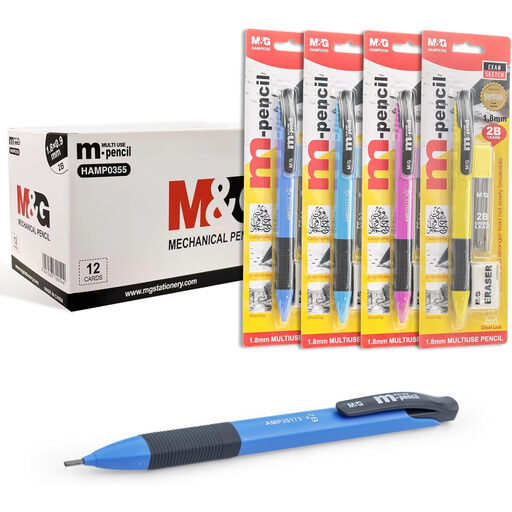
Why This Fits Their Persona: Suitable for older primary school children who already have a stable pencil grip. It combines the convenience of a mechanical pencil (no sharpening) with a thick, sturdy 1.8mm 2B lead that doesn't break easily.
This isn't a standard mechanical pencil with a thin, fragile 0.5mm lead. The 1.8mm 2B lead is robust and provides a smooth writing experience comparable to a traditional pencil, but without the hassle of sharpening.
No sharpener needed, which means less mess and fewer interruptions. The thick lead is sturdy, and the set comes with refills and erasers.

Why This Fits Their Persona: For parents who want to complete their child's school supplies for girls. A pencil case is essential, and this model offers a combination of a fun design and practical protection for new pencils and other stationery.
Instead of a flimsy fabric case where pencil tips can break, this model has a hard shell. It protects the contents from being knocked around in a full school bag.
The hard shell offers excellent protection. The large capacity ensures that all necessary writing tools will fit inside.
We have compiled a complete, up-to-date list of products that meet these strict selection criteria and UK guidelines.
Generally, triangular pencils are a good choice from around the age of four. At this age, children begin to develop the fine motor skills necessary for learning to write. The ergonomic shape provides the right support at this stage.
In short: 2B is softer and darker, allowing a child to draw a clear line with less pressure. This is ideal for beginners. HB is harder and lighter, requiring more force, which can be tiring for small hands. For the first few years of writing and drawing, 2B is often the better choice.
Choose a high-quality pencil where the graphite core is well-centred and securely glued within the wood. Additionally, use a sharp, good-quality pencil sharpener. If a child naturally presses very hard, a mechanical pencil with a thicker lead (such as 1.8mm) can be a great solution, as it is less prone to breaking than a standard wooden pencil.
