
Workshop leader making a baked pudding
You’ve chosen the baked recipe and want to know which dish and oven setting will work for your class. Good Food recommends a 1.5-litre ovenproof dish for the baked version.


For a baked treacle sponge, a conventional oven is suitable if the dish and oven setting match the recipe: Good Food uses a 1.5-litre ovenproof dish. For the traditional steamed version, Good Food describes using a steamer or large saucepan. If you’re preparing batches for a workshop, measure the oven’s internal space too, as the Consumers’ Association advises.
You’ve chosen the baked recipe and want to know which dish and oven setting will work for your class. Good Food recommends a 1.5-litre ovenproof dish for the baked version.
You want to follow the method using a covered pudding basin and first need to work out whether you need an oven. Good Food describes using a steamer or large saucepan.
You’re coordinating the dishes, available space and batches, whether they’re cooked in sequence or at the same time. The Consumers’ Association advises checking the internal dimensions and measuring the largest dish.
First decide whether you’re following a baked or steamed recipe. Then choose your setup and check that the dish and oven space are suitable for your workshop.
| What to consider | What should you check? | Who does this matter most to? |
|---|---|---|
| Baked recipe | Check the specified oven setting and measure the dish to make sure it fits inside the oven. | If I’m making the baked version, I want to be able to set the right oven temperature and fit the dish inside. Around 33% of consumers rank baking as their top priority. |
| Traditional steaming | Decide whether you’re following the recipe using a steamer. If you’re using a steam oven, check the exact function and the model-specific instructions. | If the workshop is making a traditional pudding, I want to follow the specified steaming method rather than assume that steam assistance does the same thing. This is the top priority for around 27% of consumers. |
| Workshop batches | Compare the internal dimensions with the size of your dishes, and plan to cook batches one after another if they won’t all fit at once. | With several participants, I want to know whether the dishes will fit at the same time so I can plan the rounds. Around 27% of consumers give priority to cooking batches simultaneously. |
| Placement | Measure the available cabinet space or worktop area, and follow the placement instructions for your chosen model. | If there’s no space for a built-in oven, I want to be able to position a freestanding oven without blocking the work area. Placement without built-in installation is the top priority for around 13% of consumers. |
Good Food’s traditional and baked recipes use different cooking methods. So the instructions for one version won’t automatically give you the right oven settings for the other.
Choose the recipe for your workshop before selecting an oven or steam function.
Steam assistance adds moisture while baking; it isn’t the same as a function that cooks food entirely with steam. Good Food’s traditional recipe uses a steamer or large saucepan.
Check the function of the exact model. If you’re using a steam oven, follow its model-specific cooking instructions.
The stated capacity or number of levels doesn’t tell you by itself how many of your pudding basins will fit at once. The Consumers’ Association advises checking the internal dimensions.
Measure your dishes and compare them with the internal space and suitable shelves. If they won’t all fit at once, you may need to cook more batches in sequence during the workshop.
Bosch offers built-in baking ovens with a range of heating and steam functions.
Inventum offers freestanding baking ovens, including the OV607B.
AEG describes oven ranges with steam assistance as well as ranges with a full steam function.
Take a look at these Joybuy models as oven options to compare for a baked treacle sponge. The list includes built-in and freestanding models. Always check that the oven setting, dish and available space suit your recipe and workshop.
 No image available
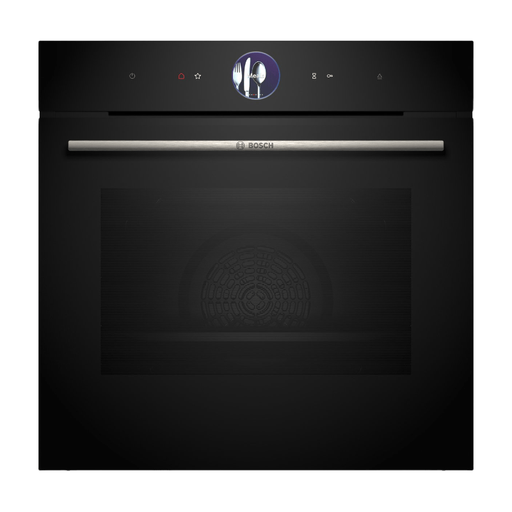
A built-in option to consider if you’re looking for an oven for the baked workshop version; check that the available baking setting suits the recipe.
Built-in steam oven; size 60 × 60 cm.
 No image available
An option to compare if you’re looking for a fan oven with a multi-level rack; check the dimensions of your dishes and the available space.
Capacity: 35 L; four-level baking rack.
 No image available
A freestanding option to compare if you’re not looking for a built-in oven; measure the space available and check that your dishes will fit.
Capacity: 65 L; power: 2000 W.
 No image available
A built-in option to compare when making a baked recipe; check the internal dimensions and the baking setting for your chosen dish.
Capacity: 71 L; 3D Hotair.
 No image available
A built-in option to compare if you’re making the baked workshop version; check that your dishes will fit and that the available baking settings are suitable.
Capacity: 71 L; 3D Hotair.
Not using the traditional recipe described by Good Food: it steams the covered pudding basin in a steamer or large saucepan for 1½ hours. Good Food also has a separate baked recipe, with a different dish, oven setting and cooking time. Don’t treat the recipes as interchangeable oven settings.
No. Steam assistance adds moisture while baking, whereas a full steam function is designed to cook food with steam. Check the function of the exact model and follow the relevant cooking instructions.
Measure the basin and compare its dimensions with the oven’s internal space. The Consumers’ Association advises checking the internal dimensions and measuring the largest ovenproof dish you plan to use.
Measure the space available and follow the manual for the exact model. The manual for the freestanding Inventum OV607B, for example, warns that accessible parts can get hot and says to use oven gloves when putting food in or taking it out. These instructions are specific to that model.
If the organiser is a food business that produces, processes or sells food, the NVWA requires them to work with a food safety plan based on HACCP or a recognised hygiene code. Food businesses must also register; this doesn’t automatically apply to every private workshop.