
Livraison le jour même et le lendemain

Qualité garantie

Débloquez vos offres de bienvenue: Livraison GRATUITE | Jusqu'à -80 % | 30 jours d'essai gratuits à JoyPlus
Téléchargez l'application
A travel pill organiser should be compact, close securely and be easy to use. Yet online, it can seem as though every model does the same thing. That’s not the case. A box that looks handy in a product photo may not have enough space in practice, could be difficult to open or may not keep its lid securely in place.
If you take medicines, vitamins or food supplements with you every day, it’s worth looking beyond colour and price. Below, you’ll find the main pitfalls to watch out for, the technical details to check and some popular options for different needs.
A compact pill organiser is easy to slip into a coat pocket or handbag, but its compartments may be small. So check not only the overall size, but also how many tablets or capsules fit in each compartment. A pill organiser with 4 compartments is suitable for a short outing or a few supplements. For everyday use, a 7-compartment pill organiser may be more practical.
Also check that the compartments are clearly separated. This reduces the chance of different types of tablets getting mixed up. Where needed for identification and usage information, it’s best to keep medicines in their original packaging.
A pill organiser with a secure closure may have a flap, snap closure, screw-top lid or double lock. These systems vary in ease of use and in how well they prevent the organiser from opening accidentally. A loose lid can be awkward in a bag, while a very stiff closure may be difficult to use if you have less hand strength.
Check the closure and see whether the product description mentions a sealing ring, silicone seal or double lock. Before using it for the first time, it’s a good idea to carry the empty organiser in a bag and check that the closure stays in place.
A claim such as BPA-free pill organiser tells you something about the stated material, but doesn’t automatically tell you about every feature of the product. Check whether the product information specifically says it’s BPA-free, and look at how the organiser should be cleaned. Not every model is dishwasher-safe or suitable for prolonged exposure to heat.
Use a medication organiser only as intended by the manufacturer. Don’t store sensitive medicines in a warm car or damp bathroom for long periods.
The layout should suit your routine:
A vitamin organiser or multi-compartment pill box can help you stay organised, but always check that each compartment is big enough for your tablets. Large capsules take up more space than small, round tablets.
For a pill holder for your bag, a compact shape and reliable closure are more important than extra accessories. A model with a silicone seal or double closure may be a good choice if you carry it with you often. A mini metal pill box with a carabiner clip is another option for carrying a small number of spare pills during outdoor activities.
Please note: a closure that does a better job of keeping out water and air isn’t the same as a product that fully protects medicines from moisture. Store medicines according to the instructions on the packaging or the advice of your pharmacist and the manufacturer.
Plastic models are generally lightweight and easy to carry. If a model is labelled BPA-free, check that this is stated explicitly in the product information. A glass or metal product may offer a different user experience, but it isn’t automatically more convenient to carry.
Clean your pill box regularly using a suitable method and let it dry completely before refilling it. Avoid mixing different medicines unless they can be clearly identified. If you’re unsure about storing or dividing up medicines, ask your pharmacist for advice.
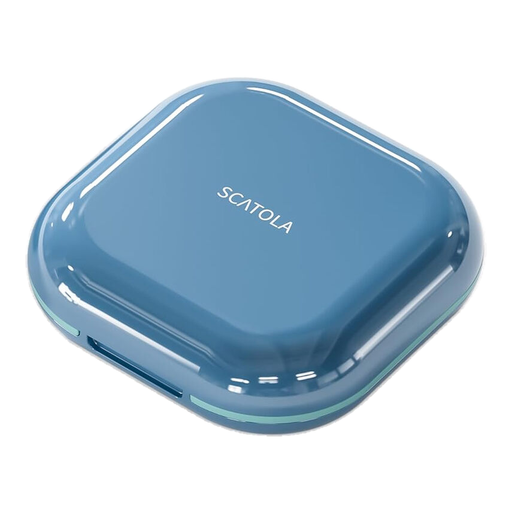
Why it suits this type of user: The four compartments offer a simple, organised starting point if you’re using a travel pill organiser for the first time or only carrying a few types of tablets and vitamins.
The number of compartments is clearly stated in the product name, so you can decide in advance whether the capacity suits your routine.
Four separate compartments and a size that, according to the product name, is designed for a bag or purse.
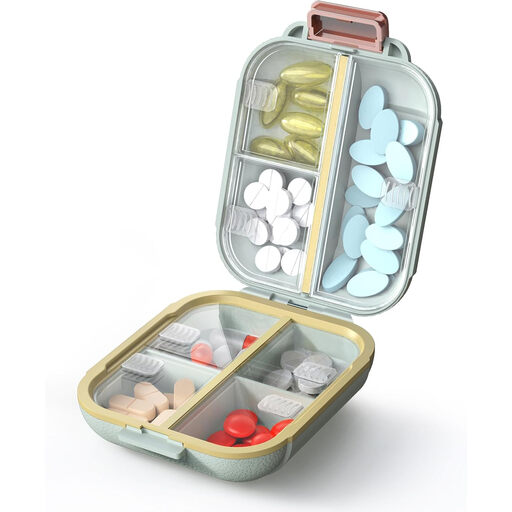
Why it suits this type of user: This model is a good fit if you want a weekly layout in a compact design. The product listing mentions seven compartments, an airtight lid and BPA-free material.
The seven compartments mean you don’t need a separate box for each day. The stated seal helps address the common concern of a loose lid.
Seven compartments; the product listing states that it’s made from BPA-free material and has an airtight lid.
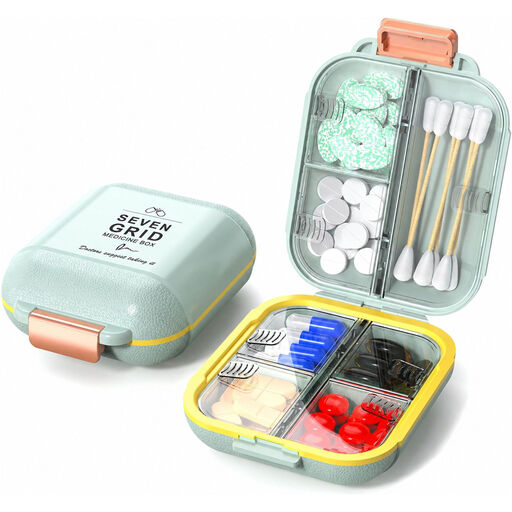
Why it suits this type of user: If you carry your pill box around often, you may appreciate the double closure and seven separate compartments. The product title also mentions BPA-free material and a silicone seal.
The double lock is designed to help prevent the box from opening accidentally in a bag. Before buying, check that you find the closure comfortable to use.
Seven compartments; the product title states that it has a double closure, BPA-free material and a silicone seal.
We’ve put together a complete, up-to-date list of products that meet these strict selection criteria and the applicable European safety regulations.
It can be, especially if you want to organise your tablets for the week. Check the capacity of each compartment and make sure your tablets or capsules will fit. For prescription medicines, always follow the storage and usage instructions on the packaging.
Its lifespan depends on the material, how often you use the closure and whether the box is exposed to heat or moisture. Replace it if a compartment cracks, the closure no longer stays shut properly or the seal shows visible signs of wear. Check the box for damage whenever you fill it.
A medication organiser has no fixed running costs. The purchase price is usually the main expense. A durable model may work out better value if its closure and compartments continue to function well with regular use. Above all, choose a size you’ll actually use; a large box with unused compartments offers little practical benefit.
