
Vandaag of morgen in huis

Kwaliteit gegarandeerd

Welkomstaanbiedingen ontgrendelen: GRATIS bezorging | Tot 80% korting | Gratis 30 dagen JoyPlus-proefperiode
Download de app
You often don’t realise you’ve chosen the wrong travel luggage until you get to the airport. Your cabin suitcase turns out to be a few centimetres too big, the wheels stick on uneven pavements or your travel bag offers less protection than you expected. Even a laptop bag can be impractical in everyday use if there’s no room for documents, a charger and accessories.
So don’t focus only on colour, price or a promise such as “lightweight”. Look at measurable features: dimensions, capacity, weight, material, wheels, fastening and compartments. That way, you can choose luggage to suit your trip, rather than the other way round.
A 20-inch suitcase isn’t automatically suitable as hand luggage. Airlines have different rules and often include the wheels and handle when measuring the outside dimensions. Always check your airline’s current requirements.
A compact trolley case measuring 34 × 22 × 52 cm can be practical for short trips, but it’s still worth measuring it yourself. With a cabin suitcase, the case’s own weight also counts towards the permitted limit.
An ABS suitcase is generally lightweight and has a hard outer shell. This makes it a good option if you want protection from knocks without taking a heavy suitcase. However, the material name alone doesn’t tell you everything about how long it will last. Check the zips, corners, handles and wheel attachments too.
A soft-sided bag can be more flexible and easier to fit into a car or tent. For camping gear, a large wheeled travel bag is usually more practical than a hard-shell case.
A TSA lock, vanity case or four 360-degree spinner wheels can be useful, but only if they suit your trip. A TSA lock is most relevant when your luggage may need to be opened by authorised security personnel. It’s no substitute for taking care of your valuables.
“Silent” wheels aren’t guaranteed to work smoothly on every surface either. Check whether the bag is suitable for smooth floors, pavements or unpaved paths. With a foldable travel bag, you should also check the wheel design and how the bag folds away.
Use these guidelines as a practical starting point:
Don’t compare capacity in litres alone. A 100-litre bag may have a different layout from a suitcase with the same capacity. Internal pockets, compression straps and a divider help keep clothes and accessories organised.
360-degree spinner wheels turn in multiple directions and are handy at stations, airports and on smooth hotel floors. Check whether the wheels are double wheels, are securely attached to the case and have enough clearance to keep dirt from getting trapped.
A telescopic handle should extend smoothly without too much wobble. For a wheeled travel bag, sturdy pull handles and extra carry handles are important. On stairs or sand, carrying the bag is often more practical than pulling it.
A combination lock won’t stop someone taking your bag, but it can help prevent the zip from being opened without your permission. If you have a suitcase set with a TSA lock, change the combination as soon as you buy it. Also check whether the interior has a zipped pocket, mesh pocket or compression straps.
For electronics, a padded compartment is more useful than just a large main compartment. A water-resistant laptop bag offers protection from light rain according to the product description, but it isn’t the same as a waterproof bag. Avoid leaving it out in the rain for long periods and follow the manufacturer’s care instructions.

Why it suits this type of traveller: This compact trolley case is designed for short trips and has a capacity of 30 litres. It weighs 2.5 kg, with external dimensions of 34 × 22 × 52 cm.
The exact external dimensions and capacity make it easier to check the case against your airline’s requirements before you travel.
ABS shell, swivel wheels, extendable handle up to 100 cm, lockable zip and combination lock.
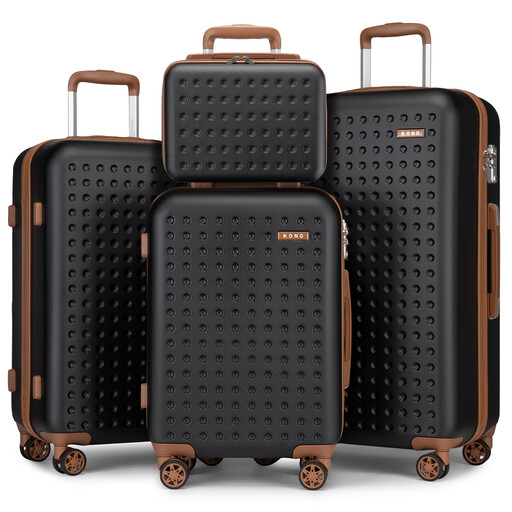
Why it suits this type of traveller: The set includes four pieces: 20-inch, 24-inch and 28-inch suitcases, plus a vanity case. That’s handy for trips of different lengths or family holidays.
The product description lists the external dimensions, weights and capacities of each piece. It states that the suitcases have 360-degree spinner wheels and a TSA-approved combination lock. Make sure you check your airline’s current requirements.
20-inch case with a capacity of around 40 litres, compression straps, mesh pocket, nested storage and a vanity case with a trolley sleeve.
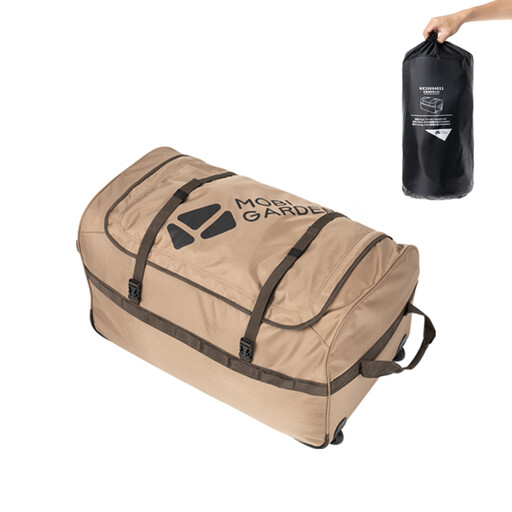
Why it suits this type of traveller: This large wheeled travel bag is designed for camping, fishing and travel. Its 110-litre capacity gives you room for bulky gear.
The bag folds away and has a stated packed size of 42 × 21 cm. The manufacturer recommends carrying it on stairs and pulling it on flat surfaces.
110-litre capacity, approximate empty weight of 1.75 kg, built-in wheels and compact storage when not in use.
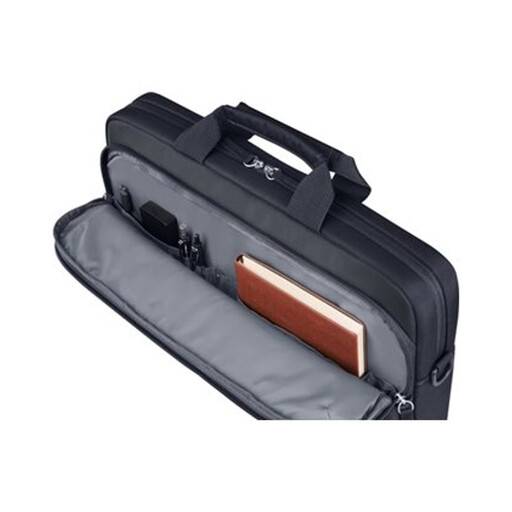
Why it suits this type of traveller: This 14-inch laptop bag is suitable for commuting, lectures and business trips. Its padded laptop compartment is designed for devices up to 14.1 inches.
Its 9-litre capacity and separate compartments for accessories, documents and quick access make it easy to see how everything will fit. The product specifications describe the bag as water-resistant, not waterproof.
600D polyester, detachable shoulder strap, carry handle, trolley sleeve and at least 60% recycled plastic according to the product information.
We’ve put together a complete, up-to-date range of products that meet these strict selection criteria and the applicable European safety regulations.
It depends on the airline, ticket type and route. Check the maximum external dimensions and permitted weight before you leave. Measure the suitcase with the wheels and handle included. A cabin suitcase accepted by one airline may have to be checked into the hold by another.
Its lifespan depends on how often you use it, how much you pack, the surfaces it travels over and how well you maintain it. Check the wheels, zips and pull handle regularly. Overpacking puts extra strain on the seams and wheel attachments. Clean the suitcase with a soft, damp cloth and remove sand or mud as soon as possible.
An ABS suitcase can be a practical choice if you’re looking for a hard outer shell and relatively low weight. As well as the material, consider the overall weight, the finish on the corners, the quality of the zips and the wheels. For fragile items, a well-organised interior with compression straps or a divider is just as important as the hard shell.
