
Vandaag of morgen in huis

Kwaliteit gegarandeerd

Welkomstaanbiedingen ontgrendelen: GRATIS bezorging | Tot 80% korting | Gratis 30 dagen JoyPlus-proefperiode
Download de app
A bag may look roomy, lightweight and water-repellent on paper, yet disappoint in practice. Problems with travel and luggage bags are often caused not by one obvious flaw, but by details that are hard to spot in product photos. Think of a bag that’s just too big for the cabin, a laptop compartment without suitable protection, or wheels that are awkward to manoeuvre when the bag is full.
Look out for these three common pitfalls:
Always measure a bag including any protruding parts, handles and wheels. An underseat flight bag measuring 40 × 20 × 25 cm is designed to fit under the seat, but you should still check your airline’s current requirements. Permitted dimensions and weights can vary, particularly with budget airlines.
A larger weekend bag measuring 55 × 35 × 25 cm offers around 48 litres of capacity. It’s practical for clothes, trainers or a short business trip, but not every airline classifies this size as the same type of cabin baggage. Before you travel, check:
A lightweight bag leaves more of your baggage allowance available for your belongings. Look at the weight of the empty bag as well as its material. According to the product information, the 40 × 20 × 25 cm Kono bag weighs around 0,5 kg. The larger 55 × 35 × 25 cm Kono holdall weighs around 0,7 kg.
An adjustable shoulder strap makes a travel bag with a shoulder strap more versatile. A bag with a trolley sleeve can also slide over the extendable handle of a suitcase. This means you have fewer loose items to carry around the airport. Check that the strap is sturdy enough for the loaded bag and sits comfortably on your suitcase.
Oxford fabric is often used for weekend bags, sports bags and cabin bags. The product descriptions for the Kono models mentioned here state that the outer fabric is water-repellent and the lining is polyester. So don’t treat water-repellent as another word for waterproof. It’s still a good idea to use a separate sleeve or waterproof protection for electronics.
Practical compartments are just as important as overall capacity. A main compartment for clothes, a mesh pocket for small items and a zipped front pocket for travel documents can make packing more organised. A suitable laptop compartment is also useful for students and business travellers. With a 15.6-inch laptop backpack, compare your laptop’s dimensions with the actual dimensions of the compartment; the screen size alone doesn’t guarantee a fit.
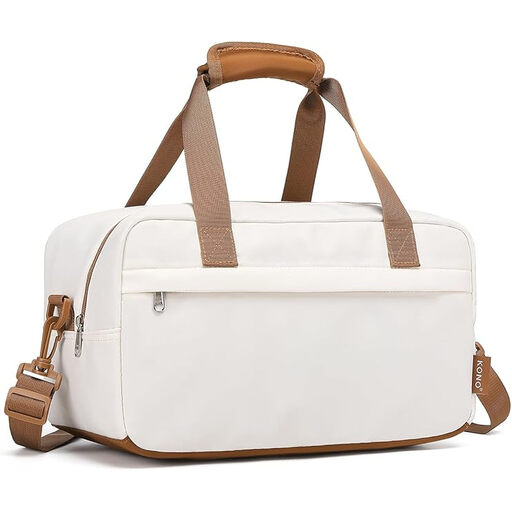
Why it suits this profile: Its compact size and low weight make it a good fit for first-time buyers looking for an underseat flight bag for short flights, day trips or weekends away.
The dimensions of 40 × 20 × 25 cm and weight of around 0,5 kg are clearly stated. Still, check your airline’s baggage rules.
20-litre capacity, adjustable shoulder strap, trolley sleeve and water-repellent Oxford fabric according to the product information.
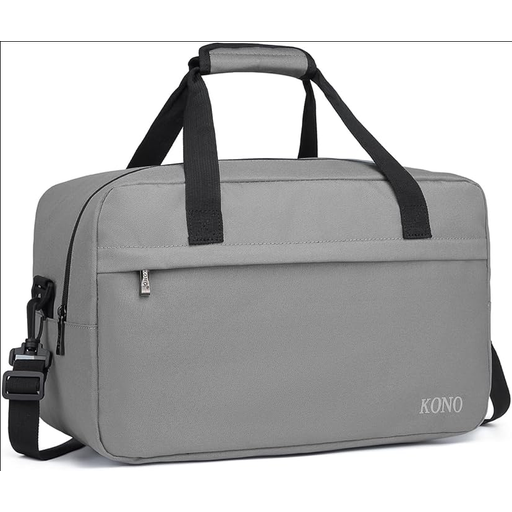
Why it suits this profile: This larger holdall is aimed at business trips, weekend stays and travellers who want to pack more clothes or equipment.
Its capacity of around 48 litres comes with a main compartment, mesh pocket and front pocket. Check the dimensions with your airline before every flight.
48-litre capacity, around 0,7 kg when empty, three carrying options and a trolley sleeve.
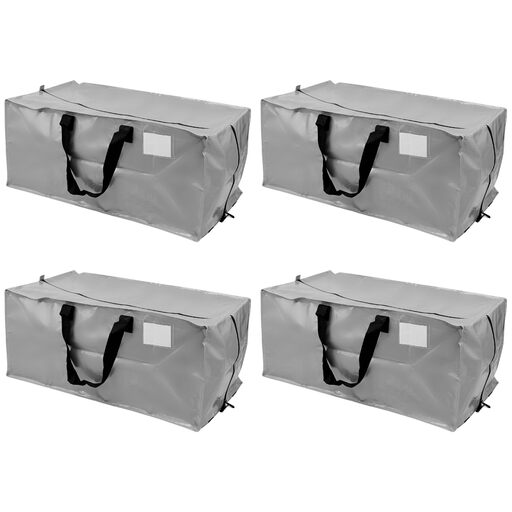
Why it suits this profile: Handy for moving house, storage and large amounts of textiles. These wheeled moving bags are an alternative to moving boxes when lifting and stacking aren’t your only considerations.
The dimensions of 73 × 34 × 37 cm and the four-piece pack make it clear what the bags are for. Check beforehand that doorways, stairs and storage spaces have enough room.
Set of four, large dimensions, handles, shoulder straps and wheels according to the product title.
A 15.6-inch laptop backpack is especially useful when you want to keep documents, your charger and personal belongings separate. The Urban Flip Cover 15.6 Inch Laptop Backpack is described as a water-repellent backpack with multiple compartments, scratch-resistant features and a luggage strap. Before buying, check the actual internal dimensions of the laptop compartment and whether there’s room for a laptop sleeve.
For commuting, a backpack is often more practical than a separate cabin bag. A trolley sleeve is handy on longer journeys, too. For students, a spacious main compartment may matter more than a rigid design; business travellers are more likely to focus on document pockets, carrying comfort and an organised layout.
A bag’s lifespan depends on how much you pack, how you use the zips, exposure to moisture and how you store it. Follow the manufacturer’s care instructions:
A wheeled bag is handy when carrying a heavy load, but lift it by the handles on stairs and kerbs. This helps reduce strain on the wheels.
We’ve put together a complete, up-to-date list of products that meet these strict selection criteria and the applicable European safety regulations.
It depends on the airline and ticket type. A 40 × 20 × 25 cm bag is designed to fit under the seat on airlines that allow this size, but always check the latest baggage requirements. A 55 × 35 × 25 cm bag may be accepted as cabin baggage in some cases, but this isn’t guaranteed.
Not without extra protection. Water-repellent material can help keep out light rain or splashes, but it isn’t the same as waterproof. Consider using a separate protective sleeve for your laptop, clothes or important documents.
There’s no set lifespan. How you use and store it, along with its weight, seams, zips and wheels, all make a difference. Choose a bag with suitable dimensions, avoid overloading it and follow the care instructions. This will help reduce the risk of premature wear.
