
Travel writer with long typing sessions
You regularly write longer pieces on a tablet or laptop, so a familiar keyboard layout and a reliable connection come first. The smallest packed size is less important.


Choose a keyboard that suits your writing device and workspace: a compact, fixed model for longer typing sessions, a foldable model when saving space in your bag is the priority, or multiple connection options if you switch between devices. Set up offline access to your travel journal separately, and save another copy on your device or an external drive; a keyboard does not back up your work.
You regularly write longer pieces on a tablet or laptop, so a familiar keyboard layout and a reliable connection come first. The smallest packed size is less important.
You want to be able to write on a phone or tablet too, and weigh up the packed size against the space the keyboard takes up when unfolded.
You want to check before setting off that your travel journal opens offline and find out how to make a separate copy. A keyboard alone cannot provide offline access or a backup.
Start with your writing space, the keyboard layout and how it connects to your device. Then set up offline access and a separate backup as two distinct steps.
| What to consider | What to check before buying | Who should pay particular attention? |
|---|---|---|
| Comfortable, practical typing | Check the layout of the version on sale, the position of punctuation keys and the dimensions; if possible, try out the key feel. | If you write longer pieces, you’ll want a familiar layout and key feel; around 30% of consumers prioritise comfortable typing. |
| Packing space and portability | Compare the folded size with the space available where you’ll write, and check the layout of the exact version. | If you have limited space in your bag, the packed size matters more than being able to set the keyboard up straight away; around 20% of consumers prioritise saving space when packing. |
| Connection and compatibility | Check that your device supports the Bluetooth, receiver or wired connection you want, and check the system input language too. | You’ll want to know in advance whether your device supports the connection and keyboard layout; around 30% of consumers make compatibility their top priority. |
| Offline access and backups | Check that your writing app and device work offline, and that the separate copy is saved to your chosen storage location. | If you need to keep writing without internet access, you’ll want offline access as well as a separate copy; around 20% of consumers prioritise this continuity. |
A document that opens offline is not automatically a separate copy. If there’s only one copy, losing your device could also mean losing your travel journal.
Make the document available offline, then separately check that the latest version is saved to your chosen backup location.
Without that separate copy, recovering your text could depend on the device you write on.
On models such as the Trust Lyra and CHERRY KW 9200 MINI, the receiver and Bluetooth are different connection options.
Decide in advance which connection you’ll use with your writing device and check that the required port is available.
A foldable keyboard takes up less space when folded, but you’ll need enough room to write when it’s unfolded.
Compare both the folded and unfolded dimensions with your bag and the space where you plan to type.
The Lyra is a compact, standalone keyboard for anyone who wants to switch between a phone, tablet and computer.
The KW 9200 MINI is a compact option if you want to compare Bluetooth, receiver and wired connections.
The foldable XK01 is worth considering if its packed dimensions and switching between Bluetooth devices matter to you.
The Pebble Keys 2 K380s is a fixed, compact Bluetooth model; the MX Keys Mini is a separate compact model with backlighting.
This selection includes foldable Bluetooth keyboards and wireless models ranging from compact to full-size. Choose according to your packing space, writing area and preferred connection; set up offline access and backups using your writing device.
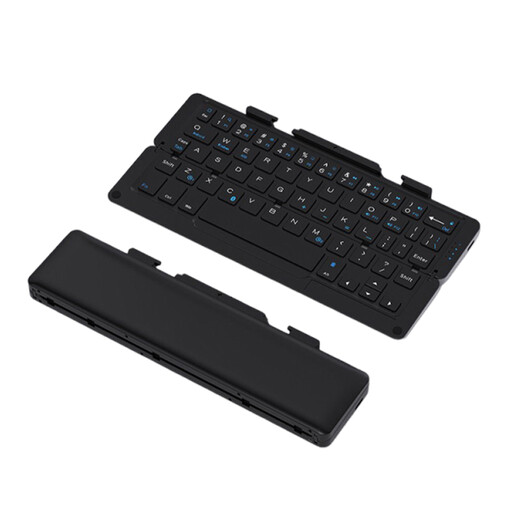 No image available
A foldable model for anyone who wants to write on a phone or tablet while travelling.
The product title mentions a magnetic stand, an aluminium casing, quiet keys and a rechargeable battery.
The product description says it can switch between up to three devices.
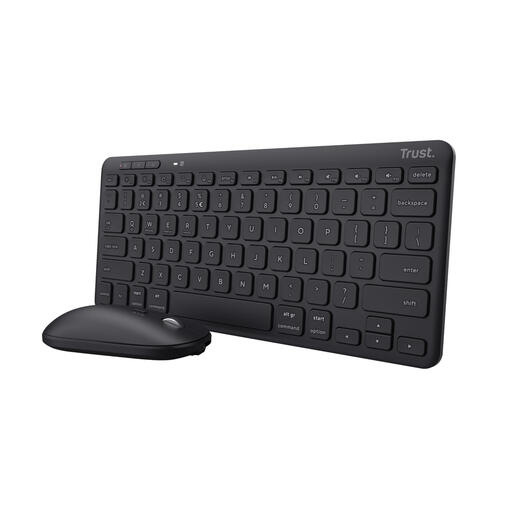 No image available
A compact, fixed model for anyone who wants to switch between devices while travelling and also needs a mouse.
The product information lists a compact TKL format, scissor keys, Bluetooth and a USB receiver for connecting to up to three devices.
The listed keyboard layout is QWERTY US; a mouse is also included.
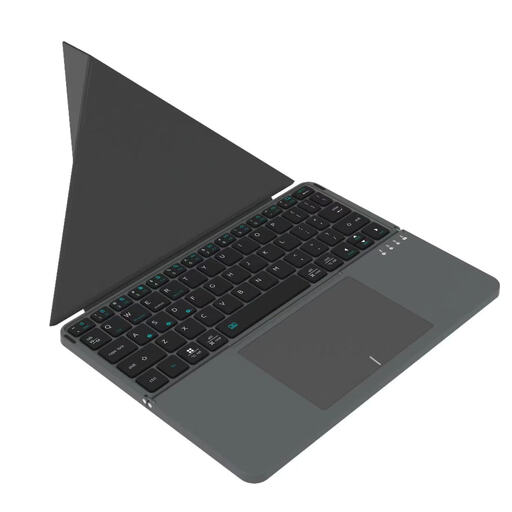
 No image available
A foldable option for anyone short on packing space who wants to use a touchpad.
The product information lists 63 keys, Bluetooth and support for iOS, Android and Windows.
Specified folded dimensions: 152 × 97 × 12 mm. Also check that the unfolded size suits your writing space.
 No image available
A foldable model for anyone who wants to write on a mobile device while travelling and use a touchpad.
The product information lists 64 keys and Bluetooth.
Specified folded dimensions: 157,5 × 98 × 15,8 mm. Check that the unfolded size suits your writing space.
 No image available
A full-size model for anyone who values a number pad and the ability to connect to multiple devices, but can make room for its size in their luggage.
The product information lists scissor keys, three Bluetooth channels and a USB receiver.
Specified dimensions: 440 × 130 × 25 mm; weight: 550 g. The listed layout is QWERTY US.
No. Make the document available offline in the app you use, and also create a separate copy using your writing device. Microsoft describes File History for Windows with an external drive; Apple describes Time Machine for Mac with external storage.
Follow Google’s offline instructions for your device, make the specific document available offline, then test it with your internet connection switched off. The process differs between a computer and the mobile app.
Check that the keyboard layout matches the input language on your device. Trust lists an incorrect system input language as a possible cause of characters appearing incorrectly.
No. The Dutch government says there is no fixed statutory warranty period in the Netherlands. What you can expect from a product depends, among other things, on the type of product and the sales information; if a product is faulty, contact the seller.
For distance purchases from a business, the Dutch government says you are entitled to a 14-day cooling-off period in many cases. Check the seller’s information for your order; purchases from a private individual are not covered by the same distance-selling rules.