
Traveller who styles their fringe precisely
You mainly want to dry one section of hair in your hotel room. Look for a suitable concentrator nozzle and adjustable airflow and heat settings.


For precise fringe drying, choose a hairdryer with a concentrator nozzle included in the set and adjustable settings. Philips explains how to direct the airflow onto a brush using a nozzle. A folding model can save space in your luggage; also check which attachments are included, the voltage it supports and the safety information for the exact version.
You mainly want to dry one section of hair in your hotel room. Look for a suitable concentrator nozzle and adjustable airflow and heat settings.
You want a hairdryer that’s easy to pack, but also need to know whether the version you’re considering includes the attachments you need.
Check the voltage range of the exact model against the power supply at your destination. A travel hairdryer won’t automatically work with every mains voltage.
For anyone taking a hairdryer to dry their fringe in a hotel room, the main considerations are precise styling, how easily it fits in your luggage, comfort in the room and compatibility with the power supply.
| What to consider | What should you look for? | Who should pay particular attention? |
|---|---|---|
| Directed airflow | Check that the set includes the right concentrator nozzle and that you can adjust the airflow and heat settings. | If I want to dry my fringe while brushing it, I need to be able to direct the airflow onto that section of hair. Around 40% of consumers in this hotel scenario prioritise precise styling. |
| Space in your travel bag | Check whether the handle folds and look at the weight and the contents of the package. | If I have limited luggage space, I want to pack my hairdryer compactly without forgetting the nozzle I need. Around 30% of consumers prioritise saving luggage space. |
| Comfort in the bedroom | Compare noise data only when measurements were taken under the same conditions, and check which heat and airflow settings are available. | If I’m sharing a hotel room, I want to be considerate of my room-mate and choose the heat setting myself. Around 20% of consumers prioritise room comfort and manageable heat. |
| Mains voltage when travelling | Compare the model’s voltage range with the power supply at your destination, and check the plug too. | If my destination might have a different mains voltage, I want to know whether the manufacturer says the hairdryer can be used there. Remington specifies 120–240 V for the D2400; Beurer lists 220–240 V for the HC 17. Around 10% of consumers prioritise power compatibility. |
The term ‘travel hairdryer’ doesn’t confirm that a model is suitable for every mains voltage. Beurer lists 220–240 V for the HC 17; check the information for the version you plan to take with you.
Compare the voltage range shown on the hairdryer and in the manufacturer’s documentation with the power supply at your destination. Also check that the plug will fit.
For precise drying, what matters is what’s in the specific package. Rowenta shows a concentrator nozzle as an accessory for the Nomad CV3312, but that doesn’t prove it’s included with the set on offer.
Check the package contents and make sure any separately sold nozzle is compatible with the model.
If the right nozzle isn’t included in the set, you may need to buy one separately.
The stated power rating isn’t, by itself, a measure of drying time or noise. When drying your fringe, start by choosing a suitable nozzle and useful settings.
Only compare drying-time or noise measurements if they were taken on the exact models under comparable conditions.
Remington describes the D2400 and D1500 as different On The Go travel hairdryers; the features listed apply to those models.
Beurer describes the HC 17 as a compact, folding hairdryer with a styling nozzle.
Rowenta describes the Nomad CV3312 as a folding travel hairdryer with two settings and two voltage options.
This selection includes compact or travel-designated hairdryers, as well as a model with a folding handle. Before deciding, check the package contents, mains voltage and safety information for each version.
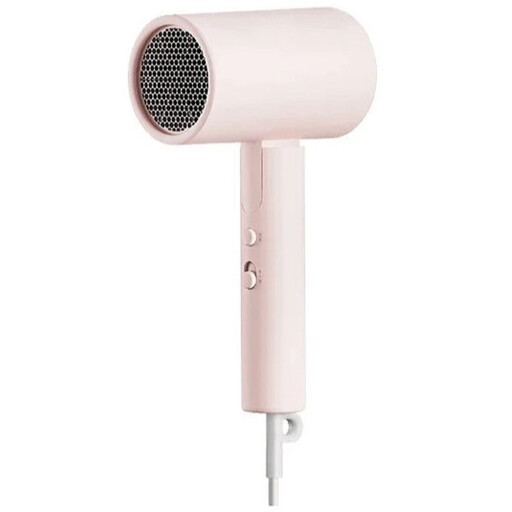 No image available
A compact hairdryer for anyone looking to save space in their luggage; check whether the set on offer includes the concentrator nozzle needed for styling your fringe.
The stated input voltage is 220–240 V. Compare this range with the power supply at your destination.
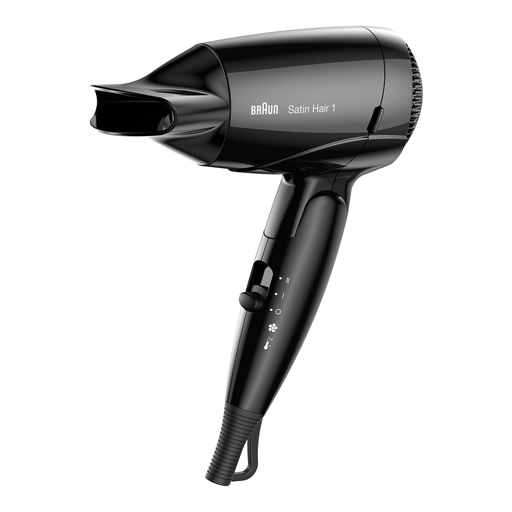 No image available
The product name identifies this as a travel hairdryer; check that the version is compatible with the power supply at your destination and that the right nozzle is included.
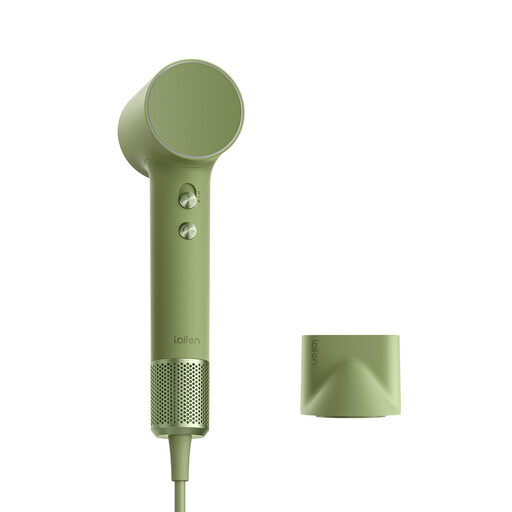 No image available
The product name describes this as a mini travel hairdryer; check the voltage range for your destination and the set contents for styling your fringe.
The product name specifies a brushless motor (110,000 RPM).
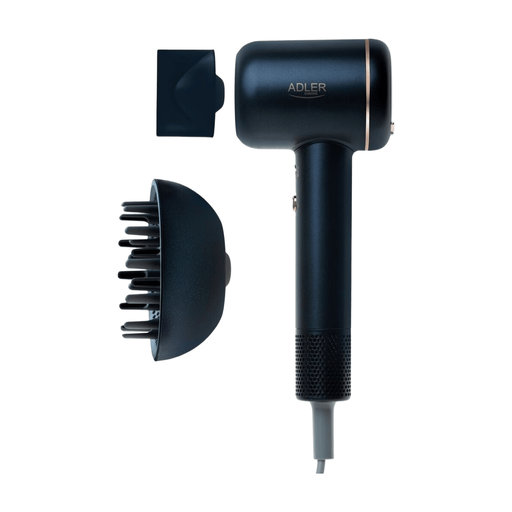 No image available
The folding handle could suit anyone who wants to pack their hairdryer compactly; check whether the set includes a suitable nozzle for drying your fringe precisely.
The product name specifies a power rating of 1200 W.
If you want to direct airflow along a brush onto one section of hair, Philips describes using a concentrator nozzle. A diffuser is designed for a different styling purpose; check which attachments are included with each version.
No. Compare the voltage range of the exact hairdryer with the power supply at your destination. Remington specifies 120–240 V for the D2400; Beurer’s datasheet lists 220–240 V for the HC 17. Also check that the plug will fit.
Follow the instructions for the exact model and keep the air vents clear. Brandweer Nederland advises taking care when connecting electrical appliances; fully unwind any cable reel and follow the hotel’s house rules.
The Netherlands Food and Consumer Product Safety Authority states that CE marking is compulsory for electrical products. Check the marking and safety information for the specific model; the marking alone doesn’t tell you whether the hairdryer is compatible with the power supply in your hotel.
No. According to the Dutch government, there’s no fixed statutory warranty period in the Netherlands. You’re entitled to a product that works as it should, and can contact the seller if there’s a fault; a manufacturer’s warranty is additional.