
Narrator in a reverberant room
You mainly want to record clear speech and can adjust the microphone distance or recording position. Shure explains how microphone distance and placement affect the balance between direct voice and room sound.


When room echo is audible, having the microphone close to your mouth matters more than choosing between a handheld recorder and a clip-on recorder: a microphone placed further away will also pick up reflections from the room. Choose a standalone recorder with a clip-on microphone if you’ll be moving around; a handheld recorder is a good fit if you can position it close to your voice or want to capture the atmosphere of the location too. Neither replaces a suitable recording space and a test recording.
You mainly want to record clear speech and can adjust the microphone distance or recording position. Shure explains how microphone distance and placement affect the balance between direct voice and room sound.
You speak while walking or in changing locations, so a microphone that moves with you can be useful. The Tascam DR-10L Pro and Zoom F2 are examples of standalone recorders with clip-on microphones.
You want to capture ambient sound separately and can position a handheld recorder to do so. Zoom describes the H1essential’s built-in X/Y microphones; Tascam describes the DR-07XP’s adjustable A-B and X-Y microphone positions.
Shure recommends testing microphone distance and position at your intended recording location. Then consider which recorder setup best suits the way you speak.
Choose this setup: if you move while narrating or want to keep the microphone close to your mouth without holding a handheld recorder.
Trade-off: this setup is less suited to recording the surroundings in spacious stereo; also consider how the microphone is attached and the risk of clothing rustle.
Choose this setup: if you can speak close to the recorder while standing still, or also want to capture ambience and location sound.
Trade-off: if the recorder is further away, the recording may contain more audible room echo; stereo recording won’t make a reverberant room acoustically dead.
Choose this setup: if you record in a fixed location and already have a suitable recording device.
Trade-off: the Shure MV7+ is not a standalone recorder; for XLR, you’ll need a separate recorder or audio interface.
| Consideration | What to look for when buying | Who is this important for? |
|---|---|---|
| Clear speech | Check that you can position the microphone close to your mouth, then listen to a test recording made at your intended location. | I want my voice to remain clear despite the echo, and I can experiment with the location and distance. Around 36% of consumers with this recording need prioritise speech clarity. |
| Recording while moving | Check which microphone and attachment come with the exact model; test the setup with the clothes you’ll be wearing. | If I’m speaking while walking, I want the microphone to move with me rather than relying on a recorder that stays in one place. Around 29% of consumers with this recording need prioritise freedom of movement. |
| Capturing the atmosphere of a location | Decide whether you want to record ambient sound separately, and check the stereo microphones and positioning options. | I want to capture ambient sound as well as the voice-over, and I can make a separate recording for it. Around 14% of consumers with this recording need prioritise location ambience. |
| Recording and transferring files | Check the storage, power supply and connection to your editing device for the exact model. | I want to be able to record independently and transfer files without having to overhaul my workflow afterwards. Around 21% of consumers with this recording need prioritise their recording workflow. |
32-bit float recording helps with changing recording levels, but it won’t automatically separate your direct voice from room reflections.
First, test different microphone distances and recording positions, then listen back before comparing recorder features.
A microphone positioned too far away may mean more recording time and post-production.
If the recorder stays in one place while you move, the distance between your voice and the microphone changes, which can make the room more noticeable in the recording.
If you’ll be speaking while moving, consider a standalone clip-on setup instead, and record the atmosphere of the location separately if you wish.
Depending on your setup, you may need to re-record or use a suitable external microphone.
The Shure MV7+ provides a microphone signal, but it doesn’t record on its own.
Before you buy, check the complete recording chain, including the device and software you’ll need.
This setup also requires a suitable computer or recorder; with XLR, you may also need an audio interface.
Tascam offers the DR-10L Pro, a standalone recorder with a clip-on microphone, and the DR-07XP, a handheld recorder for stereo recordings.
The Zoom F2 is a standalone recorder with a clip-on microphone; the H1essential is a handheld recorder with built-in X/Y microphones.
The MV7+ is a close-talk microphone for a fixed setup with a computer or a separate recording device.
These Joybuy products are digital voice recorders for recording spoken content. For each model, check that the microphone setup suits your recording location and need for freedom of movement.
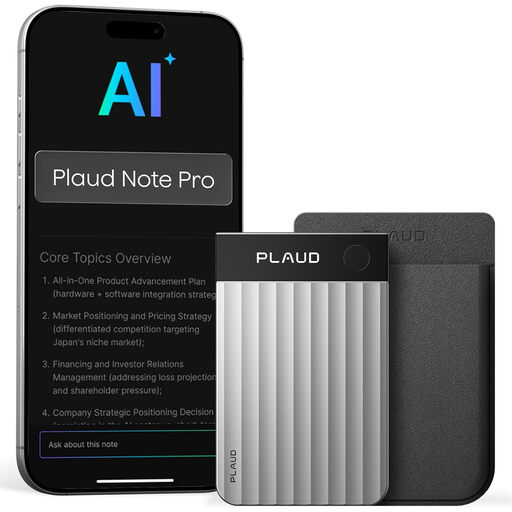 No image available
The title describes this as a voice recorder for spoken recordings; bear the microphone distance and recording location in mind if there’s audible echo.
The product title mentions transcription and summaries.
 No image available
The product title describes a digital voice recorder for spoken recordings; check that you can position the microphone close enough to your voice.
The title mentions 64 GB and a transcription function.
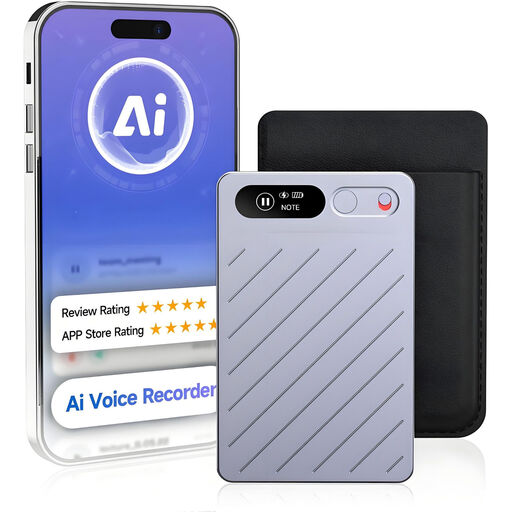 No image available
The title describes this as a mini voice recorder for spoken recordings; microphone placement remains important in a reverberant room.
The product title mentions transcription and summaries in 118 languages.
 No image available
A portable digital voice recorder may suit spoken recordings; check how you can position the device close to your voice.
The product title mentions 128 GB, an LCD screen and the grey finish.
 No image available
The title describes a digital voice recorder with one-touch recording; if room echo is audible, bear in mind the distance between the microphone and speaker.
The title mentions 64 GB; the product description lists WAV recording and file transfer via USB-C.
No. This recording mode helps with changing recording levels, but it doesn’t change the balance between direct voice and reflections. Position the microphone closer to your voice and listen to a test recording first.
Record a few sentences at your intended location and listen back. Shure recommends trying different microphone distances and positions; also check the power supply and storage on your exact recorder.
According to the Dutch government, the seller must offer a solution if a product is faulty. There is no fixed statutory warranty period of two years in the Netherlands; what you can expect depends, among other things, on the product and normal use. In many cases, purchases made online from a business also come with a 14-day cooling-off period.
Don’t assume that you can. The Dutch Data Protection Authority says that processing personal data requires a legal basis, and that publishing other people’s personal data online is generally only allowed with their consent. Whether a voice makes someone identifiable in a particular recording, and which legal basis applies, depends on the circumstances; this is not a blanket consent requirement for a recording of your own voice alone.