
Vandaag of morgen in huis

Kwaliteit gegarandeerd

Welkomstaanbiedingen ontgrendelen: GRATIS bezorging | Tot 80% korting | Gratis 30 dagen JoyPlus-proefperiode
Download de app
A travel bag may seem easy to choose: decide on the size, pick a colour and place your order. In practice, most disappointing purchases are caused by details that only become apparent while travelling. A bag may look spacious, for example, but offer little usable room because of its awkward shape. “Water-repellent” is also sometimes understood to mean fully waterproof, although the two are not the same.
For travellers, students, sports enthusiasts and families, these three pitfalls are particularly important:
The wrong dimensions for hand luggage
A bag that looks compact on paper may exceed the limit when its side pockets are full or its main compartment is overstuffed. Always check your airline’s maximum dimensions. A Ryanair underseat bag, for example, must comply with the current rules for luggage stored under the seat. A product’s dimensions do not guarantee that every airline will accept it without checking.
Confusing capacity with carrying comfort
A spacious 36- or 48-litre travel bag can hold plenty of clothing, but it can also become heavy quickly. Pay attention to the handles, whether the bag has a shoulder strap and whether it includes a trolley strap. Wheels are practical for large quantities of camping equipment, but on stairs or uneven ground you may still need to carry the bag.
Confusing water-repellent with waterproof
According to a product description, nylon and Oxford fabric may offer protection against light rain, splashes or spilled liquids. This does not automatically mean that the seams and zips will keep out prolonged rain or withstand immersion. For electronics or important documents, use a separate protective pouch.
Do not look only at the number of litres; check the external dimensions too. A hand luggage bag measuring 35 × 20 × 20 cm is a different type of product from a cabin bag measuring 55 × 35 × 25 cm. The former is designed for limited luggage stored under the seat, while the latter offers considerably more space but may be treated as larger cabin baggage by some airlines.
A practical guide:
Before setting off, check the dimensions, weight and permitted baggage category with your airline. Product descriptions may refer to a bag as “cabin” or “carry-on”, but the final requirements are set by the airline.
Many travel bags are made from nylon, polyester or Oxford fabric. Nylon is often lightweight and easy to clean with a damp cloth. Oxford fabric generally feels more robust and is often used for hand luggage and duffel bags.
Pay attention to the difference between:
According to Kono’s own product descriptions, certain models are made from water-repellent nylon or water-repellent Oxford fabric. Treat this as a material property for normal use, not as a guarantee against prolonged exposure to rain. A separate wet compartment can, however, help keep swimwear, towels or sweaty sportswear away from dry belongings.
A duffel bag with only two short handles is suitable for short distances. An adjustable shoulder strap is more comfortable for stations, airports and longer walks. A trolley strap lets you slide the bag over a suitcase handle, so you do not have to carry everything at once.
Also check:
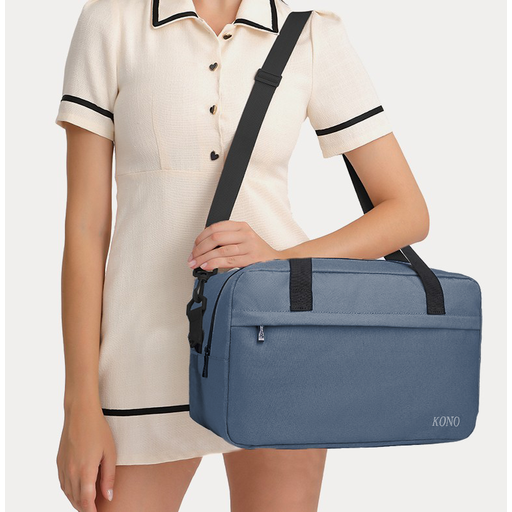
Why it suits this profile: This compact 14-litre, 0.3 kg bag is designed for travellers flying with minimal luggage who want to store their belongings under the seat. Always check your airline’s requirements.
The external dimensions are clearly stated, making it easy to compare the bag with baggage rules in advance. It also has a front pocket for documents.
14-litre capacity, 0.3 kg weight, adjustable shoulder strap and trolley strap according to the product information.
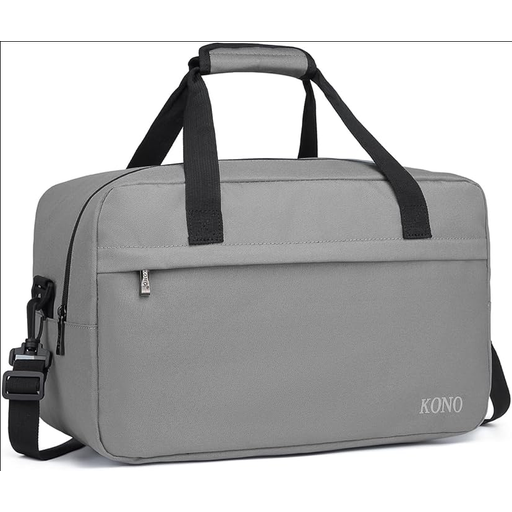
Why it suits this profile: If you need more structure and space for clothing, business essentials or a weekend trip, this bag combines a main compartment, mesh pocket and front pocket.
The bag states the exact dimensions of 55 × 35 × 25 cm. This allows you to check in advance whether it falls within your cabin baggage allowance.
Approximately 48-litre capacity, 0.7 kg weight, shoulder strap and attachment strap for a suitcase.
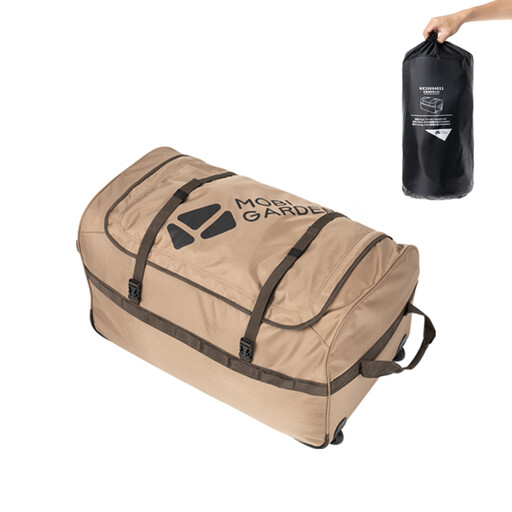
Why it suits this profile: This camping bag is designed for large, heavy items such as tents, chairs and cooking equipment. The wheels reduce the need to carry it on flat surfaces.
The capacity, packed size and weight are listed separately. This makes it clear that greater capacity also means a larger overall size, so it is not suitable as hand luggage.
110-litre capacity, folds down to approximately 42 × 21 cm and has wheels, according to the product information.
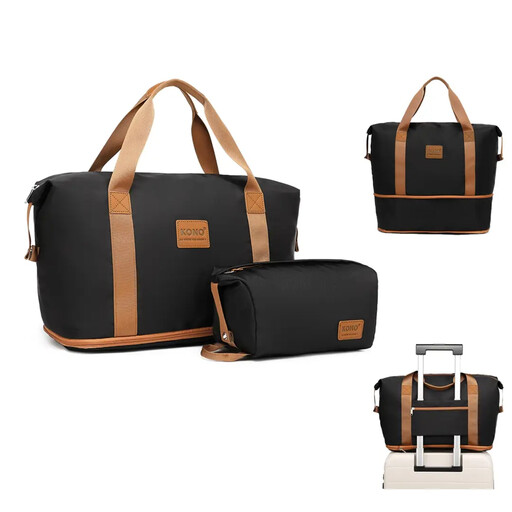
Why it suits this profile: This bag is ideal if you want one model for use as a weekend bag, sports bag or travel bag for short stays. The base zip provides extra space whenever you need it.
The expandable design lets you adjust the capacity to suit your needs. According to the product description, the separate wet compartment prevents damp clothing from coming into direct contact with dry belongings.
36-litre expandable capacity, water-repellent nylon, wet compartment, wash bag and trolley strap according to the product information.
We have put together a complete, up-to-date list of products that fully meet these strict selection criteria and the applicable European safety regulations.
This depends on the airline and the ticket you have chosen. Compare the external dimensions, not just the capacity in litres. A bag measuring 35 × 20 × 20 cm is intended for a different baggage category from a model measuring 55 × 35 × 25 cm. Measure the bag when fully packed and allow for soft sides that may expand.
A water-repellent bag can offer protection against light rain and splashes, but it is not automatically waterproof. Give valuable belongings extra protection with a waterproof pouch. Clean the bag with a damp cloth and follow the manufacturer’s care instructions.
Wheels can be useful for heavy luggage on flat surfaces. On stairs, sand and uneven paths, a carrying strap is more practical. Choose according to your route: a trolley strap and shoulder strap are useful at airports, while a sturdy handle and compact packed size are better suited to camping or everyday use.
