
Vandaag of morgen in huis

Kwaliteit gegarandeerd

Welkomstaanbiedingen ontgrendelen: GRATIS bezorging | Tot 80% korting | Gratis 30 dagen JoyPlus-proefperiode
Download de app
Buying a trampoline seems simple. You choose a size, look at the price, and place an order. Yet, many people end up with a model that becomes unusable after a few months, turns out to be unsafe, or simply doesn't meet their needs. Before you invest in jumping fun for the kids or a fitness routine for yourself, it's wise to look beyond the marketing jargon. We'll outline the most common pitfalls and give you objective criteria to make the right choice.
Many trampolines look the same at first glance, but the details determine their quality and safety. Watch out for these common problems.
To avoid a bad purchase, focus on a few concrete specifications. These determine the safety, durability, and user-friendliness of the trampoline.
The frame is the skeleton of the trampoline. For a garden trampoline, a frame made of galvanized steel is a must. This material is treated to prevent rust from rain and moisture. The protective pad (the cushion that covers the springs) must be thick enough and completely cover the springs to prevent contact. Check if the product complies with relevant safety standards, such as EN 71 for toys, which sets requirements for materials and construction.
The suspension determines the jumping experience and the noise level.
Match the size to the user and the available space. A mini trampoline typically has a diameter of 90 to 120 cm and is suitable for fitness exercises. A large trampoline for multiple children often starts at a diameter of 244 cm. Just as important is the maximum weight capacity. A cheap kids' trampoline often has a limit of 25-50 kg, while models for adults or families should be rated for 100 kg or more. Never use a trampoline with more weight than specified.
Based on these objective criteria, we have selected a number of models that suit different user profiles.
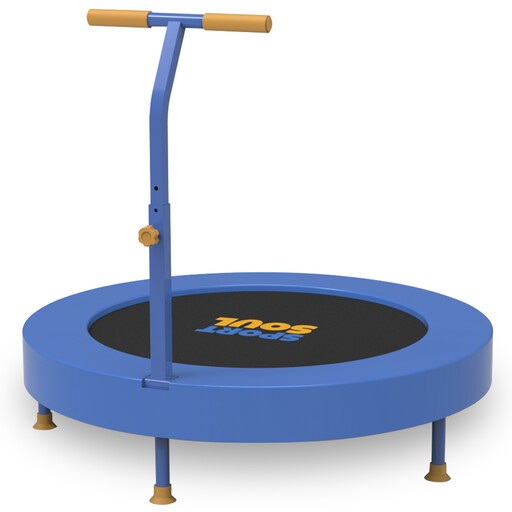
Why This Fits Their Persona: This model is designed for young children to safely burn off energy indoors. Its compact size fits in most play areas or living rooms, and the T-shaped bar provides extra support for beginner jumpers.
This trampoline uses 24 elastic bands instead of steel springs. This prevents the 'noisy surprise' and makes it suitable for use in apartments without disturbing the neighbours.
The bar is height-adjustable and the frame is foldable, making the trampoline easy to store. The main components are pre-assembled for quick installation.
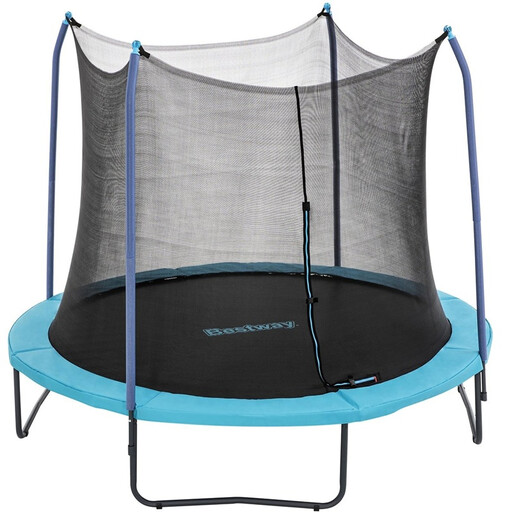
Why This Fits Their Persona: With a diameter of over 3 metres, this trampoline offers plenty of space for energetic kids. It is specifically designed for outdoor use and built to withstand the weather elements in the UK.
This model tackles the 'false sense of security' pitfall. The safety net is fully sewn in, leaving no gap between the mat and the edge. The steel poles are covered with foam.
The frame is made of galvanized steel with a powder coating for double protection against rust. The jumping mat and safety pad are weather-resistant. According to Bestway, the included QuickSpring tool simplifies assembly.
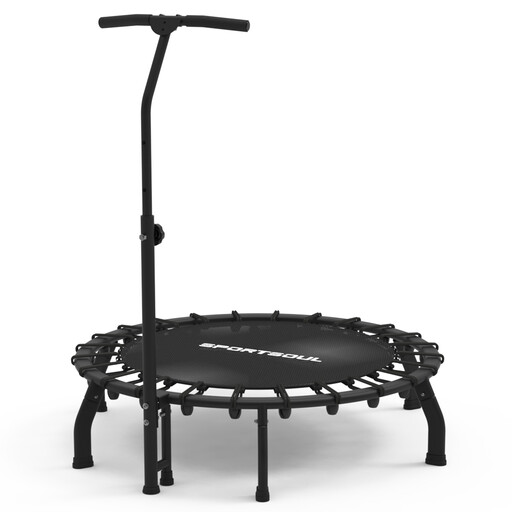
Why This Fits Their Persona: This is a serious rebounder for anyone wanting an effective, low-impact cardio workout at home. The 42-inch (107 cm) size provides enough space for various exercises, while the unit remains compact enough for most homes.
This fitness trampoline is equipped with elastic bands, making it quiet to use and minimising impact on the joints. This prevents both noise disturbance and unnecessary strain on the body.
The high maximum user weight of 120 kg makes this model suitable for a wide range of users. The elastic bands and jumping mat are pre-assembled, which reduces installation time.
We have compiled a complete, up-to-date list of trampolines that meet these objective selection criteria and safety regulations.
For safety, it is recommended to maintain a clear zone of at least 2 metres around the entire trampoline. Ensure this area is free of obstacles such as walls, fences, trees, or garden furniture. Also, check for sufficient vertical clearance, with no overhanging branches or roofs.
Regular maintenance is essential. Periodically check that all bolts and springs are still securely fastened. Inspect the jumping mat, the safety pad, and the safety net for signs of wear or damage. Clean the trampoline with a soft cloth and mild soap. To significantly extend its lifespan, it is advisable to dismantle the trampoline in winter and store it in a dry place.
Steel springs provide a short, powerful, and high rebound, which many people associate with the classic trampoline experience. Elastics offer a deeper, softer, and quieter bounce. This lower impact is more comfortable for the joints and makes elastics a popular choice for rebound fitness, where the focus is on repeated, controlled movements rather than maximum height.
