
Vandaag of morgen in huis

Kwaliteit gegarandeerd

Welkomstaanbiedingen ontgrendelen: GRATIS bezorging | Tot 80% korting | Gratis 30 dagen JoyPlus-proefperiode
Download de app
Trainers are versatile: you can wear them to school, the office, on a walk or in your free time. Yet a pair can sometimes seem more suitable online than it is in practice. A smooth sole can be awkward on wet British streets, a narrow fit can pinch and white trainers require more maintenance than expected.
With this guide, you can compare women’s trainers, men’s trainers and unisex trainers based on features you can check in advance. That way, you can choose a pair that suits how you use them, your foot size and your clothing style.
A striking tread or thick sole does not automatically mean good grip. Check the material and shape of the outsole. Rubber is often used for everyday footwear and sports shoes, but the tread and flexibility also determine how the trainers perform on tiles, tarmac and wet surfaces.
A flat sole can be comfortable for casual trainers or skate trainers, but it is not the same as a sole designed for running or long walks.
Size 37, size 39 or size 41 can fit differently depending on the brand and model. So also pay attention to:
For example, the Skechers Sport Court 92 is described as having a regular fit. The product information gives a foot length of 24 cm for EU 37 and 26 cm for EU 39. Use information like this as a starting point, but always compare it with your own foot measurement.
Comfort is not a fixed, measurable quality for every wearer. Instead, look at specific details such as a padded insole, EVA cushioning, a textile lining and the flexibility of the sole. Trainers with a leather upper can feel sturdy, while mesh usually offers greater ventilation.
According to the product description of the PUMA Team Royal, IMEVA is used to create a lightweight feel. This is a brand-specific material claim; also assess the fit, sole and intended use.
The upper affects appearance, maintenance and ventilation.
Also check whether the product contains non-textile components of animal origin. This is explicitly stated for several Vans and PUMA models.
An EVA insole or midsole can contribute to a lightweight feel and cushioning, but the experience varies depending on the foot and surface. For everyday use, a soft insole and sufficient room in the forefoot are often more important than a marketing term.
The Skechers Sport Court 92 lists a shock-absorbing midsole, an air-cooled insole and a 2 cm rubber outsole. On paper, this makes the model suitable for everyday use, but not automatically for running training.
Choose the sole based on your activity:
For children who wear their shoes at school, during sports and while playing, a sturdy sole and secure fastening are important points to check.
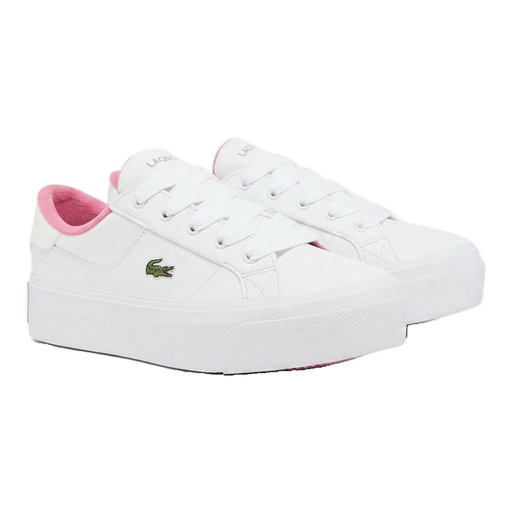
Why it suits this profile: The white base with light pink details is easy to pair with jeans, sportswear and school outfits. According to the product description, the model is designed for active use by children.
The product specifications list a padded EVA insole and rubber outsole. This means you can compare comfort and sole material in concrete terms rather than judging the trainers by appearance alone.
Synthetic leather and textile upper; rubber outsole; padded EVA insole.
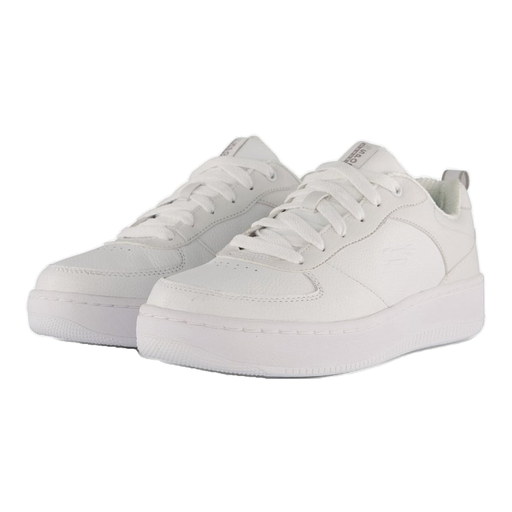
Why it suits this profile: This low-top court model is ideal for adults looking for one pair for everyday use, work and relaxed walks.
The product information links size 39 to a regular fit and a foot length of 26 cm. The sole, fastening and materials are also clearly specified.
Synthetic leather upper; padded insole; 2 cm rubber outsole; lace-up fastening.
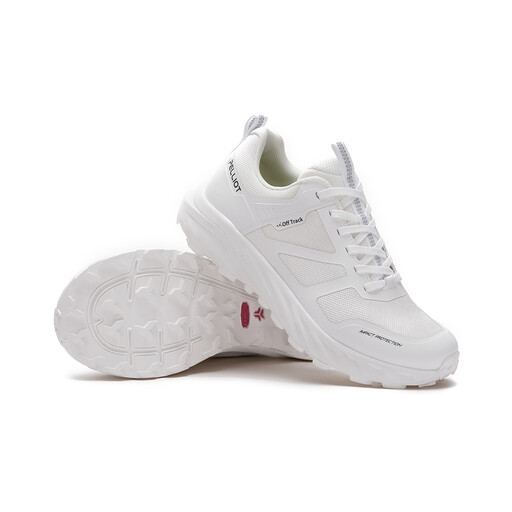
Why it suits this profile: According to the product information, the construction is intended for road-to-trail use and a range of surfaces. This makes the model better suited to active users than an ordinary lifestyle trainer.
Instead of a flat casual sole, the product specification lists a ROCKYTEC rubber outsole with tread and wear resistance. Hand wash the shoes and leave them to air dry.
Sandwich mesh and woven upper; EVA midsole; EU 39 for a recommended foot length of 24.5 cm.
We have compiled a complete, up-to-date list of products that fully meet these strict selection criteria and the applicable European safety regulations.
Measure both feet at the end of the day while wearing the socks you would normally wear with your trainers. Note the length of the longer foot and, for closed shoes, allow roughly a little finger’s width of space around the toes.
Examples from the models mentioned:
Keep the box and check the shoes indoors before wearing them outside. This allows you to assess the fit without causing unnecessary signs of wear.
Lifespan depends on walking distance, weight, surface, moisture and how often you alternate between different shoes. Allow wet trainers to dry naturally and avoid direct heat. Clean white synthetic leather with a soft, damp cloth. Suede and canvas require a different brush or cleaning method.
Do not automatically use running shoes as everyday casual trainers, or vice versa. With intensive sports use, the cushioning can change more quickly, so check the sole, stitching and insole regularly. Replace a pair when the fit becomes unstable or the tread is clearly worn down.
Low-top casual trainers with a padded insole, secure fastening and rubber sole are often practical. For longer walks, it is better to consider cushioning, weight and support rather than appearance alone.
That depends on the material and finish. White synthetic leather models are generally easy to wipe clean, but no ordinary trainer is automatically waterproof. Check the product information and allow the shoes to dry thoroughly after getting wet.
There is no fixed timeframe. Look for wear on the tread, cracks in the upper, deformation of the insole and changes in stability. Someone who wears the same pair every day may see signs of wear sooner than someone who alternates between several pairs.
