
Vandaag of morgen in huis

Kwaliteit gegarandeerd

Welkomstaanbiedingen ontgrendelen: GRATIS bezorging | Tot 80% korting | Gratis 30 dagen JoyPlus-proefperiode
Download de app
A new pair of trainers should suit your everyday life, not just look good in a product photo. Yet many people buy men's trainers or women's trainers based on colour, brand name or a general claim such as “extra comfortable”. This can result in a pair that quickly becomes uncomfortable, is difficult to clean or does not provide enough grip for its intended use.
The most common pitfalls:
Look for terms such as regular fit, standard width and an adjustable lace-up fastening. Laces help you adjust the shoe around the instep, but they cannot compensate for the wrong length. Ideally, measure your feet at the end of the day, when they take up slightly more space. Then compare the measurement with the size chart for the specific model.
Some adidas trainers, for example, are available in intermediate sizes such as 42 2/3. With Vans Knu Skool models, the foot length in centimetres is listed alongside the EU size. This makes comparison easier than relying solely on your usual size.
The material largely determines how your trainers feel and how much care they require.
Also check whether a model contains non-textile components of animal origin. This information is explicitly stated in the product details for several Vans models.
A rubber sole can provide grip and durability, but the construction varies from model to model. A flat tread generally suits a casual look and can be appealing for skate trainers. The Vans Old Skool has a flat sole, while the Rowley Classic uses Vans’ characteristic rubber waffle sole.
For walking, commuting or training, a cushioning midsole, a secure fit and sufficient grip are important. According to the product specifications, the Skechers Track Syntac has a Memory Foam insole and rubber sole. This makes the model functional for sporty and everyday use, although the product specifications do not guarantee a particular personal experience.
For running or intensive sport, it is sensible to check whether the manufacturer specifically positions the model for that purpose. A streetwear trainer can look sporty without having the construction of a specialised running shoe.
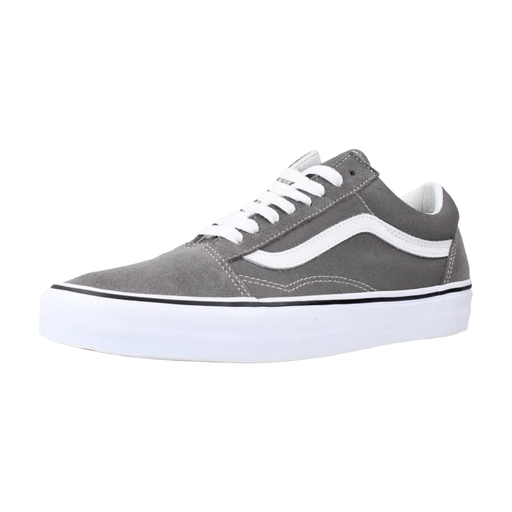
Why it suits this profile: The grey combination of suede and canvas works well with everyday outfits, streetwear and casual wear. The low-cut shape and flat sole keep the design understated.
The product information clearly specifies the materials, flat sole, textile insole and soft collar. This means you do not have to rely solely on a general comfort claim.
Suede-canvas upper; flat rubber sole; breathable textile insole.
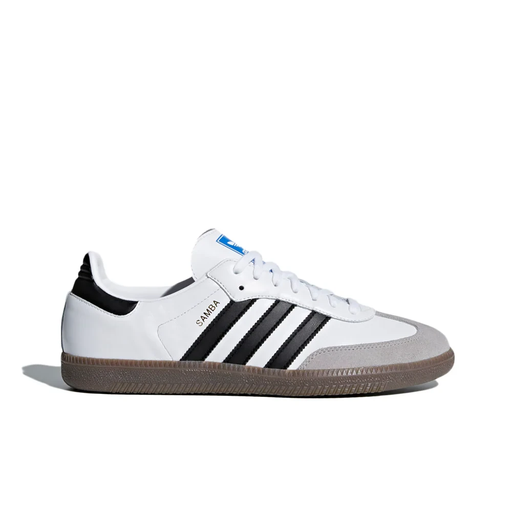
Why it suits this profile: This model combines a leather upper with suede overlays, a classic T-toe and a rubber cupsole. It works well with smart-casual and streetwear outfits.
The material composition and standard fit are clearly stated. However, check the detailed size chart, as the available EU sizes may differ in increments.
Full-grain leather with suede overlays; EVA midsole; non-marking rubber outsole.
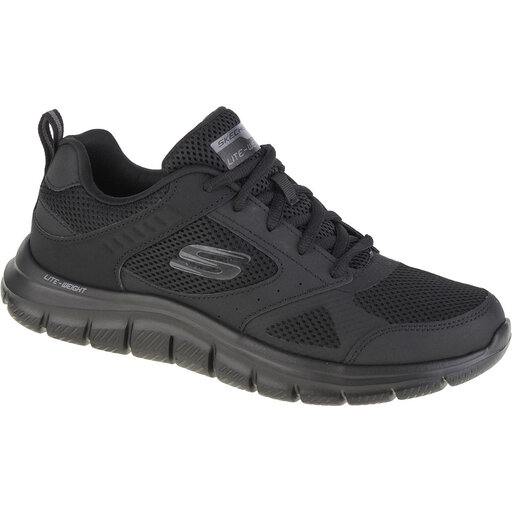
Why it suits this profile: According to the product description, this model is designed for sporty and casual use. The combination of leather and mesh, lace-up fastening and Memory Foam insole is well suited to everyday movement.
The sole, fit, materials and insole are specified. For intensive training, it is still sensible to compare your activity and the surface with the product specifications.
Leather and mesh upper; Memory Foam insole; rubber sole; standard fit.
We have put together a complete, up-to-date list of products that fully meet these strict selection criteria and the applicable European safety regulations.
Their lifespan depends on how often they are worn, the surface, body weight and care. There is therefore no set period that applies to every pair. These habits can help you reduce unnecessary wear:
For everyday use, an adjustable lace-up fastening, a suitable width, a rubber sole and a material that fits your care routine are important considerations. Vans Old Skool, adidas Barreda Decode, Converse Star Player 76 OX and various Skechers models are examples of casual trainers with clearly described materials and sole constructions.
Measure both feet in centimetres and use the size chart for the model you have chosen. Use the larger foot as your reference and pay attention to the space around your toes. Also check whether the model has a standard or unusual fit. An EU size from one brand may not feel exactly the same as the same size from another brand.
Replace a pair when the sole is visibly smooth or unevenly worn, the insole no longer provides support or the upper no longer holds your foot securely. With light casual use, a pair may last longer than with daily walking, training or skating. Store trainers in a dry place and clean them according to the care instructions.
