
Vandaag of morgen in huis

Kwaliteit gegarandeerd

Welkomstaanbiedingen ontgrendelen: GRATIS bezorging | Tot 80% korting | Gratis 30 dagen JoyPlus-proefperiode
Download de app
Buying a new pair of trainers and shoes online seems straightforward, but a good-looking photo tells you little about fit, materials or how they’ll perform. A shoe that looks suitable for everyday wear might turn out to be too narrow, offer little grip or be difficult to clean.
So watch out for these common pitfalls:
A good choice doesn’t start with colour. It starts with when and how you’ll wear the shoes, and a check of the product specifications.
If possible, measure both feet at the end of the day. Compare the longer foot with the size chart for the specific model. Don’t just check the EU size; look at the stated width too:
Children can quickly grow out of a pair. Elastic laces and hook-and-loop fastenings are practical on children’s trainers, but check that the shoe isn’t too loose. A secure heel and enough room for the toes are important for everyday wear, without the shoe pinching.
The sole affects how a shoe feels on paving, tarmac, woodland paths or wet ground.
Rubber, plastic and EVA soles each offer a different combination of grip, flexibility and weight. EVA stands for ethylene-vinyl acetate and is often used in lightweight shoes and midsoles. The material can feel comfortable, but how the shoe actually feels depends on the shape, thickness and construction of the shoe as a whole.
A textile or mesh upper may feel airier than synthetic leather. That makes it an interesting option for everyday wear or active use, but check how the material should be cleaned too. According to the product information, some models can go in the washing machine, while others should only be cleaned with a damp cloth.
Also look out for:
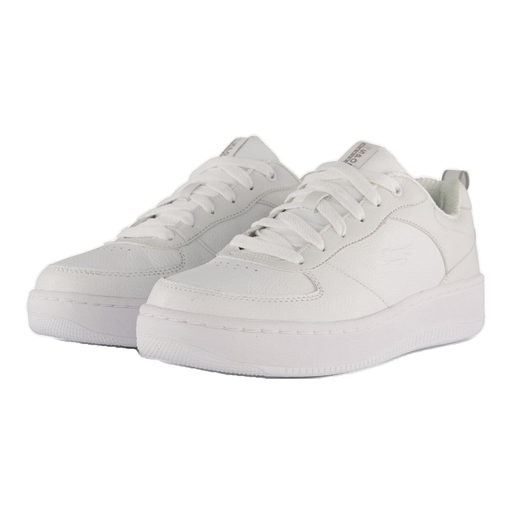
Why it suits this type of wearer: This low-cut model is designed for everyday wear and has a regular fit, lace-up fastening and synthetic leather upper. It’s a straightforward choice if you’re looking for one pair to wear with casual outfits and when you’re out and about.
The product information states that it has a regular fit, is EU size 37 and has a rubber outsole. This makes it easier to check in advance whether the model is right for your foot and how you plan to use it.
Rubber sole, lace-up fastening, synthetic leather upper and, according to the product information, a shock-absorbing midsole.
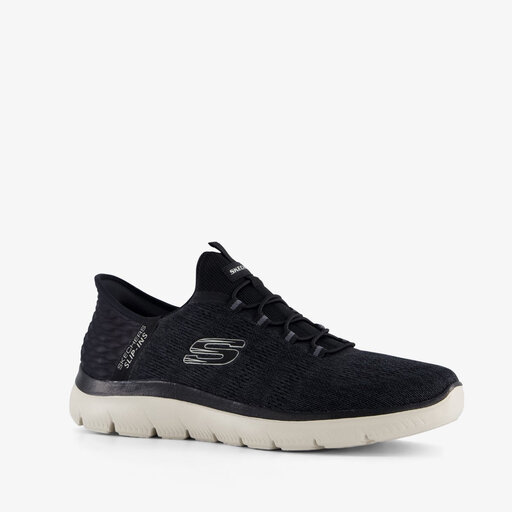
Why it suits this type of wearer: This model is a good choice if you want to slip your shoes on quickly but still care about the lining and sole construction. The product description mentions a mesh upper, removable insole and slip-on design.
Rather than relying on the slip-on design alone, you can compare the regular fit, size 41 and stated materials with your current shoes before you buy.
Mesh upper, rubber outsole, removable insole and, according to the product information, a shock-absorbing midsole.
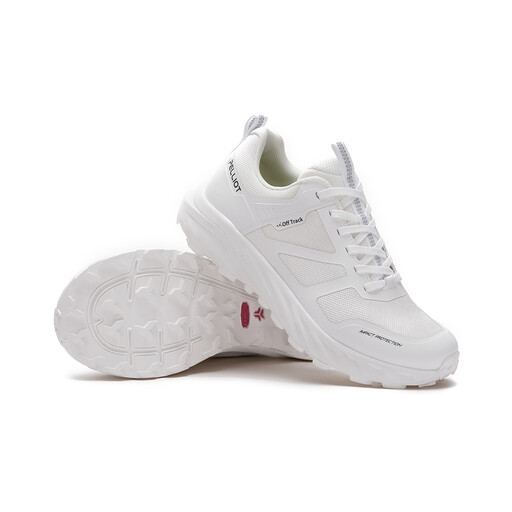
Why it suits this type of wearer: This unisex model is designed for running and use on different surfaces. The product information lists a sandwich mesh and woven upper, an EVA midsole and a ROCKYTEC outsole. According to the description, a slim version is also available for narrower feet.
The specifications make clear that this isn’t an ordinary casual trainer: the sole and upper are described as suitable for changing surfaces. Still, think about whether you’ll mainly be running on tarmac, trail paths or using them every day.
Lightweight mesh, EVA midsole, hard-wearing upper and a treaded outsole with grip, according to the product description.
For school, play and short outings, children’s trainers with elastic laces and hook-and-loop fastenings are practical. The Skechers Microspec Texlor is one example: it has a textile upper, rubber sole and regular fit. Always check your child’s current foot length when choosing a size, as sizes 31, 32 and 33 aren’t interchangeable.
For the garden, beach or quick changes, you could also consider Crocs clogs and other EVA clogs. According to the product information, the Crocs Classic Clog for children has ventilation holes, a pivoting heel strap and an EVA-like Croslite construction. The PUXI model has a one-piece moulded EVA construction and comes in a wide range of sizes. With styles like these, check the foot length and heel strap, and follow the advice not to expose them to heat or direct sunlight for extended periods.
We’ve put together a complete, up-to-date list of products that meet these strict selection criteria and the applicable European safety regulations.
Measure both feet in millimetres and use the size chart on the product page. Use the measurement for your longer foot as your guide. Also check the width and whether the model is described as a regular, narrow or wide fit.
It depends on how far you walk, the surfaces you walk on, your body weight, how well you care for them and the materials they’re made from. A pair you wear every day will usually wear out faster than shoes you alternate with other pairs. Replace your shoes when the sole becomes visibly smooth, the heel wears unevenly or the upper no longer holds your foot securely.
They can be, but you don’t always need them. Running shoes are designed with features such as a lightweight construction and cushioning. For the office, shopping or casual wear, a simpler trainer may be enough. Choose based on the surface, how long you’ll be walking, fit and care.
