
Vandaag of morgen in huis

Kwaliteit gegarandeerd

Welkomstaanbiedingen ontgrendelen: GRATIS bezorging | Tot 80% korting | Gratis 30 dagen JoyPlus-proefperiode
Download de app
Buying a pair of trainers seems straightforward, until you develop sore feet after a few weeks because of a poor fit, limited grip or an upper that is not suitable for everyday wear. Features such as “comfort”, “sporty” and “breathable” are often used rather broadly, particularly for men’s trainers, women’s trainers and children’s trainers. The product details tell you more than the marketing copy.
In this guide, you’ll find out what to look for in trainers for school, work, walking, sport or a casual outfit. You’ll then find some popular choices for different uses.
A trainer with a soft insole feels comfortable when you try it on, but that does not automatically tell you anything about the support it offers during prolonged walking. Check the type of midsole or insole instead. Examples include Cloudfoam, Memory Foam, EVA or a standard rubber sole. These materials have different properties and do not provide the same experience for every use.
A Memory Foam model may be suitable for everyday wear, while running shoes generally place greater emphasis on weight, flexibility and grip. Do not automatically use casual trainers for long running sessions.
An EU size is a useful starting point, but fits can vary between brands and models. Measure both feet at the end of the day and compare the longer foot with the product’s size chart. Also consider the width. A regular fit, such as “D” on some models, may feel different from a wider version.
If you’re looking for size 40 trainers, size 42 trainers or size 46 trainers, it’s wise not to focus only on the number. The stated foot length in centimetres is often a better way to check the fit.
A retro model such as the Adidas Run 70s 2.0 can work well for everyday wear and a casual outfit. For indoor training, rapid changes of direction or running, other specifications are more important. Look for:
A training shoe is therefore not automatically a running shoe. For road running, models such as Adidas Galaxy 7 or Adidas Runfalcon 5 are more logical options to compare. For indoor sports, a non-marking rubber sole is important.
Textile and mesh generally allow more air to pass through than fully synthetic leather. This can be useful for walking, travelling or everyday commuting. Synthetic leather and genuine leather are often easier to wipe clean, but they may offer different levels of ventilation.
Also check the lining and stitching. A padded collar can make putting the shoes on more comfortable, while reinforcements around the toe and heel are useful for more intensive use. According to the product description, the Skechers Burns, for example, has a synthetic leather and mesh upper with a rubber outsole.
The terms trainers with Memory Foam and trainers with Cloudfoam refer to different product technologies. Skechers models such as the Burns, Track-Bucolo and D’Lites are described as having Memory Foam insoles. According to the product information, Adidas Galaxy 7 and Runfalcon 5 use a Cloudfoam midsole.
Check whether the insole is removable. According to the product specifications, the Memory Foam insole in the Skechers Burns cannot be removed. This is important if you want to use your own insole.
A rubber outsole is suitable for many everyday surfaces, but the tread also affects how much grip you have. For indoor use, a non-marking sole is important to prevent marks on the floor. The Nike Hyperset 2 is described as having a non-marking rubber outsole with a multidirectional tread.
For outdoor use, consider the combination of rubber, tread and flexibility. A flat sole, as found on some lifestyle or driving models, may be less suitable for wet or uneven surfaces.
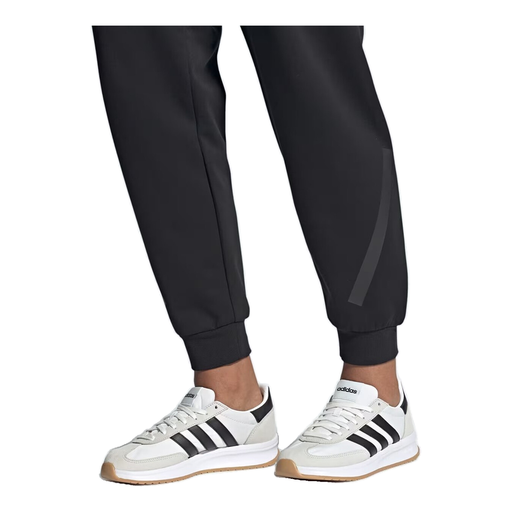
Why it suits this profile: This retro model combines a casual look with a lightweight, flexible construction for everyday wear. The stated foot length for size 40 is 25.5 cm.
The product information specifies the materials, foot length and a rubber outsole. This makes it easier to distinguish between style, fit and suitability for everyday wear.
Textile and synthetic leather; flexible rubber sole; retro design for men’s and women’s outfits.
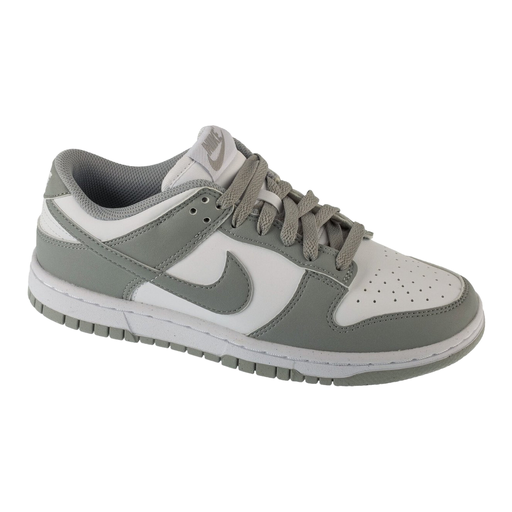
Why it suits this profile: The Nike Dunk Low is designed around a distinctive streetwear style. The leather and textile sections, padded collar and rubber sole make it suitable for everyday wear and casual combinations.
The specifications detail the upper, lining, insole and sole tread. You are therefore not buying based solely on the colour or model name.
Leather and textile upper; padded collar; rubber outsole with pivot point according to the product description.

Why it suits this profile: According to the product information, this model is intended for indoor sports. Its flexible construction, reinforced toe and heel, and targeted sole grip are suited to fast movements in a sports hall.
The sole is specifically described as non-marking and multidirectional. This makes its intended use clearer than with general sporty trainers.
Non-marking rubber sole; mesh and synthetic upper; size 47.5 for larger feet.
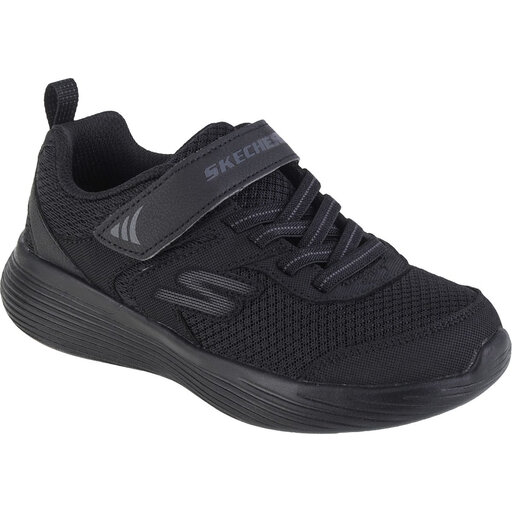
Why it suits this profile: These children’s trainers are designed for school, play and everyday wear. The hook-and-loop fastening makes them practical for children to put on and take off.
The product details specify the regular fit, size 35, mesh and rubber sole. However, always check your child’s foot length before ordering.
Mesh upper; rubber sole; hook-and-loop fastening; regular fit.
We’ve put together a complete, up-to-date list of products that fully meet these strict selection criteria and the applicable European safety regulations.
It varies by brand, model and foot shape. Use the size chart for the specific product and compare your foot length in centimetres. With models offering a regular fit, you can often use your usual size as a starting point, but always check the stated measurements.
Some models are intended for running, such as the Adidas Galaxy 7 and Runfalcon 5. Other trainers, including lifestyle models and flat casual shoes, are primarily designed for everyday wear. Check the product description for details of the midsole, flexibility, grip and stated intended use.
Always follow the care label or the care instructions. Many models can be cleaned with a damp cloth and left to air-dry. Avoid tumble-drying, direct heat and harsh cleaning products if the manufacturer advises against them. This helps preserve the materials, fit and glued connections as much as possible.
