Who is this relevant to?

Occasional travel-plan sharer

You want to share a route or appointment while travelling and first check whether your own phone or the train’s Wi-Fi will do. Apple Support explains how a phone can share its mobile connection; NS says that Wi-Fi is available on almost all Intercity trains.

Traveller with several devices

You want to share the same mobile connection with fellow travellers or your own devices on regular train journeys, so you compare device capacity and stated battery life. TP-Link and Huawei, among others, list these specifications.

Coverage-conscious train traveller

You want to be able to share an update while travelling and take mobile coverage and your data allowance into account. KPN lists coverage, the device you use and network congestion as factors that can affect internet speed.

What should you look for when choosing?

Phone hotspot

Suitable if: you only share something occasionally and your phone, mobile plan and mobile coverage support hotspot use.

Keep in mind: a hotspot uses your phone’s mobile data and battery; availability and any charges may vary by provider and phone model.

Portable 4G MiFi

Suitable if: you regularly share travel plans with several phones, tablets or laptops and want to use a separate device.

Keep in mind: you’ll need a compatible, activated SIM card and a data allowance; stated speeds and battery life don’t guarantee performance on a moving train.

Free NS train Wi-Fi

Suitable if: you want to do something simple, such as opening or sending a travel plan, and usable Wi-Fi is available.

Keep in mind: NS says that free Wi-Fi is available on almost all Intercity trains, but not every train; availability doesn’t tell you for certain what the connection will be like along the entire route.

What to consider What should you check? Who is this most important for?
Easy to use, with no extra device Check whether personal hotspot is available on your phone and included in your mobile plan. If I’m only sharing a route occasionally, I want to use my phone, provided my device and mobile plan allow it, without needing an extra device. Around 31% of consumers mainly want a simple way to share things now and then.
Connecting several devices Compare the stated maximum number of connections with the number of devices you have; also check which SIM card is compatible. If I want to share my travel plans with fellow travellers or across several of my own devices at the same time, the capacity needs to be suitable. Around 25% of consumers mainly want to connect several devices.
Mobile coverage while travelling Check your provider’s coverage along the route and make sure your device and mobile plan will work together. If I need to share an update while travelling, I want to know where my mobile connection might drop out. Around 19% of consumers mainly want to check coverage along their route.
Battery life during the journey Compare the stated battery life with the length of your journey and consider whether you’ll be able to charge it on the way. If I’m making a long journey without access to a charger, I want the MiFi to last for the whole trip. Around 13% of consumers mainly need long-lasting use without charging.
Data allowance and ongoing costs Check the terms for hotspot use and, if you’re buying a MiFi, factor the SIM card and data allowance into your decision. If I want to avoid unexpected data charges, I’ll compare the terms of my current mobile plan with those for a separate SIM card. Around 12% of consumers mainly want to avoid extra data costs.

Common buying mistakes

  • Assuming a stated Mbps figure is the speed you’ll get on the train

    Coverage and network congestion can affect internet speed. A high figure in a product specification doesn’t mean you’ll get that speed on every part of a train route.

    Check your provider’s coverage along the route and compare model specifications with what you want to do, without assuming you’ll have an uninterrupted connection.

  • Buying a MiFi without factoring in the data you’ll need

    A standalone router doesn’t automatically come with a mobile plan. You’ll need a compatible SIM card and data allowance to use it.

    First check whether your phone’s hotspot will do the job. Otherwise, compare the terms for the device, SIM card and ongoing data allowance.

    A separate MiFi may also mean you need an additional compatible SIM card and data allowance; terms depend on the provider.

  • Treating stated battery life as a fixed amount of use

    TP-Link and Huawei state battery life for specific models, but actual use and conditions can affect it.

    Choose based on the length of your journey and plan to charge the device if losing connection along the way would be a problem.

Brands to compare

TP-Link

The M7350 and M7450 V3 are portable 4G MiFi models you can compare by their stated device capacity and battery life.

  • TP-Link says the M7350 supports up to 10 devices and up to 8 hours of use; for the M7450 V3, TP-Link states up to 32 devices and 15 hours.
  • These are manufacturer figures, not independent test results or a guarantee of coverage on the train. The M7450 specifications quoted apply to revision V3.

Huawei

The E5785 is a portable 4G Mobile WiFi router for sharing a mobile connection.

  • Huawei states that the E5785 supports up to 32 connected users and up to 12 hours of use.
  • Huawei notes that actual performance may vary depending on network and usage conditions.

D-Link

The DWR-932C is a standalone 4G router for anyone who wants to use a mobile connection via a SIM card.

  • For revision E1_v200WW, D-Link lists a mini-SIM interface.
  • For this revision, D-Link states battery life of up to five hours; check the exact revision and SIM card before choosing.

Joybuy products

This selection includes portable mobile routers and MiFi devices for a separate connection on the go. Check each model’s features to see whether they suit the number of devices you want to connect and the length of your train journeys.
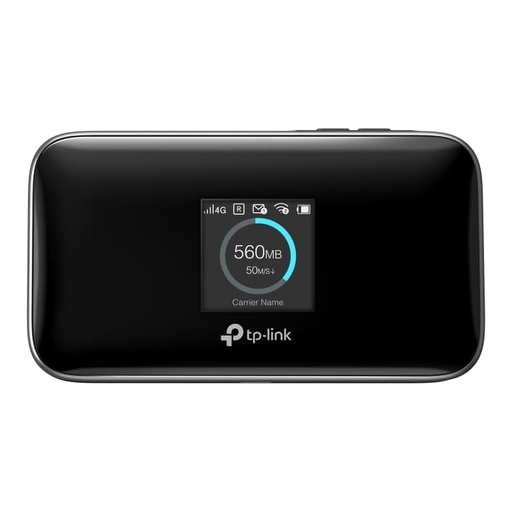
TP-Link M7750 mobile router

TP-Link M7750 mobile router

An option to consider if you’re looking for a separate mobile router for Wi-Fi on the go.

The product name describes a router for mobile networks. Mobile coverage and speed aren’t guaranteed on every train route.

View at Joybuy
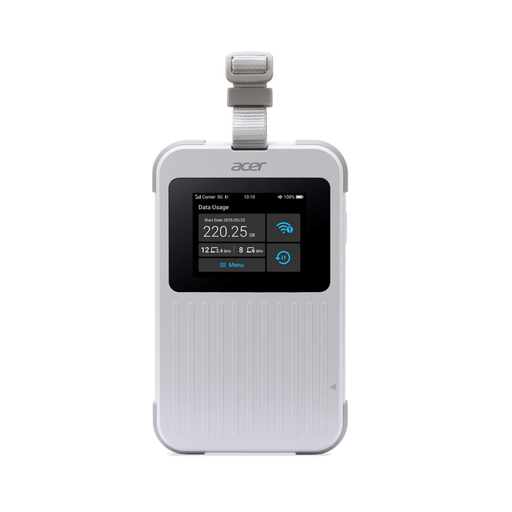
Acer Connect M6E portable 5G MiFi router

Acer Connect M6E portable 5G MiFi router

A portable MiFi option for anyone who wants to share a mobile connection with several devices while travelling.

The product name lists 5G, Wi-Fi 6E, a nano-SIM card and support for up to 32 devices.

View at Joybuy
TP-Link M7350 4G (CAT4) MiFi router

TP-Link M7350 4G (CAT4) MiFi router

A portable 4G MiFi to compare if you want to share travel plans across several devices.

The product name lists support for up to 10 devices, a 2000 mAh battery, up to 8 hours of use, a colour display and 150 Mbps. A compatible 4G SIM card is needed for mobile internet access; these figures don’t guarantee coverage or speed on the train.

View at Joybuy

Frequently asked questions

Do you need to buy a separate MiFi to share a travel plan on the train?

No, not if your phone and mobile plan support a personal hotspot. Your phone can then share its mobile data connection with other devices; a MiFi is an option if you regularly want to use a separate device or connect several devices.

Can you use an iPhone to share the train’s Wi-Fi as a personal hotspot?

No. Apple Support explains that Personal Hotspot shares the iPhone’s mobile internet connection, not a Wi-Fi network that the iPhone is connected to.

Is train Wi-Fi available on every NS train?

No. NS says that free Wi-Fi is available on almost all Intercity trains, but not every train; look for the Wi-Fi logo on the outside of the train.

What should you check during setup and use?

If you have a separate MiFi, check that the SIM card is compatible and activated. Set a Wi-Fi password for the devices connecting to it, and keep an eye on data use and battery level during your journey if your model displays this information.

What costs and rights apply to an online purchase in the Netherlands?

Consider the cost of any additional SIM card and data allowance separately from the router. ACM ConsuWijzer states that products bought online generally come with a statutory 14-day cooling-off period after delivery; the statutory guarantee also applies if a product, under normal use, does not do what you could reasonably expect of it.
