
Vandaag of morgen in huis

Kwaliteit gegarandeerd

Welkomstaanbiedingen ontgrendelen: GRATIS bezorging | Tot 80% korting | Gratis 30 dagen JoyPlus-proefperiode
Download de app
A pair of trail-running shoes needs to do more than an ordinary running shoe. On Dutch woodland paths, tarmac, sand, roots and mud can follow one another. In hilly areas, rocks and loose ground are added to the mix. If you only look at colour, brand or discount, you can quickly end up buying a pair that is not suited to how you intend to use it.
The most common pitfalls:
Do not just look at the name of the outsole; pay particular attention to the lug pattern. Chunky, deeper lugs are designed for soft and muddy ground. A less aggressive pattern is often more practical for mixed routes combining tarmac, surfaced paths and compact woodland.
Many Salomon trail-running shoes use a Contagrip outsole. According to Salomon’s product information, this rubber outsole is designed to provide grip on different surfaces. Check whether each model’s description refers to soft, wet, rocky or mixed terrain. This gives you a more realistic picture than a general claim about “all conditions”.
For shoes intended for muddy trails, deep grooves and an open lug pattern are useful. On smooth tarmac, however, these lugs may feel less comfortable and wear down more quickly. For off-road running shoes used on a wide range of surfaces, a mixed pattern may be the more logical compromise.
Trail-running shoes with GORE-TEX have a membrane that, according to the product description, helps keep water out while also supporting air circulation. This makes them appealing for rainy walks, wet grass and muddy paths.
Pay attention to the difference between:
If you mainly run during the dry summer months, a breathable mesh model may be more suitable. If you are often out in autumn and winter, waterproof trail-running shoes may offer useful advantages. Allow wet shoes to dry naturally after use and do not place them on a radiator; heat can damage materials and membranes.
A good fit keeps your heel in place without creating pressure points. There should be enough room around your toes, especially on long descents when your foot may slide forwards. People with wide feet should look for a wide fit or a model with a spacious toe box.
Stability comes partly from the outsole construction, heel hold and a supportive chassis. According to the product information, the Salomon X Ultra 4 Mid Wide GTX uses an ADV-C construction for support on uneven ground and has a wide fit. This makes this type of shoe more suitable for walking and trekking than for fast, technical races.
Cushioning also depends on how you plan to use the shoes. Softer foam can feel comfortable over longer distances, while a firmer platform can provide more direct contact with the ground. Hiking shoes often have a more robust construction and a higher collar than low-cut trail models. Choose based on the activity, not just appearance.
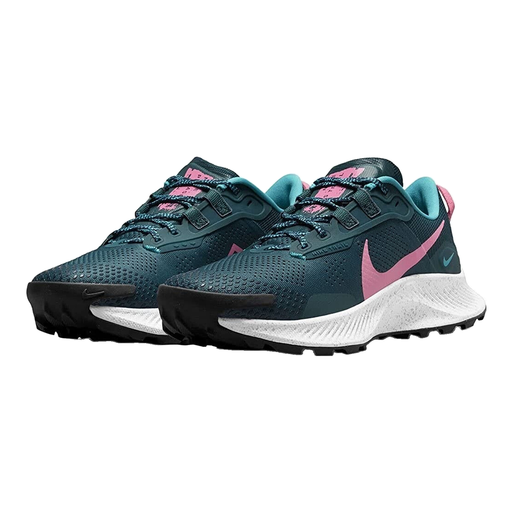
Why it suits this profile: This low-cut model is designed for runners who alternate between the city, parks and light trails. The React foam midsole and mesh upper are well suited to everyday use.
According to the product information, the multidirectional lugs are designed for rocky trails as well as urban surfaces. This means the shoe is not focused exclusively on one type of terrain.
React foam midsole, breathable mesh, and reinforced toe and heel.
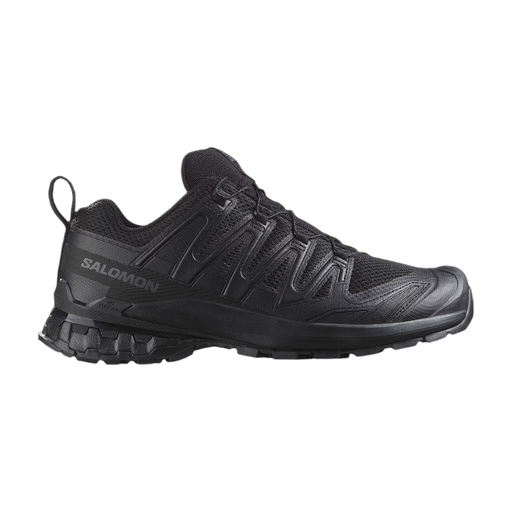
Why it suits this profile: For anyone who regularly combines technical paths, hills and walking routes. The GORE-TEX layer, 3D Advanced Chassis and Quicklace fastening are designed to provide protection and control.
The specifications mention both a waterproof GORE-TEX membrane and support for technical trails. However, check whether the standard fit provides enough room.
3D Advanced Chassis, Contagrip outsole, Quicklace, and reinforced toe and heel.
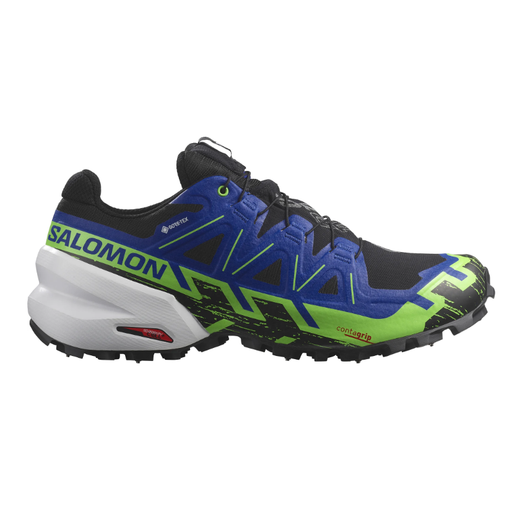
Why it suits this profile: This model is designed for winter conditions. The combination of GORE-TEX and twelve tungsten-steel spikes is suited to snow and ice, not everyday tarmac.
Its intended use is clearly defined: spikes for slippery winter surfaces. This makes it easier to avoid choosing this model for the wrong terrain.
Full GORE-TEX construction and twelve tungsten-steel spikes according to the product information.
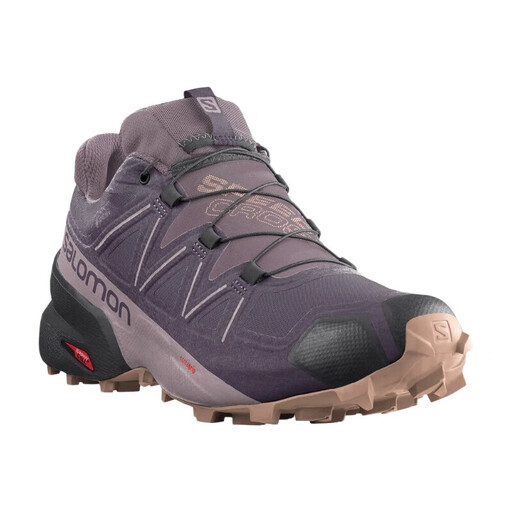
Why it suits this profile: This women’s model combines a GORE-TEX membrane with an outsole featuring deep grooves. That makes it well suited to soft, wet and uneven trails.
The product information mentions both waterproof protection and deep grooves for soft ground. Before buying, check the size guide and the available foot width.
Contagrip outsole with deep grooves, Quicklace system and GORE-TEX membrane.
We have put together a complete, up-to-date list of products that fully meet these strict selection criteria and the applicable European safety regulations.
Yes, low-cut trail models can be suitable for walks on woodland and gravel paths. For long hikes with a heavy rucksack or significant strain on the ankles, hiking shoes with a sturdier construction and higher collar may be more practical. Pay attention to cushioning, outsole pattern and fit.
Their lifespan depends on distance, body weight, terrain, maintenance and running style. Regularly check the wear on the lugs, outsole and upper. Reduced grip, tears or a collapsed midsole are signs that it is time to replace a pair. There is no fixed mileage limit that applies to every user.
You can, but it is not always the most practical choice. During wet autumn and winter months, a GORE-TEX model provides protection against moisture. In warm, dry weather, a breathable mesh model may feel more comfortable. Choose the construction based on your routes, the season and how much breathability you want.
