
Manual line artist
Wants to deliberately redraw scans by hand and is choosing between working with an existing monitor or directly on a pen display. In Krita, you can import the scan as a layer.


If you want to trace a scan by hand while looking at your computer monitor, a pen tablet without a screen suits this way of working. If you want to place the pen directly on the image, compare a pen display and check your computer’s connections beforehand. In Krita, you can use a scan as a separate layer, while Inkscape offers bitmap tracing to vector paths. Inkscape notes that this does not automatically produce an exact copy or a finished result.
Wants to deliberately redraw scans by hand and is choosing between working with an existing monitor or directly on a pen display. In Krita, you can import the scan as a layer.
Wants to edit a scanned sketch digitally and needs to weigh up the active drawing area against available desk space and the computer connection.
Wants to create editable paths from a scan. Inkscape can trace a bitmap, but notes that the feature does not automatically produce an exact copy or a finished result.
Choose this if: you work on an existing monitor and can use the pen on a separate tablet surface.
The trade-off: you do not draw directly on the displayed image, so compare the active area with the space available on your desk.
Choose this if: placing the pen directly on the visible scan is important to you.
The trade-off: a pen display needs extra space and a suitable connection for video, data and power. For USB-C video on the Huion Kamvas 13 (Gen 3), the computer port must support DisplayPort video, according to Huion.
Choose this if: you mainly want to create editable vector paths from a clear scan; you do not need a drawing tablet just to use Inkscape’s automatic bitmap tracing.
The trade-off: Inkscape warns that its tracer does not produce an exact copy or a finished result automatically; check and correct the paths where needed.
Start by choosing your workflow and the output you want. Then compare the dimensions and connections that suit them.
| What to consider | What should you look for? | Which shoppers is this for? |
|---|---|---|
| Drawing directly on the scan | Compare a pen display with a pen tablet without a screen; think about where you want to place the pen. | If I want to draw lines by hand on the visible image, placing the pen directly on it matters more than having a compact setup. Around 36% of shoppers put direct pen placement at the top of their buying priorities. |
| Desk space and monitor | Measure the space available and compare the active drawing area with the room you have on your desk. | At a small desk, I want to keep using my existing monitor while still having enough room to move my hand. Around 29% of shoppers prioritise desk space and working with their monitor. |
| Output you need | Decide whether you need raster lines or vector paths; consider how much editing automatic tracing will require. | If my final file needs to contain editable vector paths, I want to know how much correction will be needed. Around 21% of shoppers prioritise vector output from scans. |
| Connection and setup | Check your computer’s ports and the cable and driver requirements for the specific model. | Before I order, I want to know whether my computer can handle the connection needed for video, data and power. Around 14% of shoppers say connection and setup are decisive buying factors. |
The Huion Kamvas 13 (Gen 3) connects to a computer or another suitable device for video and pen input. It is important to make sure the connection you need is compatible with your setup.
Check the connections required for the exact model and what is included in the box.
You may need suitable cables, a power supply or changes to your computer setup. Check beforehand what is included with the version you choose.
Pressure sensitivity alone does not tell you whether the workflow will suit your scan and drawing software. Pen placement and usable workspace matter too; the manufacturer’s stated specifications are not a comparative user test.
Start with your scan and drawing software, then compare the pen specifications.
Inkscape says that bitmap tracing does not produce an exact copy or a finished result automatically.
Test a representative scan and check the paths created before deciding how much manual editing will be needed.
Allow time in your workflow to check the automatic tracing and make any necessary corrections by hand.
The Intuos range includes pen tablets without screens, including the documented Intuos Small CTL4100, designed for use with an existing monitor.
The Deco 01 V3 is a pen tablet without a screen, for anyone comparing a larger drawing area to use alongside an existing monitor.
The Kamvas 13 (Gen 3) is a pen display for drawing directly on the displayed image.
The Pen Tablet Medium range is an option for comparing pen shapes and controls without a pen display.
This selection includes a standalone drawing tablet with a screen and pen tablets without screens for drawing alongside a computer. Decide beforehand whether you want to work independently or need pen input on a computer screen.
 No image available
Suitable if you want to draw independently on a drawing tablet with a screen.
The product name lists an 11.45-inch IPS display, 8GB RAM, 128GB storage and Android 14. Choose this model if you want a standalone tablet; do not assume it can be used as a pen input display for a computer.
 No image available
Suitable if you want to trace scans by hand using a pen tablet alongside a computer.
The product name lists 4096 pressure levels and a 216 × 135 mm active area. This model has no built-in screen and is designed to connect to a computer.
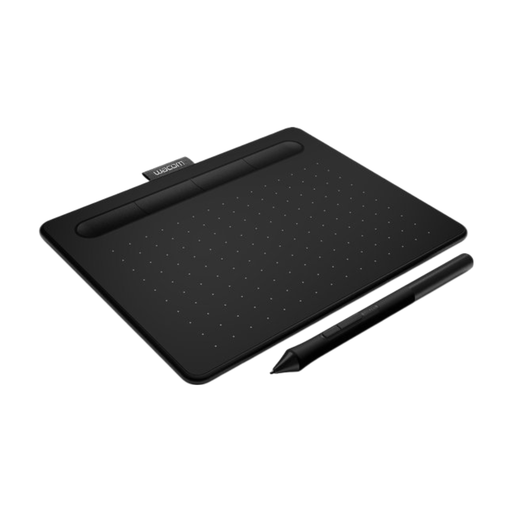 No image available
Suitable if you want to draw with a pen on a tablet surface while viewing the scan on a computer monitor.
Check beforehand that the stated USB-C or Bluetooth connection is compatible with your computer setup.
 No image available
Suitable if you want to draw by hand alongside a computer and are looking for a larger model.
The product name lists Bluetooth and USB-C. Check which connection works with your computer and allow for the space needed by the Large model.
 No image available
Suitable if you want a more compact pen tablet for drawing by hand with a computer.
Check that the stated USB-C or Bluetooth connection works with your computer and the way you work at home.
Import the scan into Krita as a layer and draw on a separate layer. You can adjust a layer’s opacity; also check that your preferred drawing software and operating system work with the tablet you choose.
No, you do not need a drawing tablet just to use automatic bitmap tracing in Inkscape. Do check the paths it creates: Inkscape says the feature does not produce an exact copy or a finished result automatically.
No. According to Huion, the computer port needs to support DisplayPort video for the Huion Kamvas 13 (Gen 3)’s USB-C video connection. For another model, check its own connection requirements and your computer’s ports.
Choose a pen tablet without a screen if you want to work with the pen on a separate surface while looking at your existing monitor. A pen display is suited to placing the pen directly on the image, provided your desk and computer can support the connections it needs.
For online consumer purchases, a 14-day cooling-off period applies in many cases, according to the Dutch Government; whether it applies depends on the purchase. The statutory guarantee is separate: according to ACM ConsuWijzer, the seller is responsible for providing a suitable solution if a product does not meet what you could reasonably expect when used normally.