
Vandaag of morgen in huis

Kwaliteit gegarandeerd

Welkomstaanbiedingen ontgrendelen: GRATIS bezorging | Tot 80% korting | Gratis 30 dagen JoyPlus-proefperiode
Download de app
Buying toys for children seems simple until you have to choose from hundreds of building sets, interactive toys, outdoor toys and age-specific gifts. Attractive packaging tells you little about how long a toy will keep a child engaged, how much care it needs or whether it is right for your child. Online shoppers are particularly likely to fall into three common traps.
An age recommendation is an important starting point, but it doesn’t tell you everything. Also consider small parts, motor skills and supervision. For example, a building set for children aged 3 and over might be a great fit for a child who loves building, but less suitable if they still often put pieces in their mouth.
So always check:
The term educational toy covers a wide range of products. A musical activity table might have different buttons, sounds and spinning elements, but its play value depends on how easily a child can work out what to do independently. So look for specific activities: puzzling, sorting, building, movement, role play or playing together.
According to the product description, the musical activity table has six play zones, including a piano, drum, telephone and spinning gears. These are features you can check. Claims about development are best viewed as possible play experiences, not guaranteed results.
Interactive toys often need batteries that aren’t included. The robot dinosaur uses 3 AA batteries for the toy and 2 AA batteries for the remote control. The walkie-talkies need 6 AAA batteries in total. Check this in advance to avoid disappointment on a birthday.
Also measure the play area. According to the specifications, the inflatable Jurassic Adventure Play Center measures 201 × 201 × 36 cm and has a capacity of 410 litres. It needs more space and water, and takes more clearing away, than a small toy for toddlers.
For baby toys and toddler toys, loose parts and accessibility matter. An activity table is listed as suitable for 6 to 36 months and, according to the product information, has rounded edges and no loose parts. For each product, check that these features are actually listed in the specifications.
Toys for children aged 3 and over, such as LEGO DUPLO and dinosaur toys, may contain small parts. The LEGO DUPLO Bluey Family House set contains 83 pieces and states that it is not suitable for children under 3 because it contains small parts. Supervision during play is still a good idea, especially for younger toddlers.
Look for details such as the CE marking and relevant European standards, such as EN71. A CE marking isn’t a quality rating; it indicates that the manufacturer declares the product meets the applicable European requirements. Also check who the manufacturer and the EU responsible person are.
The activity table’s product page lists ABS, BPA-free material and EN71. The sand and water play tree carries a warning about small parts and says children should be supervised at all times. The robot dinosaur is described as being made from BPA-free vinyl and certified to the US ASTM F963 standard. This US standard doesn’t automatically replace the need to check the European information.
For sand and water toys, drainage, storage and cleaning are just as important as the design. The sand and water play tree measures approximately 50 × 42 × 60 cm, doesn’t need batteries and should be rinsed after use and stored dry, according to the product information.
For building toys, consider the number of pieces, the dimensions and how the play can develop. LEGO DUPLO Town 10448 contains 58 bricks and, according to the description, can be rebuilt into three animal models. This offers more than one fixed play set-up, without the need for batteries.
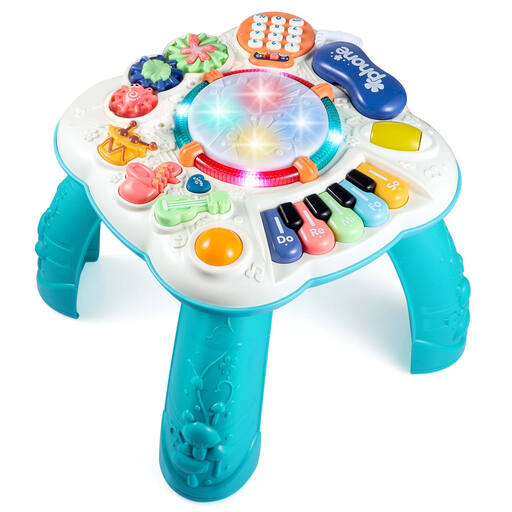
Why it suits this profile: A compact choice for parents and grandparents who want to combine several play activities in one baby toy.
The play zones and age guidance are clearly described. According to the product information, the table has rounded edges and no loose parts.
Six play zones, adjustable volume and removable legs for floor or table use. Batteries are not included.
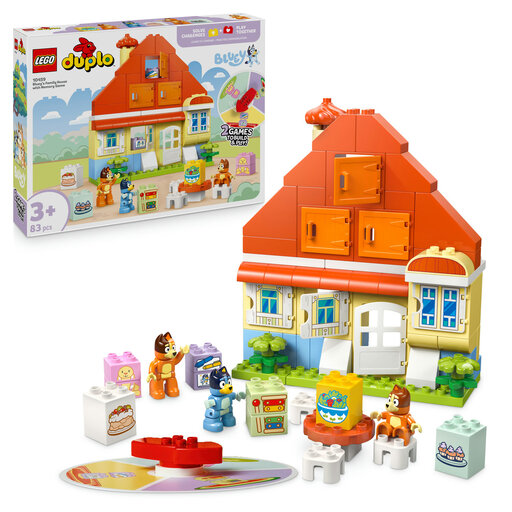
Why it suits this profile: A good fit for families who want to combine a familiar theme with building, role play and a memory game.
The box contains a clearly stated 83 pieces and gives a minimum age of 3 years. This makes it easier to judge whether it’s suitable before buying.
Three figures, a playhouse with opening windows and a memory game. No batteries needed.
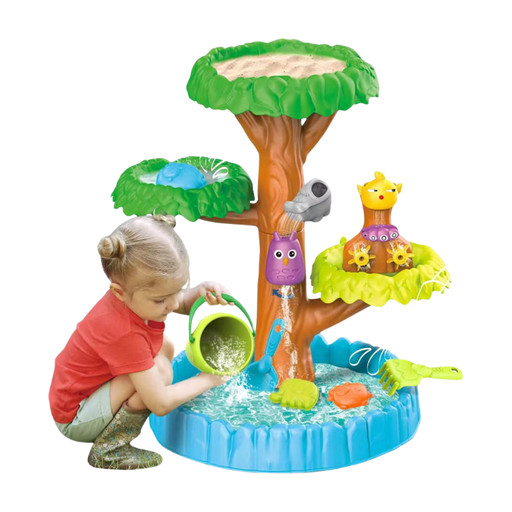
Why it suits this profile: A practical choice for children aged 3 and over who enjoy playing with sand and water in the garden, on the patio or in a play area.
The dimensions, the fact that it doesn’t need batteries and the care instructions are all listed. This makes the running costs and storage needs clearer in advance.
Approximately 50 × 42 × 60 cm, no batteries needed and suitable for scooping, pouring and imaginative play. Direct supervision is recommended.
We’ve put together a complete, up-to-date list of products that meet these strict selection criteria and the relevant European safety regulations.
If you’re looking for a birthday present for a child, choose something that suits the way they like to play. A child who enjoys making up stories might love LEGO DUPLO, a play tent or dinosaur toys. For playing together, consider a race track, walkie-talkies or a memory game. For an active garden, outdoor toys such as a sand table or water play centre make more sense.
When choosing a gift, also check:
Look for toddler toys with large parts that are easy to grip and have clear activities. An activity table for ages 6 to 36 months or LEGO DUPLO for ages 2 and over could be a good fit, as long as you follow the age guidance and warnings. If in doubt, choose a product without small parts and stay nearby while your child plays.
Lifespan depends on the materials, how intensively a toy is used, how it’s stored and how well it’s cared for. Regularly check moving parts for damage, rinse sand and water toys after use and store them somewhere dry. Battery-powered toys may last longer if you remove the batteries before putting them away for an extended period.
That depends on the range of activities and how often your child uses it. A product that offers building, sorting and role play may hold their interest for longer than a toy with just one function. So compare the specific features, dimensions, materials, battery costs and care requirements rather than relying on the ‘educational’ label.
