If you want to take quick close-ups without changing lenses, look for a camera with a clearly specified close-up mode. If you want more control over magnification and framing, compare a mirrorless camera with a suitable macro lens. Check that both the entire figure and the smallest details fit in the frame on your workbench, and bear in mind the limited depth of field and the space needed for lighting.
Who is this choice relevant to?
Miniature detail photographer
You want to capture brush strokes and small pieces of equipment individually. Lens magnification, framing and room for lighting all play a part. Canon Netherlands, Sony Netherlands and Nikon Netherlands describe the lens features and specifications mentioned here.
Scene builder
You photograph an entire figure with parts at different distances and want to control how much of it is in focus at once. Canon Netherlands and Nikon Netherlands describe focus bracketing and focus stacking for specific camera models.
Beginner photographing at home
You want to take close-ups with minimal equipment and are comparing a fixed-lens camera with an expandable camera setup. OM SYSTEM Netherlands describes a close-up mode for the Tough TG-7; with mirrorless cameras, macro capability also depends on the lens you choose.
What should you look for when choosing?
Compact camera with close-up mode
Best for: anyone who wants to start without a separate lens and first check whether the close-up mode gives them the framing they want.
Bear in mind: the lens cannot be changed. Working close to your subject can also limit where you can position your lighting.
Mirrorless camera with macro lens
Best for: anyone who wants to choose a lens based on the framing and magnification they need.
Bear in mind: check the mount, which lens is actually included and how much space there is in front of the lens.
| What to consider |
What should you check? |
Who is this more relevant to? |
| Magnifying small details |
Check the maximum magnification of the exact lens or close-up mode, and take a test shot of a figure of a similar size. |
If I want to fill the frame with paint details, I look at magnification and the space available for lighting. Around 33% of consumers say magnifying details is their top buying priority. |
| Getting the whole figure in focus |
Check whether the camera model can take a focus-bracketed series and whether it combines the images in-camera. Make sure your setup is stable. |
If I want the face, equipment and base to be in focus at the same time, I look at depth of field and focus-stacking options. Around 27% of consumers say front-to-back sharpness is their top priority. |
| Getting started quickly |
Compare the framing of the close-up mode with that of a mirrorless camera and the specific compatible lens. |
If I’d rather not choose a separate lens straight away, a simple setup matters to me. Around 20% of consumers put ease of getting started first. |
| Complete setup |
Check exactly what is included in the package and decide whether you also need a lens, stable support or a tailored lighting setup. |
If I want to avoid unexpected purchases for a lens and setup, I check in advance what’s actually in the box. Around 20% of consumers say the contents and cost of a complete setup are their top priority. |
The lens affects both how large a detail appears in the frame and how much room is left in front of it. Sony Netherlands gives a working distance of 2.4 cm from the front of the lens for the SEL30M35 at its closest focusing distance; Nikon Netherlands gives approximately 5 cm for the NIKKOR Z MC 50mm f/2.8. Consider this distance alongside the space you need for lighting.
Common buying mistakes
-
Judging macro capability by the camera body alone
Magnification depends on a specific lens; it doesn’t automatically come with a compatible camera body. For example, Canon Netherlands specifies 1.4× magnification for the separate RF 100mm F2.8L Macro.
Check the lens mount, exactly what is included in the package and the magnification of the lens you actually plan to use.
A mirrorless camera may require a separate macro lens and suitable support.
-
Confusing focusing distance with the space in front of the lens
Focusing distance is not the same as working distance from the front of the lens. Sony Netherlands gives a minimum focusing distance of 9.5 cm and a minimum working distance of 2.4 cm for the SEL30M35.
Check the working distance at the magnification you want, and consider whether there will still be room to light the figure.
You may need a different lens or to reposition your lighting to work around the subject.
-
Expecting one close-up to show the whole figure in focus
In close-ups, parts at the front and back of a figure may not fall within the same plane of focus. Focus stacking combines images taken at different focus points; Canon Netherlands describes features for specific EOS models.
Decide whether you want one detail or the whole figure in focus, and check the focus-bracketing features of the exact camera model.
Taking a series and possibly combining the images takes extra time. A stable camera helps minimise movement between shots.
Camera brands to compare
Canon
EOS mirrorless cameras with an RF mount offer an interchangeable-lens option; check which lens comes with the kit you choose.
- Canon Netherlands specifies 1.4× magnification for the separate RF 100mm F2.8L Macro.
- Canon documents focus bracketing and in-camera combining for the EOS R7 and EOS R10.
- These lens specifications and camera features do not automatically apply to every EOS kit lens or EOS body.
OM SYSTEM
The Tough TG-7 is a fixed-lens option to compare if you want a built-in close-up mode.
- OM SYSTEM Netherlands states that the microscope mode can focus from 1 cm.
- The lens cannot be changed. The LG-1 light guide mentioned is part of the micro-adventure kit described and is not automatically included with a standalone TG-7.
Sony
Sony’s E-mount system includes mirrorless cameras and separately available APS-C macro lenses, including the SEL30M35.
- Sony Netherlands specifies 1:1 magnification for the SEL30M35.
- At its closest focusing distance, Sony Netherlands gives 2.4 cm of space from the front of the lens. Check whether there is still room for practical lighting.
Nikon
Nikon Z mirrorless cameras can be paired with separate Z macro lenses; assess the body and lens together.
- Nikon Netherlands gives the NIKKOR Z MC 50mm f/2.8 a magnification of 1:1 and approximately 5 cm of space from the front of the lens at its closest focusing distance.
- The Z50II setup described for indoor use has a different lens, the Z DX MC 35mm f/1.7. The features of the two lenses are not interchangeable.
Cameras at Joybuy
The Joybuy cameras below come in a range of designs and feature different functions. If you’re considering one for toy soldiers, check that it offers the framing and focusing you need, as well as enough room for lighting.
 No image available
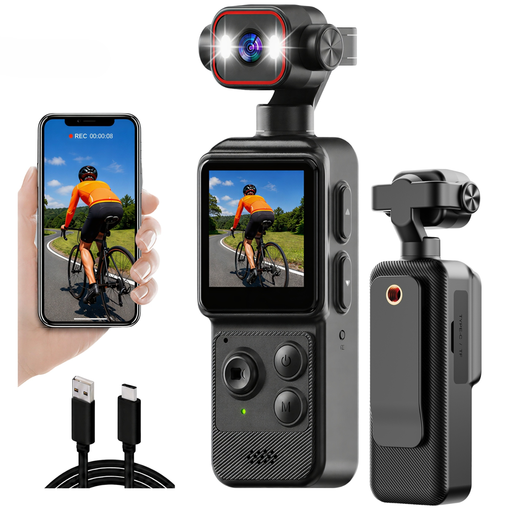
Mini Action Camera 4K with clip, 1.54-inch display
If you’re considering this camera for miniatures, first check that its framing and focusing suit your figure and small details.
The product name lists a 140° wide-angle lens, app control, an LED light and a 1,200 mAh battery.
View at Joybuy
 No image available
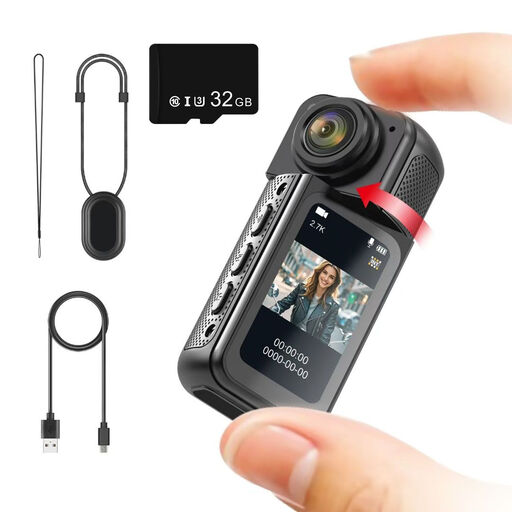
NAXSIR Mini Action Camera 2.7K
If you’re considering this camera for miniatures, check that the rotating lens gives you the framing you want and that you can light the figure properly.
The product name lists a 180° rotating lens, magnetic attachment, a 1.47-inch IPS screen and an included 32 GB memory card.
View at Joybuy
 No image available
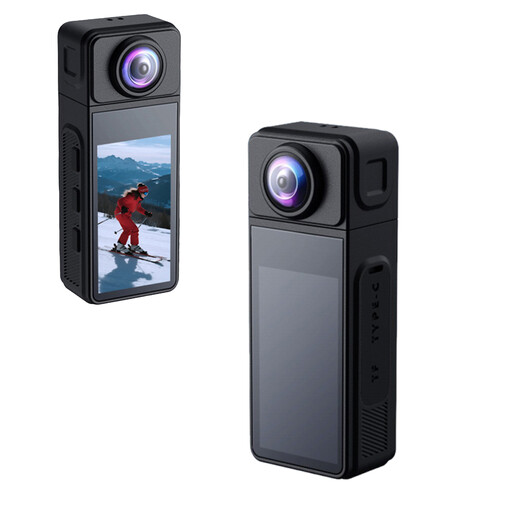
NAXSIR 2K Mini Action Camera
If you’re considering this camera for a fixed setup, check that the lens and focusing are suitable for the distance to your figure.
The product name lists a 270° rotating wide-angle lens, magnetic housing and electronic image stabilisation.
View at Joybuy
 No image available
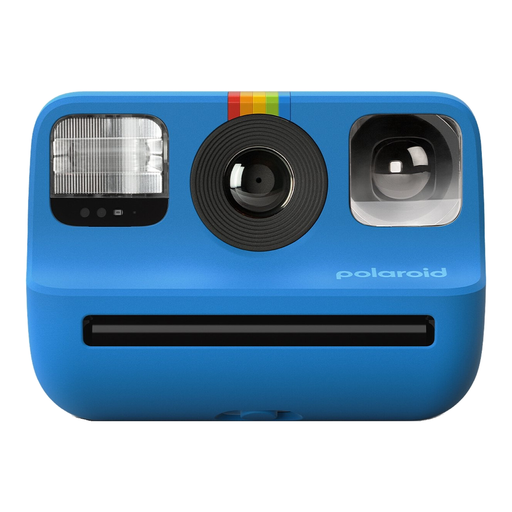
Polaroid Go Gen 2 - Blue
If you’re considering an instant camera for your miniatures, check that the print size suits what you want to capture.
This camera uses Polaroid Go instant film; the listed print size is 66.6 × 53.9 mm.
View at Joybuy
 No image available
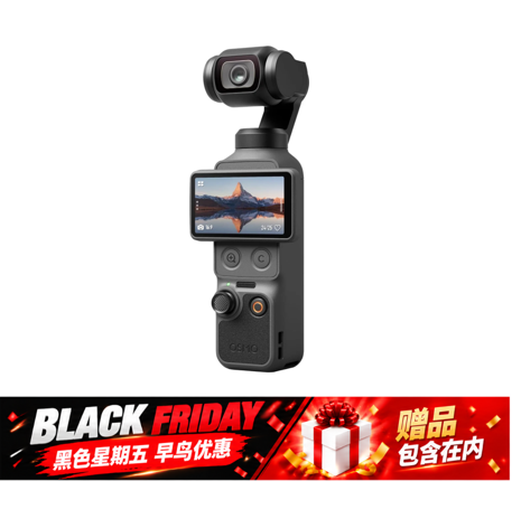
DJI Osmo Pocket 4 Standard Combo
If you’re considering this camera for stationary miniatures, check that it offers the focusing and framing you need.
The product name lists a 1-inch CMOS sensor, 4K/240fps, 3-axis stabilisation, 2× lossless zoom, 107 GB of built-in storage and a 2-inch rotatable screen.
View at Joybuy
Frequently asked questions
Is a camera with a kit lens automatically suitable for tiny paint details?
No, it depends on the lens supplied with the camera. The Canon EOS R50 supports RF and RF-S lenses, but Canon Netherlands specifies 1.4× magnification for the separate RF 100mm F2.8L Macro. So check which lens comes with the kit you choose.
How should you set up a figure for a focus-bracketed series?
Keep both the figure and the camera stable, and take shots at successive focus points. Check your camera model’s manual to see how to take and combine the series; Canon describes these features for the EOS R7 and EOS R10.
Why can a short focusing distance be tricky on a small workbench?
The distance to the plane of focus is not the same as the clear space in front of the lens. Sony Netherlands gives a minimum focusing distance of 9.5 cm and a minimum working distance of 2.4 cm from the front of the lens for the SEL30M35. Check whether there is still room for your lighting at that distance.
What can you do in the Netherlands if a camera you bought online disappoints or is faulty?
For an online consumer purchase, ACM ConsuWijzer says you generally have up to 14 days after delivery to change your mind, subject to applicable exceptions and conditions. If a product is faulty, the seller is responsible for the statutory guarantee; this is separate from any additional manufacturer’s warranty.


