What should you look for?
Compact camera with close-up mode
A good fit if: you want to set up quickly and would rather not swap a separate macro lens. OM SYSTEM lists a Microscope mode and a fixed lens for the TG-7.
Trade-off: you can’t replace the fixed lens with one that has a different working distance. Test the framing and check how much room you have for lighting with your own figures.
Mirrorless camera with macro lens
A good fit if: you want to tailor your lens choice and magnification to specific figures. Macro capabilities depend on the lens; they don’t automatically come with the camera body or standard kit lens.
Trade-off: check exactly what’s included in the kit and allow room in front of the lens for lighting. OM SYSTEM gives a minimum focusing distance of 0.19 m for the M.Zuiko 60mm lens, measured from the camera.
At a shared workbench, detail, depth of field, quick pack-away and what’s included in the complete kit may each be a different priority when you’re choosing a camera.
| What to consider |
What should you check? |
Who is this important for? |
| Getting small details large in the frame |
Check the maximum magnification of the exact lens and test the framing with your figures. Also consider how much room will be left for lighting. |
If I want to capture paintwork or small parts in detail, I want to know whether the complete camera-and-lens combination is suitable. Around 36% of consumers make detail their top priority. |
| Sharpness throughout the depth |
Check whether the exact camera model supports the focus stacking you want and whether you can set up the camera securely. |
If you want to keep protruding parts of a stationary figure sharp at the same time, allow extra time for shooting and make sure your setup is stable. Around 29% of consumers give depth of field top priority. |
| Quick set-up and pack-away |
Compare a fixed close-up lens with a set of interchangeable lenses, and consider how much space the camera and lighting will take up. |
If I share my workbench with others, I want to be able to set up and put away my equipment quickly. Around 21% of consumers prioritise a compact, quick set-up. |
| What’s included in the complete kit |
Check which lens and lighting are included with the exact version; a standard zoom isn’t automatically a macro lens. |
If you want to avoid needing another lens or lighting after buying, check the complete kit rather than just the body. Around 14% of consumers prioritise what’s included in the full kit. |
Camera options at Joybuy
The Joybuy camera options below may be worth considering if compactness or a particular photo feature matters to you. Check whether each model can capture your figures with the framing you want; the product names alone don’t confirm that they’re suitable for macro photography.
 No image available
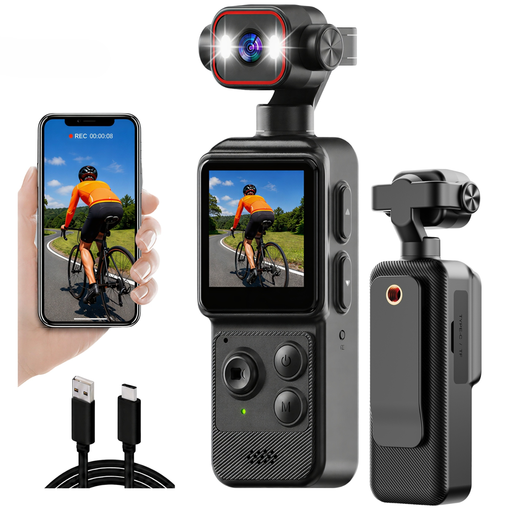
Mini Action Camera 4K with Clip
Worth considering if you’re looking for a compact camera; first check whether the close-up framing works for your figures.
The description mentions a photo mode, a weight of 35 g and a tripod thread.
View at Joybuy
 No image available
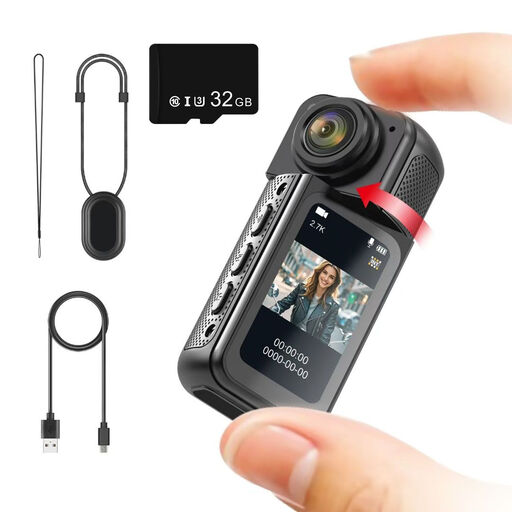
NAXSIR Mini Action Camera 2.7K, 180° Rotatable Lens
Worth considering if you want a compact camera; test whether the angle of view works for the framing you want for your figures.
The product title mentions a 180° rotatable lens. The description mentions a photo mode, a weight of 35 g and a magnetic mount; it also lists a memory card.
View at Joybuy
 No image available
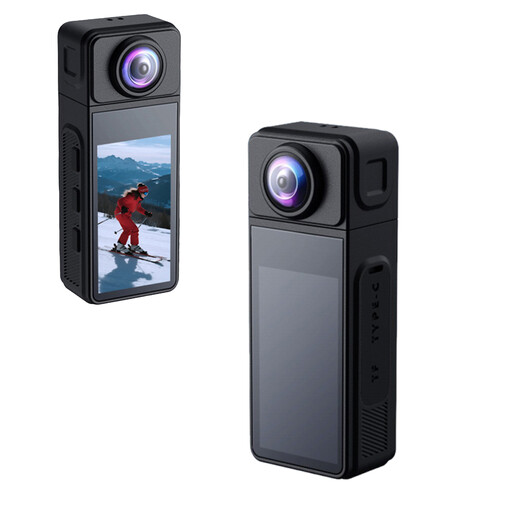
NAXSIR 2K Mini Action Camera, 270° Rotatable Wide-angle Lens
Worth considering if a compact camera suits your setup; check whether the lens can capture small details large enough in the frame.
The product title mentions a 270° rotatable wide-angle lens and electronic image stabilisation. The description mentions a photo mode, a weight of 35 g and a tripod thread.
View at Joybuy
 No image available
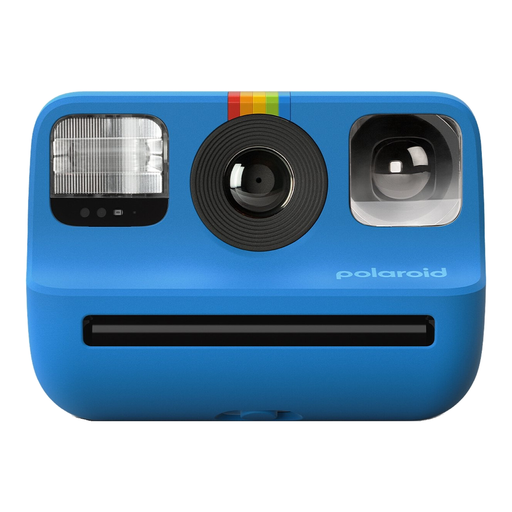
Polaroid Go Gen 2 - Blue
Worth considering if you’d like to print photos as well as take them; check that this suits the way you work at a shared bench.
The description mentions a self-timer, double exposure and instant prints on Polaroid Go film. The camera uses Polaroid Go film.
View at Joybuy
 No image available
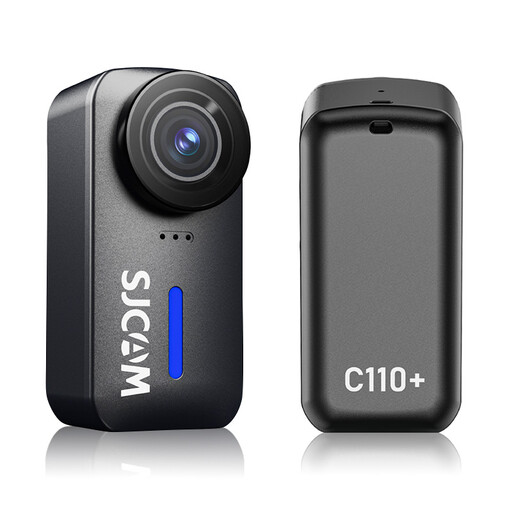
SJCAM C110+ 4K Action Camera
Worth considering if a compact camera with a photo mode suits your needs; test the close-up framing with your own figures.
The product title mentions a 170° wide-angle lens and 20 MP photos. The description mentions 4K video, a compact design and a weight of 82 g.
View at Joybuy
Frequently asked questions
Is macro mode enough to get an entire toy figure in focus?
Not always: shooting close up reduces depth of field. For a stationary figure with protruding parts, you could consider taking a series of shots at different focus distances. Keep the camera steady and check which features the exact model supports; Canon recommends using a sturdy tripod for focus stacking.
How can you set up a small photography area on a shared workbench?
First, test the framing and check how much room there is in front of the lens for lighting. For focus stacking, use a stable setup and keep the camera and figure in as nearly the same position as possible between shots. Agree how much bench space you’ll need with the other users.
Does a mirrorless camera kit include a macro lens?
It varies by version, so check exactly what’s in the box. The Canon EOS R50 kit we looked at lists the RF-S 18-45mm lens; the separately reviewed RF 35mm macro lens isn’t listed as part of that kit.
What can you do if your camera develops a fault?
With normal use, a product in the Netherlands must meet reasonable expectations; the seller is your point of contact for your statutory guarantee. ACM ConsuWijzer says the seller must resolve a problem covered by this guarantee free of charge, for example by repairing or replacing the product, or refunding you.
Can you take photos if other people might be recognisable in them?
This depends partly on how you use the images. The Dutch Data Protection Authority describes an exception for photos kept private, solely for personal use or within a very small circle. If you share them more widely or use recognisable images for business, the GDPR may apply and you’ll need a lawful basis.
Do you have a cooling-off period when buying a camera online?
For many distance purchases from a business, you have a 14-day cooling-off period, according to the Dutch Government. Whether this applies to your situation and whether any exceptions apply depends on the transaction, so check the seller’s information before ordering.


