What should you look for when buying?
When photographing toy figures for a creative portfolio, your choice mainly comes down to detail magnification, sharpness throughout the depth of the image, colour consistency and a practical set-up.
| What to consider |
What should you check? |
Who is this important for? |
| Fine paint details |
The magnification of the exact lens and the free working distance in front of the lens. |
If you want to show brushstrokes or texture clearly, the detail in the frame matters most; around 33% of consumers prioritise magnification. |
| Sharpness across the whole figure |
Whether focus bracketing is available and whether shots taken at different focus points can be combined. |
If protruding parts need to remain recognisable from front to back, sharpness throughout the depth of the image is key; around 27% of consumers prioritise this. |
| Consistent paint colour |
Adjustable white balance and RAW support on the exact model. |
If you want colours to look consistent from session to session under the same lighting set-up, colour consistency comes first; around 20% of consumers choose this as their main priority. |
| A simple tabletop set-up |
What is included with the camera and how much room is left for the figure, background and lighting. |
If you prefer to work on a small photography table without unnecessary separate accessories, a suitable complete set-up matters most; around 20% of consumers share this priority. |
Joybuy products
The Joybuy products below range from compact cameras to models with interchangeable lenses. A product name alone does not confirm whether a camera is suitable for close-ups of small figures, so check the focusing capabilities and the lens included with the version you choose.
 No image available
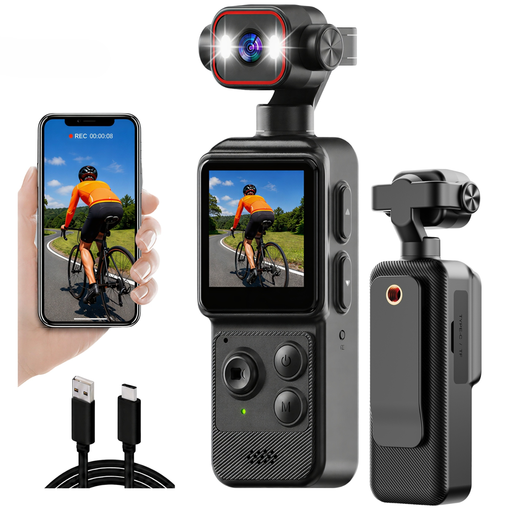
Mini 4K action camera with clip
The product information mentions still photography and two built-in LED lights; check whether the focusing and framing are suitable for your figures.
The product name specifies a 140° viewing angle, a 1.54-inch screen, app control and a 1200 mAh battery.
View at Joybuy
 No image available
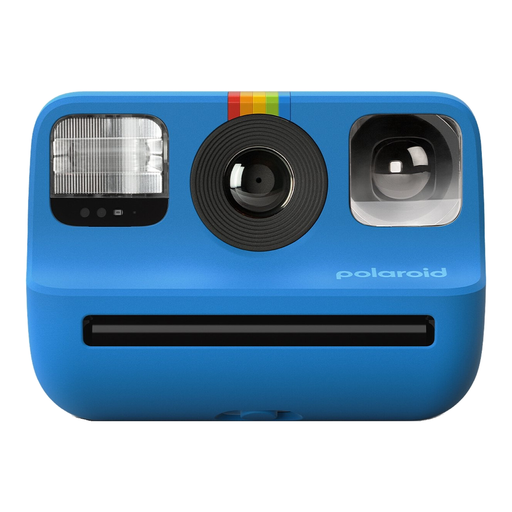
Polaroid Go Gen 2 – blue
The product description mentions instant photos and prints, which could be a good fit if you also want to include physical images in your portfolio. Check separately whether the camera can capture the small details of your figures sharply.
The camera uses Polaroid Go film. The product information also mentions a self-timer.
View at Joybuy
 No image available
DJI Osmo Pocket 3 Creator Combo
The product description mentions photography and fast focusing. It does not specify macro magnification, so check whether the lens can focus close enough to capture fine paint details.
The description mentions a 1-inch CMOS sensor and a 2-inch touchscreen.
View at Joybuy
 No image available
Sony ZV-E10 + 16–50mm Zoom Black
According to the product information, this version includes an E PZ 16–50mm zoom lens with a Sony E mount. For miniature details, check the close-up capabilities of this exact lens.
The description mentions a 24.2 MP APS-C sensor.
View at Joybuy
 No image available
Sony Alpha A6100 + 16–50mm f/3.5–5.6 OSS II
The product information says that a 16–50mm zoom lens is included. Check whether this lens’s focusing capabilities suit the small details you want to photograph.
The description specifies a 24.2 MP APS-C sensor.
View at Joybuy
Frequently asked questions
Is a camera with the word ‘macro’ in its name enough for tiny painted details?
Not based on the name alone. Compare the maximum magnification and working distance of the exact lens; Sony Netherlands distinguishes between the distance from the sensor and the free space in front of the lens.
How can you keep a figure with protruding parts sharp from front to back?
Set up the camera and figure securely, then check whether one shot gives you enough sharpness throughout the depth of the image. If not, you can combine shots taken at different focus points. Check in advance whether your camera can capture the sequence automatically and whether you will need to combine the shots afterwards.
What can you do if a camera or lens is faulty, and do you have a cooling-off period for an online purchase?
For a consumer purchase in the Netherlands, the seller must put a faulty product right; according to the Dutch government, there is no fixed statutory warranty period of two years. For a distance purchase from a business, you generally have a 14-day cooling-off period, with some exceptions. According to the Dutch government, an online purchase from a private seller does not count as a distance purchase in this sense.
Can you use someone else’s photos in your portfolio?
Not without permission. The Dutch government states that, in principle, you may only use other people’s copyright-protected photos with the creator’s permission; you may not make a private copy available to the public. The rights that apply to a photo you take yourself of a specific toy design depend on the design and how you intend to use the photo.


