
Entering years and catalogue numbers
You record lots of individual toys and want to decide whether a numeric keypad suits the way you enter information.


If you mainly enter years and catalogue numbers, start by looking for a keyboard with a numeric keypad. If you repeat searches or filtering tasks, consider customisable keys or macros—but only if your catalogue software supports the commands you need. Search and filter functions come from the software, not the keyboard.
You record lots of individual toys and want to decide whether a numeric keypad suits the way you enter information.
You often carry out the same tasks and want to check whether programmable keys can trigger shortcuts in your catalogue software.
You type for extended periods and prioritise a suitable working posture and keyboard shape, without assuming that a particular model has a medical effect.
First, decide which type of input or repeated task you want to make easier. Then consider the keyboard layout, available space and connection that suit your workspace.
| What to consider | What to look for | Who it matters to |
|---|---|---|
| Entering lots of numbers | Check whether the version you choose has a numeric keypad and leaves enough room for your mouse. | If I often enter years and catalogue numbers, I want a separate number pad; around 29% of consumers say entering numbers is their main buying priority. |
| Repeating searches and filters | Test the commands you need in your catalogue software and check whether they can be assigned to keys. | I want to access recurring search, filter or input tasks more quickly; for around 29% of consumers, repeating these kinds of commands is a top priority. |
| Comfort during long sessions | Consider the keyboard shape, room for your mouse and the layout of your workspace. Don’t treat claims about reducing discomfort as a proven personal benefit. | When I spend a long time cataloguing, I want the shape and setup to suit me; around 24% of consumers give typing comfort the highest priority. |
| Layout and connection | Check the physical ANSI or ISO layout, language variant, operating system compatibility and the USB connection or Bluetooth pairing required. | I want a familiar key layout and a connection that works with my computer; for around 18% of consumers, this is their main buying priority. |
Customisable keys can carry out commands, but your software determines its search and filter capabilities.
First test the search steps you need in your own catalogue, then check whether the keyboard can trigger the relevant shortcuts.
ANSI and ISO layouts differ physically. Versions within the same product range can also have different features. For example, according to Keychron, the Black - Fully Assembled version of the Keychron K10 Pro is not hot-swappable.
Check the full version name, key shape, language layout and features you want in the specific model.
A different layout may take time to get used to, and choosing the wrong one could mean you need to replace it.
A Joybuy product page describes a Logitech MK650 keyboard and mouse set in its title, while the description covers a Signature M650 mouse. This makes the product identity unclear.
Before buying, check the model number, what’s in the box and the specifications of the specific offer.
The MX Keys S is designed for customisable keys and use with multiple devices. Wave Keys is a separate range with a wave-shaped design and a wrist rest.
The K10 Pro may be worth considering if you’re looking for a mechanical version with customisable keys and possibly a numeric keypad.
The KC 6000 SLIM is a slim office option to consider if programmable workflows aren’t a priority.
The Compact Break is a compact option to consider if you first want to see how much desk space the keyboard takes up.
These keyboards are suited to entering numbers, repeating commands and general catalogue work. Check the layout, connection and any programmable features for each version.
 No image available
The numeric keypad is useful if you enter lots of years or catalogue numbers.
The product title specifies a full-size version, while the description mentions navigation keys and a plug-and-play connection.
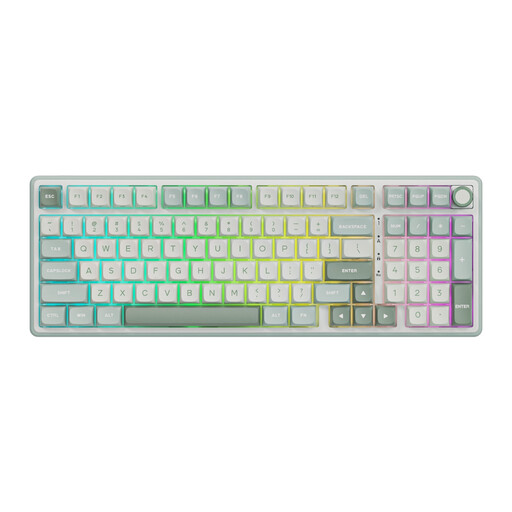 No image available
This version may suit you if you’re looking for a numeric keypad and customisable keys for recurring tasks.
The product information lists a volume knob, macros and a programmable driver. The title mentions hot-swappable keys, Sky Cyan and Cream Switch.
 No image available
The product description mentions saved key functions and macros for assigning recurring tasks to keys.
The title lists tri-mode connectivity, US Layout QWERTY, an 8000 mAh battery, Flying Fish Switches, a volume knob and hot-swappable keys.
 No image available
The product description mentions a numeric keypad and document navigation keys for entering and navigating catalogue data.
The product information lists a scissor mechanism and Bluetooth; the title mentions USB and Bluetooth.
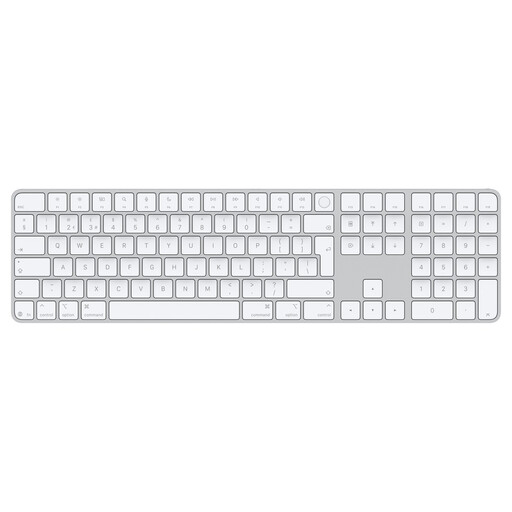 No image available
The numeric keypad is useful if you enter lots of catalogue numbers.
According to the product information, this version is designed for Mac models with Apple Silicon.
No, a keyboard doesn’t add those functions itself. It can carry out supported commands, but searching and filtering depend on your catalogue software. For example, Microsoft describes filters for data columns in Excel.
Check that your computer supports the connection you need and that you can install any configuration software. Try a shortcut in your catalogue first; Logitech directs MX Keys S users to Logi Options+.
Follow the cleaning and battery or charging instructions for the specific version, and set up your workspace carefully. Arboportaal advises limiting intensive use of a screen, keyboard and mouse to a maximum of 6 hours a day.
For online consumer purchases in the Netherlands, the statutory cooling-off period is generally 14 days from the day after delivery, subject to exceptions. Ondernemersplein, the Dutch government’s business portal, describes this period. The statutory guarantee is separate from any paid extended warranty product.
The Arboportaal rule cited applies to employees who work at a screen for more than 2 hours a day: the screen and keyboard must not be attached to each other. When using a laptop, the employee must be able to use a separate screen or keyboard in that situation. This is not a general product specification for hobby use.