
Vandaag of morgen in huis

Kwaliteit gegarandeerd

Welkomstaanbiedingen ontgrendelen: GRATIS bezorging | Tot 80% korting | Gratis 30 dagen JoyPlus-proefperiode
Download de app
Toy cars are available for almost every style of play, from a simple car with sound effects to an RC car, drift model or electric ride-on car. With such a wide range to choose from, making a quick purchase is not always wise. An impressive product photo says little about how easy the car is to control, how long the battery lasts or whether it is suitable for your child.
This guide helps you compare toy cars based on points you can check. That way, you can avoid buying a gift that ends up unused after just a few play sessions.
A toy car suitable from age 3 is not automatically right for every child of that age. Small parts, a powerful motor or a complicated remote control may require extra supervision. Therefore, check:
An interactive car such as the VTech Toet Toet Car Disney Mickey Fire Truck is intended for children aged 1 to 5 years. The model uses sounds, melodies and reactions when the character is pressed. The product is not suitable for children below the stated age.
A toy off-road vehicle with large tyres can handle grass, gravel and uneven ground better than a small racing car. However, the surface, gradient and moisture all affect performance. Product descriptions sometimes mention several types of terrain, but that does not mean driving through deep water or mud is risk-free.
Pay attention to the combination of:
Lights, music, spray functions and high speeds make a toy car appealing, but they also use more energy. Check whether the model has a rechargeable battery, which batteries the remote control requires and whether a charger or USB cable is included.
For an RC car, the run time per charge is also more important than the battery type alone. A spare battery can be useful, but always check that it is compatible.
A simple remote-control car with forward, reverse and steering is often suitable for beginners. For younger children, a model with fewer buttons may be easier to understand. A 2.4GHz remote control is useful when several cars are being driven at the same time; according to the product descriptions of various models, this frequency is designed to limit signal interference between vehicles.
For older children and teenagers, additional settings may be useful, such as:
A drift car performs best on a smooth, flat surface. A toy off-road vehicle, on the other hand, needs grip and suspension. Choose based on where it will be used, not just on its appearance.
For a toy car that is used frequently, the bodywork, bumper and wheel suspension are important. ABS plastic is used in various models because it combines low weight with dimensional stability. Some models combine ABS with a metal or alloy body.
Also look for:
No toy car is indestructible. Collisions, falls and driving on surfaces for which the model was not designed can shorten its lifespan.
A small 1:24 or 1:64 car is easy to use indoors and is suitable for a homemade course. A large RC off-road vehicle needs more room to turn safely. An electric ride-on car also requires a flat, clear area and storage space.
For an electric ride-on car, also check:
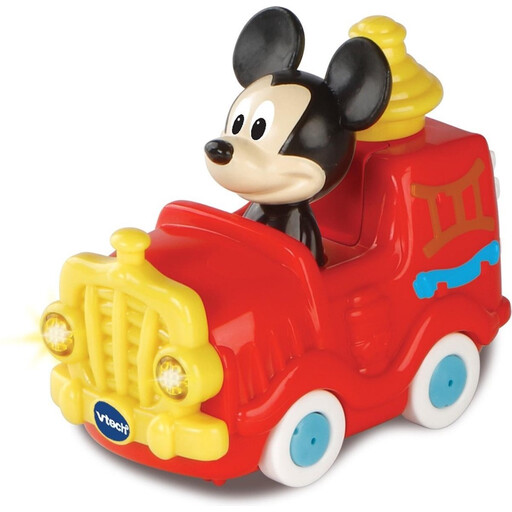
Why it suits this profile: An accessible choice for young children discovering toy cars. The car responds when Mickey is pressed and works with other Toet Toet cars and Zoef Zoef playsets.
The 1–5-year age recommendation and on/off button with automatic shut-off make the intended use clear. However, pay attention to the warning about small parts.
Sound effects, 6 melodies and 3 songs; compatible with other sets in the same product range.
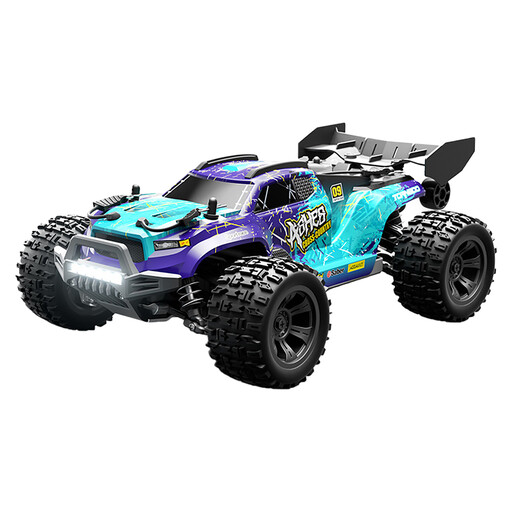
Why it suits this profile: Designed for teenagers and users aged 14 and over who are looking for a more powerful RC car for outdoor driving and longer courses.
The specifications list 4WD, a 7.4V battery and a 2.4GHz transmitter. Check the local terrain beforehand and follow the instructions regarding moisture.
4WD drive, LED headlights, 7.4V 1500mAh lithium battery and adjustable transmitter functions.
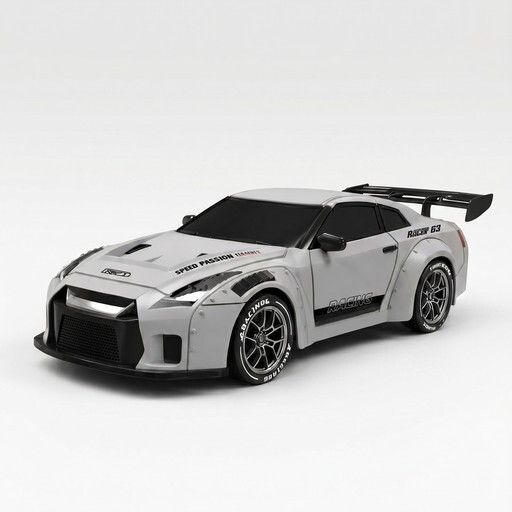
Why it suits this profile: For children and teenagers who want to practise drifting, slaloming and racing. This model offers more adjustment options than a basic toy racing car.
The two speed settings allow you to start at a more manageable pace. The product description also mentions interchangeable drift and racing tyres, so you can adapt the car to the surface.
4WD, adjustable gyro system, two tyre types, LED lighting and a 7.4V LiPo battery.
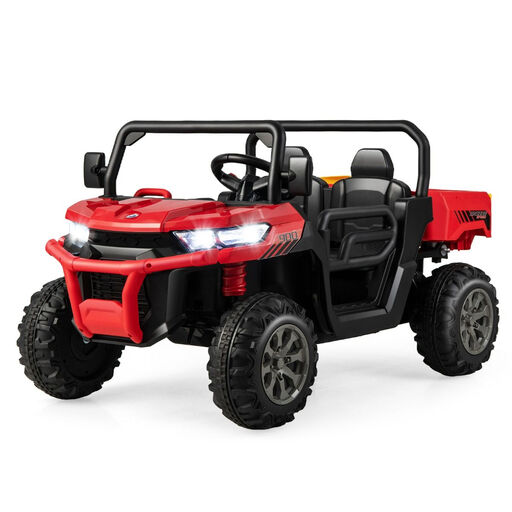
Why it suits this profile: A choice for children aged 3–8 who want to ride in a vehicle themselves rather than simply play with a model car. A parent can assist using the remote control.
The product details list a seat belt, soft-start function, parental 2.4GHz remote control and a maximum speed of 3–8 km/h.
Two seats, 50 kg load capacity, 12V battery, suspension and controls for both child and parent.
We have put together a complete, up-to-date list of products that fully meet these strict selection criteria and the applicable European safety regulations.
Start by checking the official age recommendation and warnings. For a child aged 3 and over, a simple low-speed RC car may be easier to manage than a powerful model with lots of features. A model with small parts, a spray function or a high speed requires extra supervision.
This varies depending on the model, speed, surface and use of lights or music. Check the stated battery capacity and run time on the product page. A rechargeable lithium battery is practical for repeated use, but for longer outdoor sessions, allow enough time for charging or have a suitable spare battery ready.
A drift car usually performs best on flat, smooth surfaces such as tiles, wood or a suitable indoor track. For grass, gravel and sand, a buggy or toy monster truck is generally a better choice. Always check the product description and do not use the vehicle in water unless the manufacturer explicitly allows it.
